
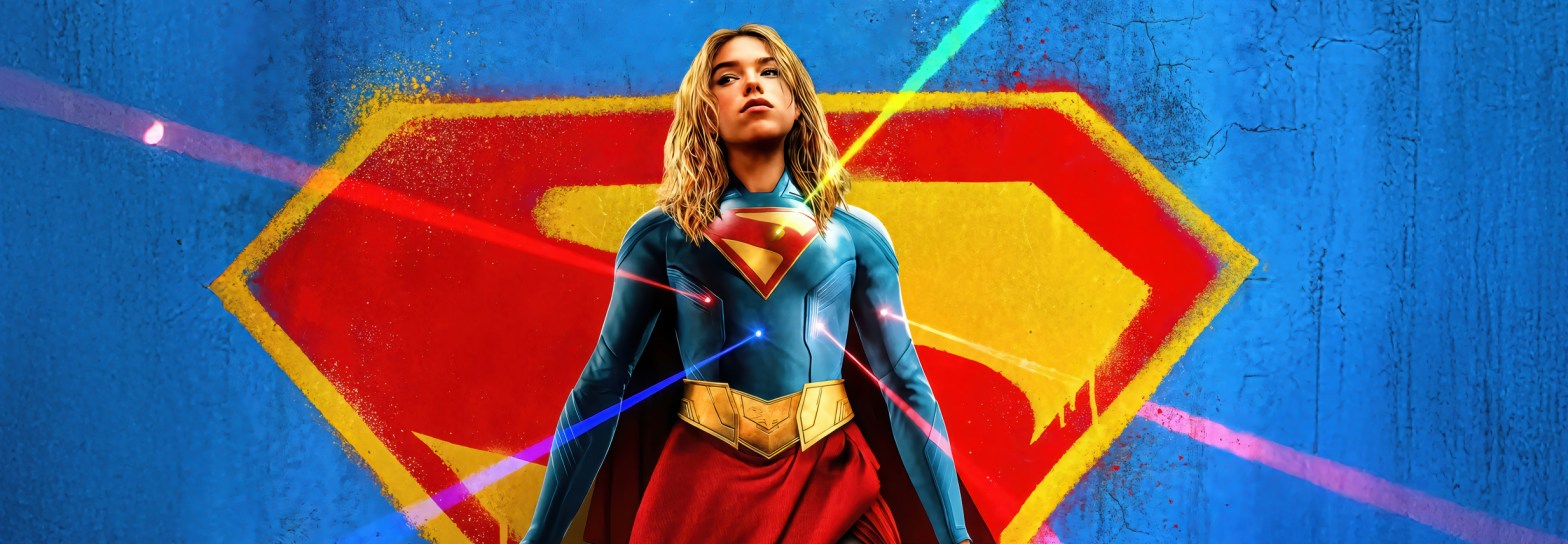
Krypton didn’t die in a day. The gods are not that kind.
The new DCU’s second true foray to the big screen comes in the form of Supergirl; Clark Kent’s heroic younger cousin, presented here as a somewhat more chaotic version of herself than most of us are used to, played by Milly Alcock (House Of The Dragon). After picking up Krypto from Clark at the end of last year’s Superman, Kara Zor-El has headed to a planet with a red sun to celebrate her birthday so she can feel the effects of the libations. When Ruthye (Eve Ridley, 3 Body Problem) interrupts her festivities on the hunt for a warrior to help her seek revenge on the brigands who killed her family, Kara is drawn into a conflict that quickly spirals out of control.
Supergirl serves two unique narrative purposes in regards to our relationship to the character; both deepening our understanding of how and why Kara is acting as she does as of her introduction to us, and also serving as the origin story of this version of Kara within the DCU. It’s an interesting twist on an origin story, showing us through flashbacks the specific moments that resulted in Kara coming to Earth and why she’s become something of a loose cannon as we are introduced to her, and it works nicely to divide the narrative and provide us context, though some of the flashback sequences are better introduced than others and the shift in narrative tone can be a little aggressive at times.
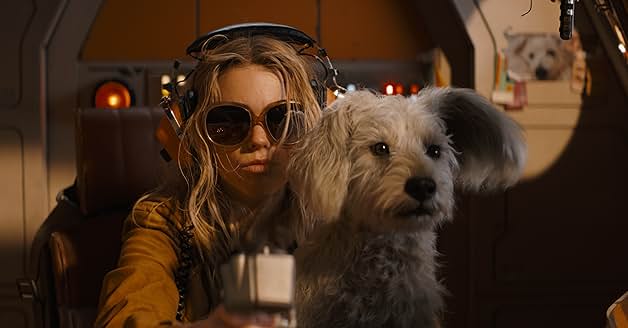
I’m getting ahead of myself; Supergirl is a good film. At times, it’s even a great film; but most of the time, it’s a good film. It is driven by its central performance, with Milly Alcock hoisting this film on her back and carrying it as high as she possibly can. She has great support from Ridley, who is convincing as Ruthye even if the character is burdened with the weight of the Vengeful Child stereotype, but she makes it work for the most part. Their interactions together are typically charming, with both characters getting frustrated with the other at various intervals for various reasons, but ultimately both looking out for each other as much as they’re able to – with varying success. Alcock really does just feel right in this role; she’s able to swing from the cooler, lighter, quippier side of the character to the darker and more traumatised version with ease, sometimes mid-sentence; perfectly balancing a shifting tone that is one of multiple aspects which can’t help but invite, perhaps unfairly, comparisons to the Guardians Of The Galaxy trilogy. Still, as an actress stepping into her biggest role to date, and her first starring role on the big screen at that, Milly Alcock firmly proves that she is worthy of wearing that red cape and logo, and I have no doubt that she is going to shine bright as Supergirl beyond this specific project.
The central cast is rounded out by main villain Krem (Matthias Schoenaerts, Amsterdam) and Lobo (Jason Momoa, Aquaman). Lobo fulfills an anti-hero role here and is essentially an introduction for a character who will invariably play a larger role at a later point in the DCU; and while his subplot brings him into Kara’s path at various critical points, his presence here is like empty carbs; enjoyable in the moment, but after the fact I couldn’t help but reflect on how I didn’t really feel like I’d gotten much out of his inclusion in the narrative. It feels more like James Gunn trying to right what he may perceive as the miscasting of Momoa as Aquaman, more than the inclusion of a necessary character for the film; securing Momoa’s continued association with the DCU under his watch by having him play a role that he’ll really enjoy.
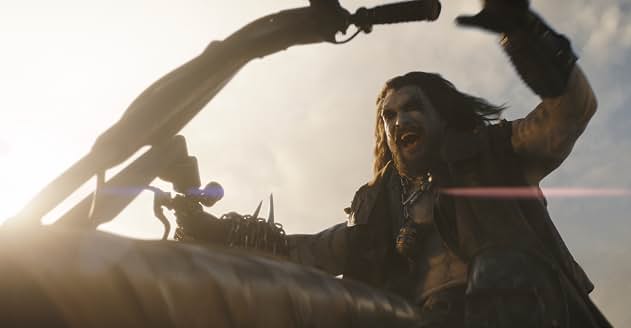
As much as Lobo doesn’t contribute much, he’s still fun to have around; the same cannot be said for Krem, sadly. Krem certainly is the villain of this film and Schoenaerts is absolutely chewing the scenery with the role, and I mean that in a good way, but when you strip back his performance there’s absolutely nothing to this character. He is villainy for the sake of it, and while you would expect that from a band of space brigands, there just isn’t enough to him to keep the audience interested in who he is as that villain. This is not the first superhero movie to suffer from an underwhelming villain, but it’s a shame that we’re still seeing that issue this far into superheroes as a big screen concept. Even when the most cartoonish depths of his villainy are revealed, it’s almost too much of a swing for a villain of this nature; none of the pieces of the character fit together properly to make a coherent personality, and it’s a real shame and a waste of a talented actor.
On the note of repeated genre mistakes, director Craig Gillespie (I, Tonya) also failed to learn a lesson from James Gunn’s Superman with the colour palette for Supergirl, which resides firmly in various shades of mud coloured. After the gorgeous, bright palette of Superman, this is a particular shame; I had hoped that we had left dull visuals behind with the end of Zach Snyder’s tenure over DC’s cinematic properties, but Gillespie takes us right back there here. I think I understand what he was trying to do; creating a parallel between Clark’s hopefully, boy scout personality and Kara’s depressed, traumatised state with colour language; but there has to have been a better way of doing that without having every major set piece set out against backgrounds of grey, brown and dark blue; shifting scenery and situation around these same dull, lifeless colours and dark rooms with dark characters. The first fight of the film gave me hope; outside a dishevelled bar, in the rain, at night; but illuminated with red neon in a sequence that reminded me of the cyberpunk neon aesthetic of the likes of Blade Runner; but that was soon left aside for dilapidated cityscapes that could’ve been from any low-budget early 2000s sci-fi film or TV show. Supergirl the character deserved better than this, as did Milly Alcock, but at least she made the most of what she had.
I do wonder if more nuance and intrigue could’ve been woven by a different director, perhaps a woman; while Gillespie certainly can’t be said to be bad at directing leading women after the triumph that was I, Tonya; for a story that is so heavily rooted in feminine trauma and survival, a female voice behind the camera could’ve brought more meaning to this piece. We see glimpses of this coming through from Ana Noguiera’s script, but the framing of it seems off at times, with key character moments moved on from too quickly for the next action set-piece or mood-lifting joke. After such a clear and bold vision from Gunn with Superman, I feel like Supergirl, and the DCU as a whole, could do with engaging in that same vision; engaging with directors who will truly put their stamp on their individual projects while maintaining the tone needed for a shared universe.
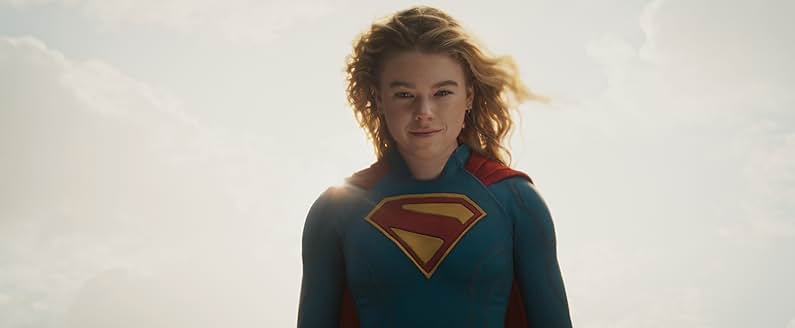
All of this is to say, again, that Supergirl is a good film, at its worst moments. A lot of these criticisms didn’t sit too heavily on me while I was actually in the cinema, but crept into my brain while I was thinking about the film on my way home. While there are certainly some thematic and aesthetic issues that Gunn, Safran and DC need to really take on board as they continue moving forward with this experiment; I would recommend that the superhero fans who read this give this film the chance it deserves. It may not be perfect, but it still deserves to exist; which is, at its core, the message of the film itself, rather fittingly.
Oh; and Krypto is still a very good boy.

