
May the bridges I burn light my way.
Legacy sequels are always a risk, despite becoming more of a trend in modern cinema. We’re seeing studios opting to place their bets on the nostalgia market aimed firmly at Gen Y and Millennials, with properties revived and revisited in the hope of box office success over anything else. The Devil Wears Prada 2 stands out against most of these by virtue of not being an action film; but is that enough to justify its existence, or can it bring more to the table?
20 years after her time working for Runway magazine as assistant to Miranda Priestly (Meryl Streep), now accomplished journalist Andy Sachs (Anne Hathaway) finds herself back at the magazine as the new Features Editor. She must adapt to Runway’s modern environment, help bring the magazine back into greater relevance and also relearn how to work alongside Miranda; but there are more challenges ahead than it first appears…
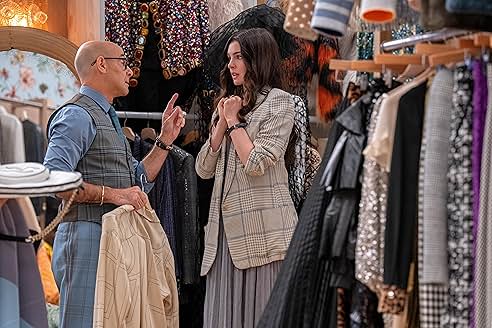
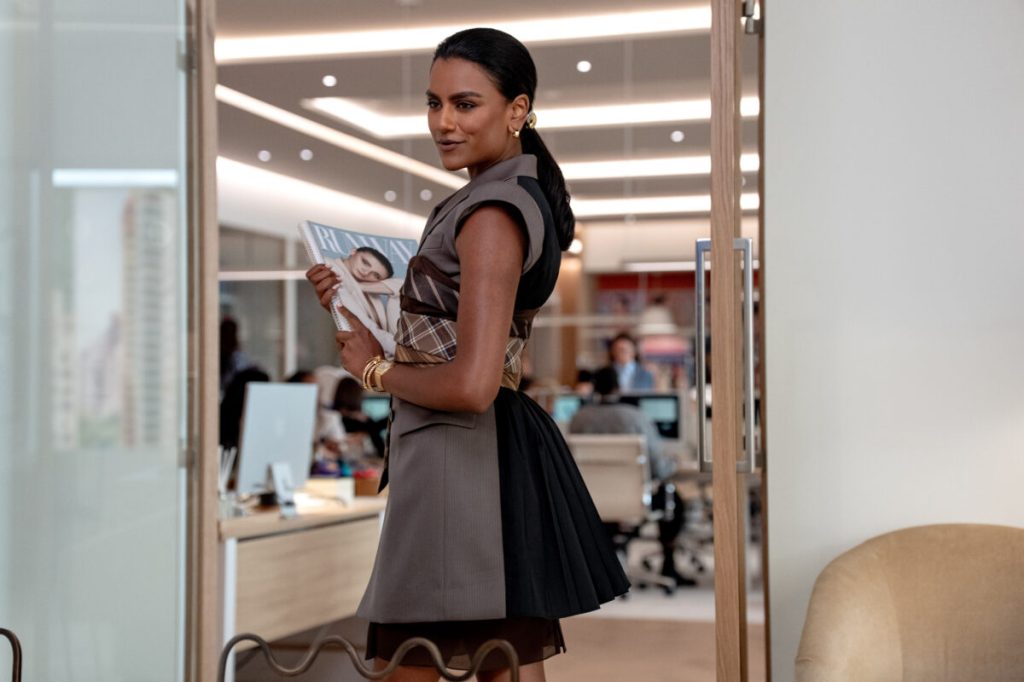
The 20 years since the original The Devil Wears Prada have seen a seismic shift in both cinema and publishing, and the first challenge of The Devil Wears Prada 2 is to establish how Runway fits into both of these worlds without leaning too heavily on exposition and hand-holding. Runway is now much more than just a print magazine about fashion; it also strives to be a major player in the digital space, with Miranda and Nigel (Stanley Tucci) working to find the balance between the world they know and the world they now operate in. Aline Brosh McKenna and Lauren Weisberger’s script does a good job of this; guiding us through the changes at Runway by having them be introduced to Andy in a naturalistic way, or by throwing them at Miranda in moments that both show the changes that have been made at the magazine, and how resistant Miranda has been to letting them happen. Many of these moments come from the tandem of Miranda and current first assistant Amari (Simone Ashley, Bridgerton), who is perfect in this role in the same way that Emily Blunt was perfect in the equivalent role in the original as Emily. Amari’s role differs from Emily’s despite the identical job title in that we are given the impression she isn’t just an assistant to Miranda, but also at times a handler, quietly interjecting when necessary to remind Miranda of new departments, initiatives, and even sometimes HR rulings. She moves with the poise and grace of a model herself, and is more than capable of the same biting sarcasm and exaggerated eyerolls that Blunt was so proficient in for the original.
The dynamics at the centre of the film directly reflect those of the original, with Miranda unsure whether Andy will contribute what is expected of her and Andy leaning on Nigel as a confidante during the process. The familiarity of these dynamics, framed within the new lenses of the changing work environment and Andy’s elevated role, actually work well to balance the nostalgia of the piece without making it feel too heavily like a rehash; Andy isn’t left balancing shopping bags and coffees on the street while Miranda chews her ear off her, but she is resigned to a small, dark office and her page clicks are held against her during leadership meetings. It’s a perfect demonstration of how things can change and remain the same, and works to breathe the necessary new life that was desperately needed to make this sequel work. That being said, familiar elements are peppered throughout the narrative, with the aforementioned Emily playing a key role as things move forward, though as an external force; and the film’s climactic event centred around a key runway presentation at a major fashion event, though kept fresh by landing in Milan instead of in Paris; a more than suitable shift for a fashion–forward piece of cinema.
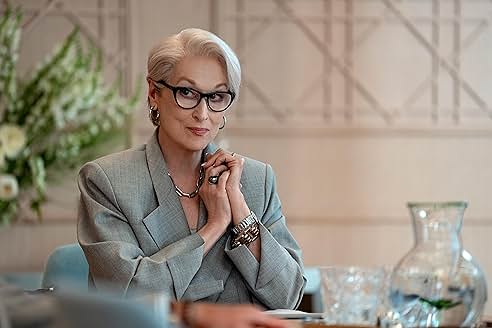
Our central cast also gives us exactly what we’re expecting; essentially more of the same, filtered through this new lens. Emily may not be working at Runway anymore but her interactions with both Miranda and Andy carry the same emotional base as in the original, Nigel continues to be earnest, steadfast and reliable, Andy is determined and driven, and Miranda is, well, Miranda. The newer cast additions, much like Simone Ashley, are what bring the extra lift to this piece, regardless of the depth of their screen time. Kenneth Branagh (Murder On The Orient Express) is well placed as Stuart, the “new Mr. Priestly”; a concert violinist and composer whose warmth and tenderness plays well against Miranda’s colder demeanour, and softens her in the right moments. B.J. Novak (The Office) and Justin Theroux (Mulholland Drive) both join us as billionaires, but with very different backgrounds; Novak is Jay, heir to the media empire which Runway is a part of, who acts as foil to the Runway crew in excellent form. Theroux is Benji, a self-made tech magnate who manages to encapsulate all of the worst personality traits of all the worst parts of the real-world 1%; it’s hard not to see parts of Musk, Zuckerberg and Bezos woven into his character, and he stands perfectly against the occasional appearances of his reclusive ex-wife Sasha, played with poise and grace by Lucy Liu (Charlie’s Angels), with more than a dash of Bezos’ ex-wife MacKenzie Scott flavouring that performance. Even Caleb Hearon (Pizza Movie) and Helen J Shen (Eternally Yours), who play Charlie and Jin, assistants to Miranda and Andy respectively, make the most of their small roles to help demonstrate both how Runway has changed and also how it hasn’t, both in the two decades between films and in the aftermath of Andy’s arrival. The world has been widened and it benefits the narrative, especially when it finds room in its cameo budget to move beyond just famous models and add in an obvious performance from Lady Gaga (A Star Is Born), who has positioned herself as such a force in entertainment and fashion that this film would’ve felt like it had lost touch if it didn’t include her.
The only expansion of the world which felt unwelcome to me was the inclusion of Peter (Patrick Brammall, Colin From Accounts), Andy’s love interest for this outing. While much better written and performed by his counterpart from the original, a romantic sub-plot just felt entirely unnecessary here; distracting from the primary drive of the narrative to tell us things about Andy’s character and headspace that could’ve been demonstrated to us in other ways without shoehorning a romance in. This is not a dig at Brammall, who as I said, does fine work within this role and presents a much kinder and more empathetic potential match for Andy; it’s just not what we needed in this narrative, and I feel like a cut without Peter in it wouldn’t detract from the film.
Cinematically, The Devil Wears Prada 2 stays true to the style of the original, with fast cuts and montages dominating the cinematic language. David Frankel returning to direct the sequel was an obvious choice and it was the right one, as the tone and pace of the original is maintained through the sequel; capturing the pace of both the media and the fashion world, and centring colour and beauty in every possible shot. This is further enhanced by the soundtrack, with Theodore Shapiro’s original score accented by tunes from Lady Gaga, of course, but also similarly fashionable artists like Doechii, SZA, Raye and more, with Madonna left behind in lieu of featuring these modern artists. It’s a sterling choice that further helps highlight how the world has shifted in the last two decades.
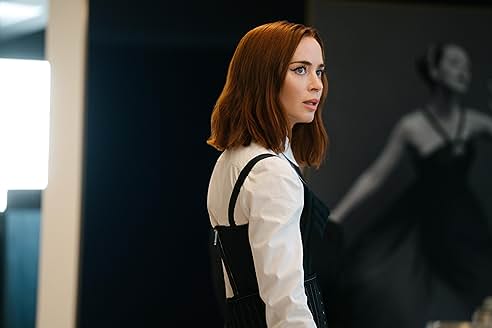
The Devil Wears Prada 2 is a slick, stylish and enjoyable film that does more than incite feelings of nostalgia; it takes time to examine how the landscapes of fashion and of publishing have shifted to this point in the 21st century, and lays out the challenges of both industries to stay alive in the modern climate. Powerful central performances, fantastic direction and cinematography and a killer soundtrack all support a witty and thoughtful central narrative that allows us to revisit this world without feeling like we’re just treading old ground. It feels like films of this ilk, be they sequels or not, aren’t as prevalent in modern cinema as perhaps they once were; and hopefully the success of The Devil Wear Prada 2, both critically and financially, will inspire studios to make more films of this style – just perhaps not about this style, and maybe not about these people, as I don’t see us returning to Andy, Miranda and Emily for a third time without another seismic shift in fashion and publishing.

