
“I think they will have what you’re searching for.”
Nothing says Christmas like a romcom; Hollywood basically has a sub-industry making cozy, romantic films to get out onto streaming services in time for the holidays. With greater demand comes a greater possibility of diminishing returns, with premises and situations being pushed to the absolute limit in the provision of bubblegum romance designed for cosy evenings together under a blanket on the couch. Where does Champagne Problems fit into this genre?
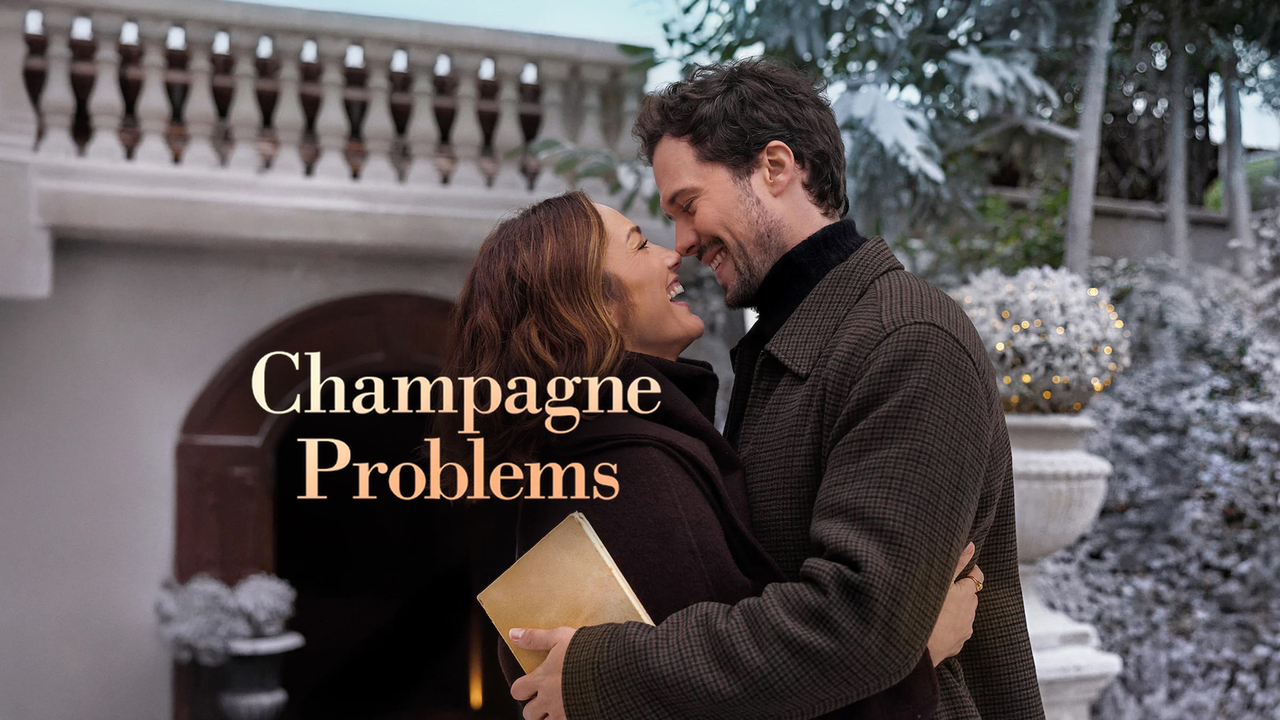
Sydney Price (Minka Kelly, Just Go With It), an executive at investment group The Roth Group, suggest that TRG get involved with the champagne business and is dispatched to Paris to buy The Champagne Chateau from Hugo Cassell (Thibault De Montalembert, All Quiet On The Western Front). Her task comes upon various challenges, not least the distraction caused by meeting handsome stranger Henri (Tom Wozniczka, Slow Horses) on the night of her arrival. Will he divert her attention so much that she fails her acquisition?

Like Sydney, Champagne Problems has a struggle from the off, and that struggle is that it’s a Netflix original romantic comedy. It’s no secret at this point that Netflix has a specific strategy for original films, and part of that strategy is that the film must support the general public’s ability to keep up with the plot while not actually paying attention to the film; be they distracted by making dinner, cleaning the house, or using a secondary screen. The result of this, like with so many Netflix originals of the modern era, the script of Champagne Problems is weighed down with unnecessary exposition; our central cast in particular is laboured with the task of explaining her thought process, emotional response and plot shift out loud, rather than allowing them to play out naturally through the traditional language of cinema.
However, that is not to say that Champagne Problems is a disaster by any stretch of the imagination; in fact, there is a very enjoyable film buried beneath all the exposition, and much of that is down to the sterling work of Minka Kelly. Kelly shines as Sydney, and while the character is certainly not a groundbreaking entry into cinematic lexicon as the over-ambitious workaholic young woman who finds herself thrust into a romantic setting like a deer in headlights, Kelly’s natural charm, wit and acting talent bring a warmth and depth to Sydney that a lesser actor would have struggled to access amongst a script like this one. It’s easy to believe that she truly does feel the complicated range of emotions and motivations that compete for her attention during her time in Paris, and it’s to Kelly’s credit that this comes through. Her chemistry with Wozniczka is also palpable, particular during their first meeting together, and their shared warmth drives the narrative forward.
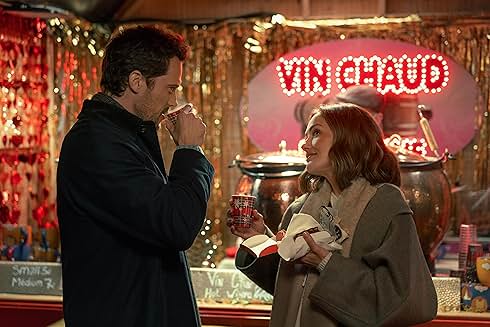
Beyond our two leads, the rest of the cast is a little disappointing; but not due to their performances. The stand-out is Thibault de Montalembert as Hugo Cassell, owner of The Champagne Chateau, who presents us with exactly the kind of character you would hope for as the owner of a distinguished, French champagne empire. Beyond him, the rest of the supporting cast is primarily made up of competitors for the sale and colleagues of Sydney, and they are very much written as stereotypes of their distinct backgrounds; the German delegate, the American playboy, the uptight French competitor. While each of these roles does provide humour at various points, their characters are so obviously surface-level that it shatters the immersion somewhat.
Champagne Problems’ biggest issue, however, comes around halfway through the film and is isolated through its use of generative AI for one of the pitches to Hugo Cassell. AI animation continues to tell on itself immediately; its presence was jarring, not fitting with the aesthetic of the film in any way, and not being relevant to the plot – the character who makes this pitch does not mention using AI to generate it, so it is not a storytelling device, just a method of avoiding paying an animation team to create a sequence for this film. It’s obvious, it’s jarring and it’s ultimately disappointing.
There’s a great movie at the heart of Champagne Problems, but disappointing decisions across the production mean that we didn’t really get to see it. At its best it’s pretty enjoyable, but at its worst, it relies on lazy stereotypes and makes choices that erase the good grace that Minka Kelly’s performance buys for it. It’s still a better choice than others for a movie night curled under a blanket with a hot chocolate, but it isn’t shifting the needle in the wider lexicon of romantic comedies, and doesn’t fulfill its potential in the end, sadly.

