Superman

“Maybe that’s the real punk rock.”

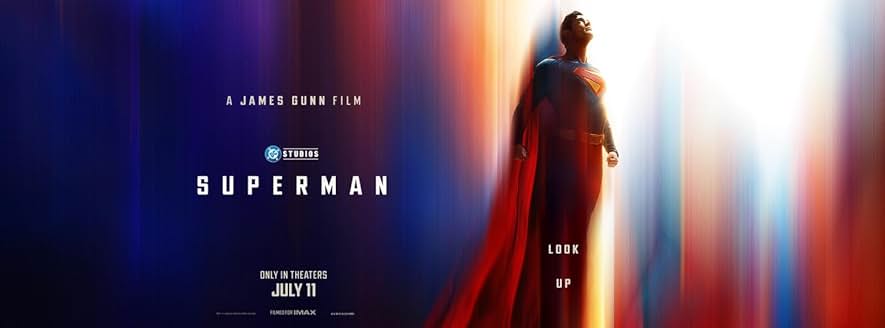
The Man Of Steel is easily one of the most iconic superheroes of all time, and one of the first superheroes created in comic book history. With double digit cinematic appearances and a legacy of actors portraying him across the big and small screen; providing a fresh take on Superman is becoming increasingly challenging, but that’s a challenge that James Gunn (The Suicide Squad) and David Corenswet (Hollywood) were ready to take on with Superman.

Intergalactic orphaned refugee Kal-El, better known as Clark Kent on Earth, has been proudly helping humanity for three years under the guise of Superman; making no secret about his alien origin, while working hard to keep his secret identity under wraps. When Lex Luthor (Nicholas Hoult, Warm Bodies) enacts a plan to destroy Superman for personal gain; everything that Kal-El has worked for is put in jeopardy and he is forced to reconcile his Kryptonian heritage with his human upbringing.
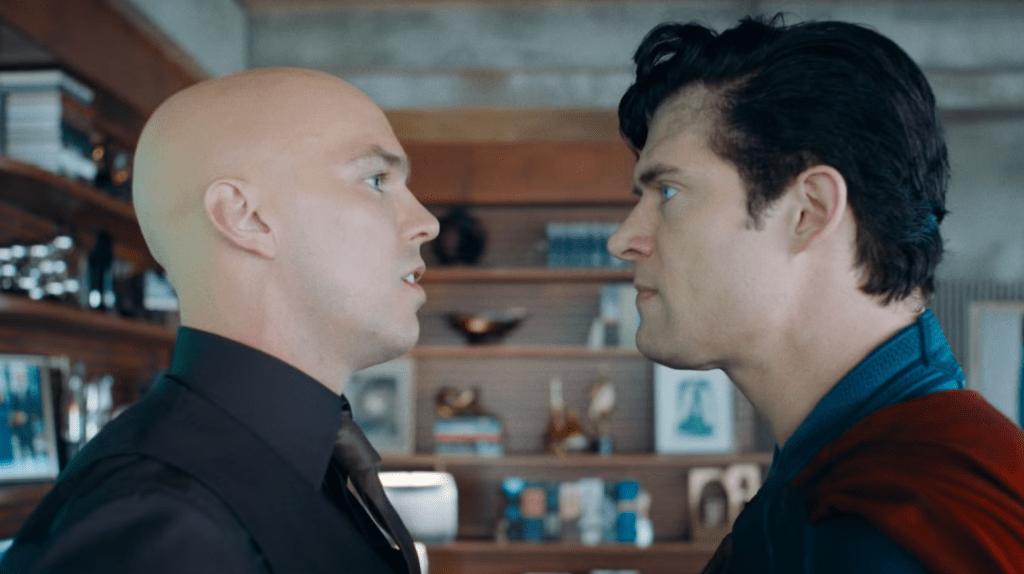
Lex Luthor (Nicholas Hoult) and Superman (David Corenswet) come face to face

Superman marks the true start of James Gunn’s reworking of the DC cinematic universe after taking the reins alongside Peter Safran, following the fallout from Warner Bros. Discovery’s quite public breakup with Zack Snyder. Much like Snyder before, Gunn aims to centre his revival around Superman, who is arguably DC’s central superhero character. Unlike Snyder, Gunn doesn’t look to imbue his take on Superman, and on DC comics, with gritty realism and moody angst – this Superman is bright, colourful and full of hope, a new take on a classic hero that stays true to the character while looking to forge out in new directions. This film does a great job of blending the new direction with the classic influences; be it nods to the original John Williams score in the new score by John Murphy and David Fleming, or a new Superman logo that invokes the Kingdom Come storyline from the comics in the mid-1990s. Gunn has already demonstrated in his career that is a fan of the source material, especially when it comes to comic books, and that passion comes through in the design of this film. Of course, comic book accuracy is by no means all that matters to a modern superhero movie; and Gunn is not afraid to step out from the source material and inject new lore into the story of Superman, most notably the creation of a brand new villain in The Hammer Of Boravia and a very different line-up for The Justice Gang. Gunn’s ability to balance these new elements against classic comic book references gives the narrative interesting directions to take and leaves questions to be answered, while still keeping the heart of DC’s long and rich history in place.

Heart is a good term to use for Superman; as this film has a lot of it. Bright, earnest and colourful; Gunn’s take on The Big Blue Boy Scout has that nickname firmly in mind, and he is lovingly brought to life by David Corenswet. It certainly doesn’t hurt that Corenswet is a tall, handsome and well-built guy; perfect physical traits for The Man of Steel – but there’s a boyish charm to him that helps him portray both Superman and Kal-El, especially in the rare moments that we get to see the intersection of those two personalities around those who know and understand his secret. This version of Superman acts on the instinct of Doing The Right Thing, and the central narrative hangs on a conflict that has been born out of his desire to save lives without accounting for the potential ramifications beyond that act in the moment. Corenswet does a great job of portraying this desire to do good without making Superman come off like an idiot; leaning into naivety over stupidity, and allowing his charm and charisma to shine through. This also helps give extra gravitas to the moments when he is displaying true anger; it’s all the more impactful when showcased alongside the calm and cheerful demeanour that we usually see on both Kal-El and Clark Kent.

Corenswet is supported in this film by a huge cast of supporting characters; some central to the Superman lore and others from wider in the DC universe. Rachel Brosnahan shines as Lois Lane, with plenty of opportunity to demonstrate Lane’s whipsmart journalistic instincts will also setting her up as a more prickly presence to contrast Corenswet’s lovable Kent; she’s just sarcastic and sardonic enough to provide the straight-man foil to Corenswet’s more clownish moments, but it carries through to the rest of the Daily Planet team too. Skyler Gisondo makes a lasting impression as Jimmy Olsen, pairing the character’s traditional boyish good looks and charm with a dogged determination for a good story that pays off halfway through the film. Plenty of other supporting characters get brief screentime, including Wendell Pearce as Perry White, Beck Bennet as Steve Lombardi and Mikaela Hoover as Cat Grant, though not as much of a chance to really flesh out their characters. It’ll be interesting to see if they’re more involved in future outings for the DCU after their introductions here, as we wait to see what shape the wider universe is going to take.
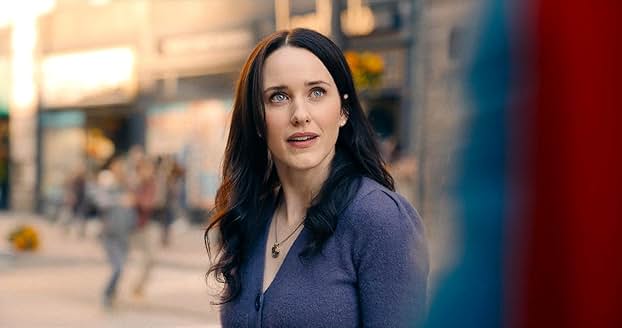
Rachel Brosnahan as Lois Lane in Superman

On the villainous side of things, Nicholas Hoult (Warm Bodies) really steps into his own as Lex Luthor, bringing another iconic character to the screen in a new light. You can tell he’s done his homework on Lex, and there are elements of legacy performances strewn within his take on him. This Lex is the perfect intersection between genius and unhinged, clearly driven by both greed and jealousy, which becomes more apparent as the narrative continues. He’s supported primarily Maria Gabriela De Faria (The Exorcism Of God) as The Engineer, a surprising character to include given her comicbook history as the leader of a superhero team (another example of Gunn trying new things), but one who has been cleverly reworked and fits in perfectly within Luthor’s organisation. De Faria does a great job of bringing this complex character to the screen for her film introduction, and I get the feeling we’ll be seeing more of her as the DCU progresses, as it seems like there’s a lot more to learn about The Engineer than we saw from this first outing.

The support goes beyond just the primary villains and the Daily Planet staff, as Gunn also takes this opportunity to introduce other DC stalwarts in the shape of the Green Lantern, Guy Gardener (Nathan Fillion, Firefly); Mr. Terrific (Edi Gathegi, Princess Of The Row) and Hawkgirl (Isabela Merced, The Last of Us) as the founding members of The Justice Gang. All three characters get to provide both comic relief and superheroic assistance at various points in Superman, and Gunn makes a great decision by including them without spending time digging into their specific origins – their abilities are demonstrated on screen, their personalities are fully established and they’re ready to be featured in future projects, helping to tie the wider universe together as it gets its feet under itself. Gunn pulls off this inclusion at the risk of making a film that feels too stuffed with characters and narrative; and I say this without having mentioned the likes of the Superman robots (voiced by Alan Tudyk, Michael Rooker and Pom Klementieff), Luthor’s selfie-obsessed girlfriend Eve Tessmacher (Sara Sampaio, At Midnight) or Metamorpho (Anthony Carrigan, Barry), who all also play key roles throughout the narrative and play them well. Gunn gets away with this giant cast by virtue of the fact that even the more branching parts of the central narrative end up wrapping themselves together as we learn more about Luthor’s plot to kill Superman, and everyone ends up working towards the same underlying goal. It’s a big risk but it has a solid payoff, both for the flow of this film and for the establishment of the wider universe; especially as we start to see these characters show up in other places. Gathegi in particular benefits from one of the most unexpectedly delightful sequences of the film, as he single-handedly takes down one of Luthor’s outposts to the cheerful sounds of Noah And The Whale’s Five Years Time; a song that I would never have thought of as the soundtrack to an action sequence, but that’s because I’m not James Gunn, who has more than proven his proclivity for pairing music to action over the years.
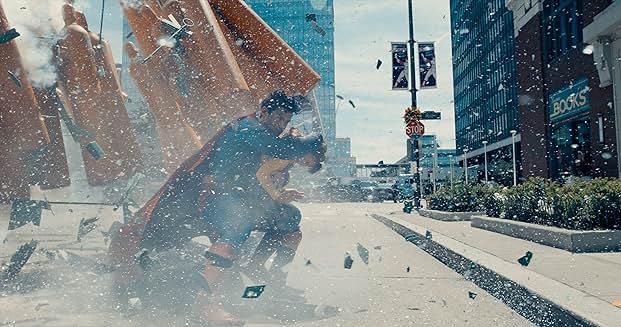
Superman is used to saving people; but will this Kryptonian save DC’s movie universe?

Superman stands out to me as both a reset point for DC’s cinematic adventures, and as a promise for a new tone for superhero adventures going forward. It’s bright and colourful without sacrificing drama, it’s earnest without being cringey, and it’s funny when it needs to be without distracting from the tone of the moment. James Gunn didn’t need to further prove that he understands his way around a comic book movie, but he did it anyway; and his take on Superman as a character brings the Man Of Tomorrow back towards being the symbol of hope that he has shone brightly as for almost his entire existence, centred around an actor who brings true warmth and heart to the role. For those of you who missed Superman in theatres due to superhero fatigue, or because you lost faith in DC’s cinematic output; I would heartily recommend you give this one a go, because I think that James Gunn’s Superman may well be my favourite interpretation of this character; and I am genuinely excited to see where they take him next.

Oh – and Krypto is a very good boy.

A very good boy.
The Drama

If asked, I think most people would say that they try to avoid “the drama” in social situations. For Kristoffer Borgli, writer and director of The Drama, I have the distinct feeling that the opposite may be true. The Drama follows Emma (Zendaya, Challengers) and Charlie (Robert Pattinson, The Batman) as they make joyful preparations for their wedding; but the unexpected revelation of a secret from the past shifts the dynamic of the relationship in ways that threaten the foundation of their upcoming life together.

The Drama is the first of Borgli’s films that I have seen, though I feel that’s in spite of myself; I missed Dream Scenario in theatres by a hair, and Sick Of Myself is exclusively on MUBI in Canada, which I don’t have access to. I’ve had numerous people tell me that both of these films are right up my alley, so I knew I couldn’t miss The Drama in theatres. What I got was exactly what I expected in the form of a romantic black comedy with compelling, charismatic leads; and a whole lot of things I didn’t expect.

Charlie (Robert Pattinson) and Emma (Zendaya) are the couple at the centre of The Drama

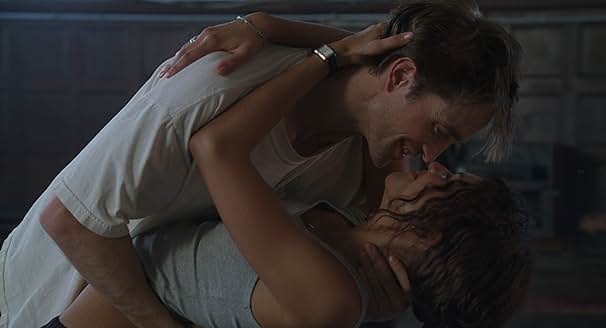
The Drama centres heavily on Charlie and Emma, and the chemistry between Pattinson and Zendaya is undeniable. The opening sequence, detailing their first meeting and the preparations for their wedding, is a clear demonstration of a young couple in love; but also maintains a sense of realism, with the couple disagreeing over the necessity of certain aspects of the wedding. It’s one of the most memorably effective opening sequences in a film of this kind that I can think of; taking the steps to establish a more complicated dynamic between the couple that allows for a proper look into who they are, both together and separately, before the dramatic plot moment that this film truly hinges on is revealed.

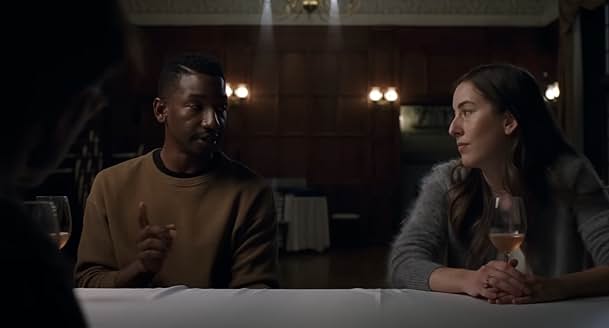
I won’t go into what that moment is, but importantly, Charlie and Emma are not alone for it. Best man Mike (Mamoudou Athie, Elemental) and Maid of Honour Rachel (Alana Haim, Licorice Pizza) are also present, and their knowledge of the secret is a true driving factor in the rest of the plot. Both of them play their roles well; Mike is a quiet, considered yet direct sounding board for Charlie and Athie is very convincing in that role, and Rachel reacts with a kind of rage that is a real catalyst for the immediate emotional responses of the whole group.

Mike (Mamoudou Athie) and Rachel (Alana Haim) at a wedding tasting in The Drama

What follows is a darkly funny and often awkward spiral from Charlie and Emma as they both deal with the ramifications of this secret, all while still preparing for a wedding which is less than a week away. Borgli does a great job of pacing the story; showing us both Charlie and Emma apart and together, interacting with other characters that both highlight the growing space between them and the desire to hold everything together. Their issues spill over into other aspects of their lives, including the professional relationship between Emma and Rachel. Weaving other characters into the story as a tool to both demonstrate the mental anguish of the central couple, and also as a way to exacerbate it, is an impressive and effective tool to advance the narrative in a realistic and naturalistic way for such a human story. Zendaya and Pattinson do really great work throughout this whole film; with both balancing their attempts to hold things together in public with their more vulnerable moments both alone and together as the week goes on and their emotional states become more complicated.

The narrative really is key to the impact of this film, and while I generally avoid plot discussions in my reviews; it’s especially important here to keep things under wraps as much as possible for those of you who want to see it. You can take that as my recommendation; this is a great piece of cinema, with a truly unique and compelling narrative and a brilliant cast working with a fantastic script. It’s worth seeing before someone or something spoils that major plot moment; and I know for a fact that I’ll be redoubling my efforts to see the rest of Borgli’s work off the back of this film.

Project Hail Mary

“I’m not heroic in any way.”

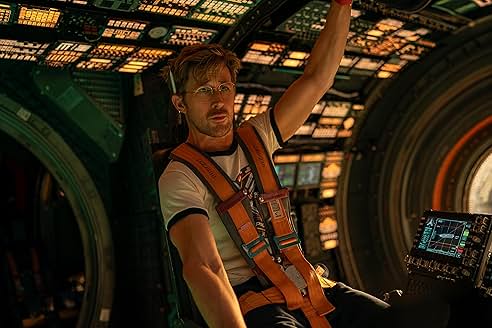
Project Hail Mary, adapted from the novel by Andy Weir (The Martian), follows Ryland Grace (Ryan Gosling, The Fall Guy), who wakes up from an induced coma alone on a spaceship, with no memory of who he is or how he got there. As he works to figure out his mission and regain his memories, he makes an unexpected discovery that will change the course of history in the shape of Rocky (James Ortiz, The Woodsman), an alien life-form whose own mission mirrors that of Ryland Grace.

Ryan Gosling travels to parts unknown as Ryland Grace in Project Hail Mary

I came into Project Hail Mary knowing only three things; it was adapted from a novel by the author of The Martian, it stars Ryan Gosling, and it has an alien rock creature. I didn’t really need to know any more than that to get me into the cinema, but I did wonder what the hook or the twist was going to be, given that Rocky’s existence was given away in the trailer. That was a little short-sighted of me, because having seen it, I now understand that the most important thing for this film was simply to get people into the cinema to see it at all, and that the story would do the rest of the work.

The sun is dying, as is every other star within reasonable study distance, and humanity’s best minds can’t figure out why; but they know that one star hasn’t been affected and a huge multinational effort to find out why is underway. Grace’s experience as a molecular biologist proves to be essential to the effort, and lands him on board the spaceship headed to Tau Ceti to investigate why it hasn’t been affected. He wakes up alone, with no other crew to help him, and as he is trying to figure out what he has to do and how he’s going to do it; a huge alien spaceship pulls up alongside and attempts to make contact, resulting in Grace meeting Rocky; a sentient, alien rock that seems to be half Muppet, half Pokemon, and becomes an essential partner for Grace’s effort.

Project Hail Mary is very much an opportunity for Ryan Gosling to show off his skills; as for the majority of the film, aside from flashbacks to mission preparation, he is alone other than Rocky. This is not so dissimilar from Matt Damon’s position in The Martian, and sci-fi fans coming to Project Hail Mary as a result of their enjoyment of that film are not going to be disappointed. Gosling’s ineffable charm is on full display, but he also pounces on the chance to show his full range and does it very well, deftly maneuvering between comedy, tragedy, action and more; all while primarily acting to himself or to a puppet of a rock. That rock puppet is very important though, as Rocky provides an excellent foil for Grace, with Gosling and Ortiz deftly trading the roles of straight man and wise guy as the scenes require. I learned after watching that Ortiz and Gosling had developed so much chemistry together while Ortiz was puppeteering that he secured himself the role of Rocky’s actual voice during filming, which is a testament to the personality he developed within the character opposite Gosling, and I sincerely struggle to imagine any other voice within that role.

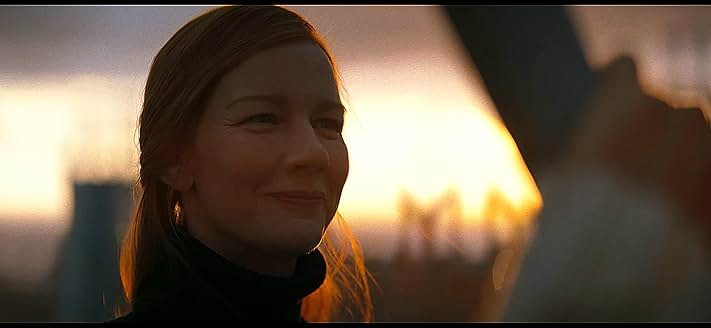
Sandra Hüller makes her presence felt in Project Hail Mary

There are supporting human roles through the flashback sequences, the stand-out being Sandra Hüller (Anatomy Of A Fall) as Eva Stratt, the person in charge of the research mission. Hüller and Gosling also have excellent chemistry, with her straight-laced, no nonsense personality occasionally giving way to some softness as Stratt and Grace grow closer during the research effort. Lionel Boyce (The Bear) also makes his presence felt as Carl, a security agent assigned to Grace during his research on Earth. It’s a small role but he makes the most of it, and his natural charisma and comedic timing play well in the screen time he’s given.

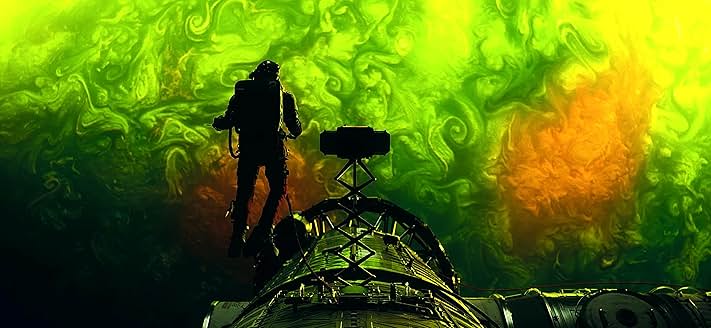
Given that it’s a modern science fiction film set in space, Project Hail Mary relies on CGI for its outer space scenes, and does so very well; however, I was astonished to learn that directors Phil Lord and Christopher Miller (Spider-Man: Into The Spiderverse) made heavy use of practical effects for this film, including constructing a full set of the inside of the Hail Mary for Gosling to maneuver around. I had guessed that some of the sets were physical but hadn’t realised they built the whole ship, and this dedication to creating such a detailed, practical environment clearly elevated the production. Similarly, Rocky was brought to life through a combination of the previously-mentioned puppeteering, animatronics and digital enhancements; having a clearly-defined physical presence clearly helped with Gosling’s performance and brings a vital realism to Rocky’s presence on screen. Lord and Miller’s dedication to utilising practical effects is a demonstration of their range as directors, given their previous career high-point is an Academy Award for a purely animated film in Spider-Man: Into The Spiderverse.

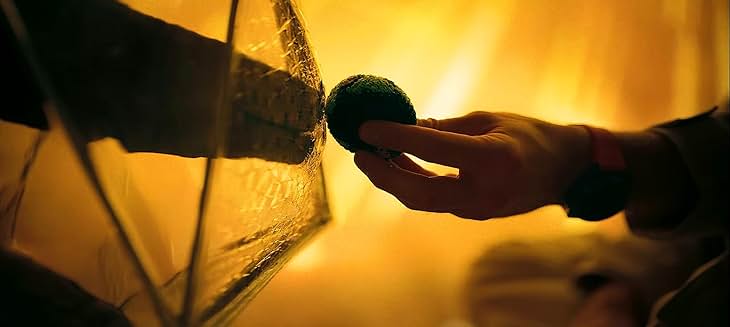
Rocky & Grace’s relationship is central to the narrative of Project Hail Mary

All of this is to say that Project Hail Mary is an exceptional piece of cinema. Andy Weir’s novel translates brilliantly to screen. Lord and Miller’s dedication to a believable, tactile environment for Gosling to work in, alongside the work of Ortiz and the puppetry team on Rocky, come together for one of the most enjoyable cinematic experiences I’ve had in a long time. There’s one element of Project Hail Mary that I haven’t really touched on, however, and I think it’s the vein that runs through the whole piece and brings it all together; and that is hope. This film is unashamedly about hope; about navigating the unknown, about searching for the truth, and about doing the right thing. It’s a refreshing theme for modern science fiction, and feeling the hope running through the narrative is a refreshing lift.


At the time of publication, there’s still time to watch Project Hail Mary on the biggest screen you can find with the biggest bucket of popcorn you can buy, and I heartily recommend that you do that. You’ll regret it if you watch this one for the first time on an airplane.

Sonic The Hedgehog 2

“Being a hero isn’t about taking care of yourself. It’s about taking responsibility for other people.”

I think it’s safe to say that people were pleasantly surprised at the beginning of 2020 when Sonic The Hedgehog, the first attempt at bringing the blue blur to the big screen, turned out to be pretty fun. It may not have been the “best” film released in the year 2020, but given what happened in the weeks immediately following its release, it ended up being the year’s highest grossing film. The announcement of a sequel set the internet on fire, particularly with the reveal that not only would Miles “Tails” Prower be featured, and voiced by long-time Tails voice actor Colleen O’Shaughnessey; but that it would also feature the debut of Sonic’s O.G. frenemy Knuckles… voiced by Idris Elba.

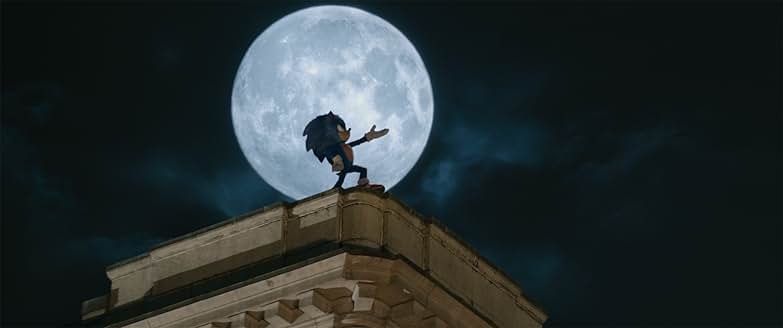
Sonic The Hedgehog (Ben Schwartz) aims to play the hero in Sonic The Hedgehog 2

Sonic The Hedgehog 2 returns us to the small town of Green Hills, Montana, where Sonic (Ben Schwartz) is trying to figure out his place in the world. Desperate to use his abilities to help people, he struggles to balance that with his need to stay hidden from the wider world; but when an old enemy makes a surprising return with a powerful new ally on a quest for power, staying hidden is no longer a priority for Sonic.

The good news about Sonic The Hedgehog 2 is that, if you enjoyed the first movie, then this is more of what made that movie fun with some of the rougher edges shaved off. Ben Schwartz’s vocal performance in the first film was the stand-out factor that gave real life to the project; and he maintains that balance of earnest do-goodery and bratty irreverence in the sequel. Sonic is in a more comfortable place living with the Wachowskis as this film begins, though he is still trying to figure out where he fits in as part of the wider world; and Schwartz does great work in navigating the hero hedgehog through these trials and tribulations; through personal revelations and personal growth. The comedy is light and fun but doesn’t overshadow the darker, more serious and more action-filled moments, and Schwartz is clearly comfortable demonstrating the balance within Sonic’s personality on his second outing as the character.

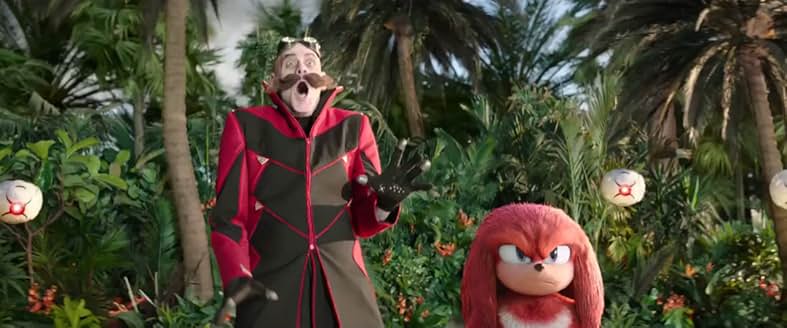
Schwartz is not alone in his stellar performance; Carey returns with the same chaotic energy he brought to the first entry, enhanced after Robotnik’s isolation on a distant planet. He once again manages to find the balance between goofy and threatening, reminiscent of his classic performances from films like The Mask and Ace Ventura: Pet Detective; bringing comic relief without it feeling cringey, and still maintaining his standing as the central villain amongst the laughs. Support from the returning Lee Madjoub (The 100) as Robotnik’s assistant Agent Stone is welcome, but they also have Knuckles to play straight-man to Robotnik’s chaotic energy as well; and Elba finds an excellent balance between the “noble warrior” and “meathead” characterisations that Knuckles has long found himself ping ponging between in recent depictions. In Sonic The Hedgehog 2, Knuckles is driven by his desire to fulfill the responsibilities of his people and return honour to his tribe by restoring the Master Emerald to its rightful place, but Elba weaves subtlety into the performance and helps demonstrate that Knuckles is also thoughtful and cunning beneath his strength and drive for honour. Elba’s announcement as the voice of Knuckles caught many people off guard, but he has more than proven that he was the right choice for the role in this initial outing.

Dr. Robotnik (Jim Carey) and Knuckles The Echidna (Idris Elba) team up in Sonic The Hedgehog 2

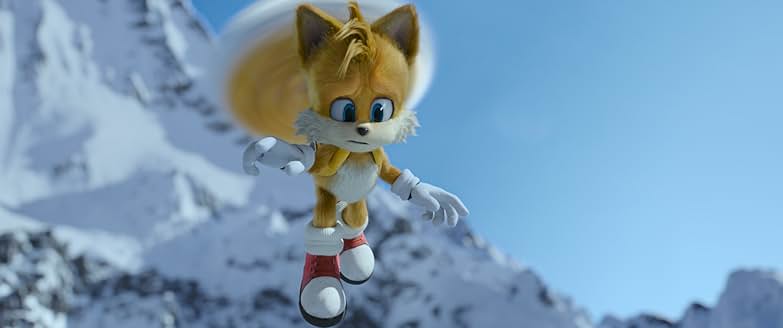
The other side of that coin is Colleen O’Shaunessey, who makes her film debut as Tails but is no stranger to the character, having voiced him in video games and TV shows since the Sonic Boom video games in 2014, and has been involved in Sonic properties since before then as the voice of Charmee Bee. Colleen’s performance represents a familiar grounding for the character and helps iron out some of the creases from Sonic The Hedgehog; as Tails is a much better buddy comedy/road trip/great adventure companion for Sonic than Tom Wazowski was. The relationship between the two characters seems much more natural, and they almost immediately fall into a brotherly dynamic that allows some of the clunkier exposition to feel more forgivable. They also benefit from both filling that “fish out of water” role in scenes where it’s required, where Tom’s position as the road trip buddy in Sonic 1 made Sonic’s differences feel much more aggressively stark – and while that was appropriate for the first entry, easing it off for the second helps keep the story flowing.

That is not to say that the supporting human performances are not unwelcome, despite their reduced presence. As mentioned previously, Marsden and Sumpter are deployed well as Sonic’s parental guardians, with Marsden and Schwartz effectively demonstrating a deeper father & son dynamic between Tom and Sonic that plays well, builds on the first entry and adds real heart to the film. Natasha Rothwell also returns as Maddie’s sister Rachel, and as with the first film in this series, she provides the same excellent standard of comic relief in this outing as she did in the first, and as I hoped for in my review of that first film, is given a bigger piece of scenery to chew here and does it to great effect, really making the most of her minutes on screen. Sadly, my hope that Tika Sumpter would get more to do was not realised, but it was only on a second watch that I was struck with that realisation as the film does manage to succeed in spite of that. However, her time on screen is better used here, as she joins Marsden in that parental role and helps to further build up the sense of family that the Wachowskis have generated with their adopted alien son and keep the heart of the film beating fast.

Earlier mention of the Master Emerald’s importance to the plot leads to Sonic 2’s secondary strength, which is a greater nod to aspects of the videogame series lore, both big and small. The Master Emerald has been at the centre of the Sonic game series since the third game way back in 1994, so its inclusion in this film makes a lot of sense. There are other nods, both large and small, which will catch the eyes of multiple generations as they watch this film; longtime Sonic fans of my generation will note the updated Robotnik drone designs reflecting the classic Badnik robots of the early series games, or the snowboarding scene aping the beginning of the Ice Cap Zone from Sonic 3; younger fans will clock Tails’ array of gadgets as a nod to his technical skill from later series entries, and the revelation that the human world has established a global military taskforce called G.U.N. (a name justifiably mocked in this film) is straight out of the Sonic Adventure series.

Miles “Tails” Prower (Colleen O’Shaugnessey) makes his debut in Sonic The Hedgehog 2

I have a lot of good things to say about Sonic The Hedgehog 2, but it certainly isn’t perfect. Earlier mention of clunky exposition is rare but still noticeable when it happens; and Sonic 2 makes the classic sequel mistake of unnecessarily retreading elements from the original, most notably the “alien discovered in a packed bar” scene. While the two scenes play out somewhat differently in each film, it’s still a return to a setting which worked in the first film but didn’t warrant a return in the second, and I found it jarring on both my first and most recent watch, which is unfortunate. This is a series that relies on CGI quite heavily, and for the most part that CGI is well executed; but it is at its worst when the central CGI characters are using their powers. We can thank modern superhero movies for the use of lightning effects to signify the use of super speed and other abilities, and when all 3 anthropomorphic characters have inner power they can access, filling the screen with lightning effects of different colours is a visual spectacle which I found quite distracting, especially during key fight scenes between Sonic and Knuckles. Hopefully as the series progresses, the animation designers will walk those effects back a little, as unless they’re being used to hide rough edges in the animation, I feel like they’re not entirely necessary and cleaner action scenes would play better. This is something I noted in my review of the original as well, so at the very least the usage is consistent; but I’m also consistent in my distaste of it.

Sonic The Hedgehog 2 takes the aspects of the original which really worked and builds on them successfully. This is a fun, exciting family film; with a great balance of action to comedy, of tension to cheese, and has an emotional core that keeps the action grounded and leaves space for the central characters to grow. In the best possible way, this film is more of the same, and there’s only room for the fun to keep growing as this series progresses. Had I finished this review in 2022 when I started it, I likely would’ve made a jokey comment about casting for Sonic 3 struggling to outdo the choice of Idris Elba as Knuckles – but we already know what happened there…


Watch this film, especially if you’re a lifelong Sonic fan, or if you have kids of an appropriate age – and then get ready to watch Sonic The Hedgehog 3, ‘cause that review is up soon!

Cyrano

“You must let her decide our fate. She must have the choice!”

In 1897, Edmund Rostand wrote a play named Cyrano De Bergerac; a fictionalised story of the real-life French 17th century writer and duelist of the same name.That play has gone on to be adapted to screen multiple times; the latest being Cyrano, a musical version itself adapted from a 2018 stage musical written by Erica Schmidt, with music written by members of The National. That stage version starred Peter Dinklage as Cyrano, adapting the original story of Cyrano De Bergerac’s “deformity” (most often characterised as a large nose) to instead play on Dinklage’s achondroplasia as the source of the character’s lack of self-confidence.

Guard captain and notorious intellectual Cyrano de Bergerac (Peter Dinklage) has a reputation for strong words and the ability to back them up, but he also has a secret; he is in love with his childhood friend, the esteemed (but broke) beauty Roxanne (Haley Bennett). An eventful night at the theatre sees Roxanne cross paths with Christian (Kelvin Harrison Jr), who has arrived in town to join Cyrano’s guard. When Roxanne professes it was love at first sight and makes Cyrano promise to ensure Christian writes to her; Christian and Cyrano begin to work together to woo her in a deception which cannot hope to last…

Roxanne (Haley Bennett) meets with Cyrano De Bergerac (Peter Dinklage) in Cyrano.

Cyrano is an interesting piece of cinema, as its construction is very much akin to most cinematic adaptations of the works of Shakespeare, in that it does not abandon the stage play that it has been born out of. Erica Schmidt herself adapted the play for screen, maintaining the basis of her piece and expanding the world into a cinematic landscape; and with Joe Wright on hand to direct, the feel of the film still holds itself as very theatrical. For me, this works to its credit; by keeping more theatrical beats and staging as central to the flow of the film, it almost elevates the romanticism on hand, as well as creating an atmosphere that allows the musical interludes and the larger choral scenes to fit more comfortably into the action. Wright’s history of highly-regarded literary adaptations and historical dramas mean that his direction of Cyrano very much plays to his strengths; he leans in heavily on the dramatic scenery (with the majority of the film being shot around the island of Sicily) to further elevate the theatricality of Cyrano; with a number of the specific scene locations themselves reflecting what one might expect the set to look like for the theatrical version. As an adaptation of a French play about a famous linguist, the scenario lends itself to a style of dialogue which is both more flowery and more intricate, with Cyrano in particular getting to grips with extensive similes and metaphors, and this style of dialogue falls right in line with Wright’s previous working bringing works by the likes of Jane Austen to life on screen. There’s something about the fact this story is played straight for the most part, but is elevated beyond that by its theatrical presentation; its sweeping musical score and numbers, impressive choral dance presentations and its dedication to desperate, passionate exploration of love that held it up high in my esteem. I’m sure not everyone will agree with me on that front, as some prefer their theatrical performances to remain on the stage, but the sense of movement, both physically and verbally, that leaning on the original theatrical performance brings makes Cyrano more playful at its core; and that allows for a stark contrast when the narrative takes Cyrano and Christian onto the battlefield, and the playfulness is stripped back to highlight the hardships which their regiment are enduring.

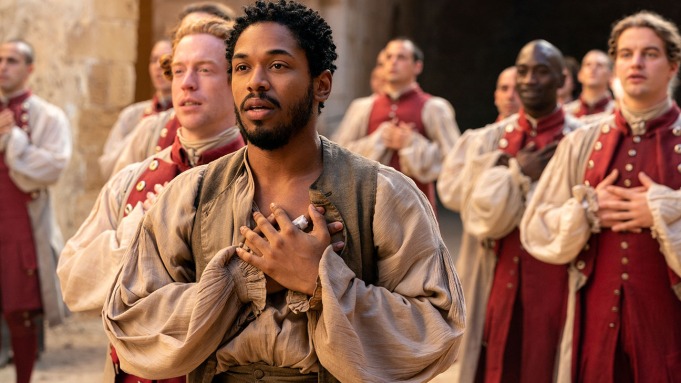
Christian (Kelvin Harrison Jr) is willing, but unable, to profess his love in Cyrano

Those sweeping musical numbers are of great importance to the success of this story. As previously mentioned, the score was written by The National, expanding out the music they had originally written for the stage version. For me, the most interesting thing about the music here is that, while Cyrano is absolutely a musical; the music does not feel or sound like what one would expect from “a musical”, and I think that works to its benefit. In a year where we have had some truly excellent traditional musicals hit the big screen, having a film where the music feels like it was written for the story, rather than being written around the story, makes it stand out. The songs still drive the narrative, but they fit into the whole picture in a different way than one might expect, and one which I am proving is quite hard to really explain.

The Nationals’ lead singer, Matt Berninger, sings at around the same pitch and timbre as Peter Dinklage, which makes the group perfect to write music for him. This is key to note; Dinklage and Bennett are primarily here because they were the stars of the original stage play; Schmidt wrote this version of Cyrano specifically for Dinklage to play, hence the hinging of Cyrano’s character hanging so much off his stature as opposed to a more shallow interpretation of supposed “ugliness”. The songs are well sung, and the depth and power of Dinklage’s singing voice is somewhat of a surprise; and it pairs beautifully with Bennett’s, accentuated further by the score’s focus on strings for the majority, accented and assisted by piano for the most part. Kelvin Harrison Jr. also sings well, with his higher-pitched voice marking him out with a more youthful naivety against Dinklage’s deeper vocals, and the three together weave a tapestry through song that helps drive the narrative forward in a way that is a real credit to The National’s work here. One other song deserves a highlight, though the main cast barely feature; Wherever I Fall, a song written from the viewpoint of soldiers at war, writing home to their loved ones; is such a beautifully crafted and moving piece of music that I am surprised that it didn’t get an Academy award nomination; though I am perhaps allowing the emotion I personally felt for that scene in the cinema, as someone who is ostensibly far from home (in one interpretation of the phrase) to influence that thought. It’s performed by Glen Hansard, Sam Amidon and Scott Folan, all of whom are actors and singers, and all of whom deserve plenty of plaudits for the power and emotion of their performances in this piece.

Our cast does more than sing, though, and Cyrano is an impressive advertisement for the advantages of casting Peter Dinklage as a leading man. Those familiar with Game Of Thrones will be familiar with Dinklage’s intellectual charisma through his portrayal of Tyrion Lannister; but Cyrano allows us to see more of his physical strengths, as he plays a character who is a skilled duelist, a regiment captain; crafting a deep and complex dichotomy around the hardened poet, the romantic soldier. It’s an incredible performance from a fantastically skilled actor, and it would be a joy to see this launch him into more leading roles. He is well matched by Bennett; who brings an ethereal beauty to Roxanne, while also presenting a very down-to-earth characterisation of a young woman with broad fantasies of what love should be. It’s another complex portrayal; a kind, good-hearted young woman with the capacity to feel great scorn and betrayal if things are not progressing exactly in the way she imagines them, and her characterisation goes some way into unearthing some of the more emotional subtext of the script, delving even beyond the huge, belting emotional musical numbers she gets to grips with.  Kelvin Harrison Jr. puts in a strong showing here too; bringing us a sense of youthful arrogance but also a lack of confidence all in one; his exuberance and excitement around his deceit with Cyrano and his hope of love with Roxanne coming across handsomely; his rage when he discovers that Cyrano has not been honest regarding his personal intentions striking through the portrayal with both a sense of emotional immaturity but a bravery that we hadn’t seen previously, and Harrison Jr. brings this out of Christian with great skill.

Duke De Guiche (Ben Mendelsohn) attempts to woo Roxanne in Cyrano.

Ben Mendehlson is on hand as our de facto villain in the form of Duke De Guiche; who is also attempting to woo Roxanne, though less successfully. While the story doesn’t need a traditional villain for its primary function, De Guiche works as an interesting narrative device at certain key moments, and Mendhelson is perfectly suited to the role and carries it off well; even delivering an impressively booming performance for his only song; an aggressive and passionate doctrine dedicated to the entitlement of the ruling classes. There a host of wonderful supporting performances; Bashir Salahuddin is beautifully playful as Cyrano’s closest friend Le Bret, Monica Dolan is fantastic as Roxanne’s attendant Marie, getting a number of stand-out jokes; and Joshua James puts in a great performance as De Guiche’s friend Valvert; a snide, arrogant worm of a man who finds himself at odds with Cyrano both physically and linguistically and struggles to spar with him in either regard.


Cyrano was not the film I expected it to be, and I mean that in the best possible way. With a stellar performance from Peter Dinklage (who is very much the star of this film and the main reason it is so enjoyable), brilliant work from Haley Bennet and Kelvin Harrison Jr. and a spate of great supporting roles; it is the structure of this piece, the faith it has in its theatrical origin, and the the tremendous score that really sets it apart as a dark horse in the awards field this year. See this film if you can, you won’t regret it; especially if you’ve ever loved someone so much you could feel it burning inside you.

Dave McGuckin is a theatre graduate, bar manager, former comedian and eternal film lover from Northern Ireland, now living in Canada. He began writing film reviews in 2016 for The Grade and then Great Central, both based in Leicester, England.

This site will collate these reviews, but also provides a platform for new reviews and essays on cinema, television, videogaming and (possibly) more

If you enjoy what you read, please consider sharing on social media, or leaving a small donation towards webhosting and content creation costs on Ko-Fi at http://www.ko-fi.com/davewritesreviews.

Check out the official social media links for Dave Writes Reviews below:

Belfast

“If they can’t understand ya, then they’re not listening. And that’s their problem.”

There’s something about an autobiographical drama film that tends to result in a more charged emotional connection to its audience. The depth of feeling and the memories which have been accessed to drive the narrative mean so much more to the director and the cast; and depending on who is watching, to the audience as well.

Belfast follows the story of Buddy (Jude Hill), a 9 year old second son of a Protestant family in Belfast, as he and his family attempt to navigate love and life against the backdrop of the growing violence within the city. Written and directed by Kenneth Branagh, heavily drawing on his own experiences as a child in Belfast in 1969, we see how life changes for those in Belfast as The Troubles begin.

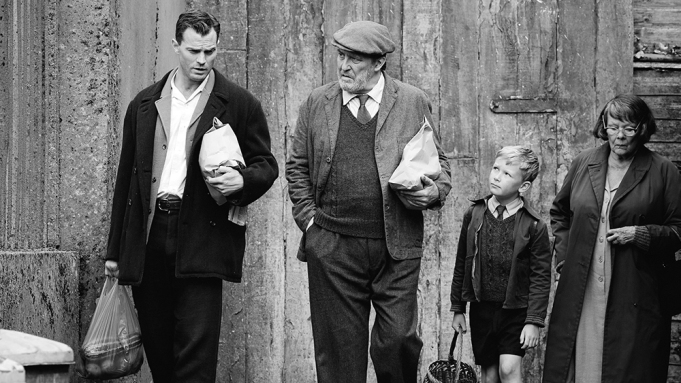
Jamie Dornan, Caitriona Balfe, Jude Hill and Will McAskie take a trip to the cinema in Kenneth Branagh’s Belfast.

While I’m a couple of decades younger than Kenneth Branagh, I found myself being quite personally taken by Belfast as a nostalgic piece of cinema. The perspective of an Irish childhood against a backdrop of violence was a more poignant setting than I had anticipated; and while Branagh (and as an extension Buddy) was 9 years old when The Troubles truly began; I was 9 years old when the Belfast Agreement was signed in 1997, essentially bringing the conflict to an end (in broad terms; though the impact of 30 years of conflict would continue in isolated pockets essentially in perpetuity). I note this now because, while I always intend to begin the review process from a position of impartiality; I am happy to tell you that I walked out of Toronto’s Fox Theatre after watching this film and burst into tears; tears fuelled not only by what was an excellent story in a wonderful film, but also due to a lightning bolt of personal nostalgia and an unexpectedly overwhelming wave of homesickness – an emotional response which is a testament to the emotional depth that Branagh has brought to Belfast, through everything from the script to the direction.

While it’s integral to the narrative as a whole, the conflict is not the central story thread of Belfast; this is a film about family life at its core. Buddy lives on a street where everybody knows his name; a street where his neighbours are more than just his friends, but also include his schoolmates, his cousins and extended family, and a tight community that looks out for each other every day. This is demonstrated in the opening few minutes of the film, before his world is flipped upside down by a Protestant/Loyalist mob, who swarm the street and target the houses occupied by Catholics for acts of violence and destruction. Herein lies one of the film’s only flaws, in that the conflict is expressly framed by the characters as being between Protestants and Catholics without any allusion to a more political divide as opposed to a religious one; and while it makes sense within the framing of the world from the point of view of a 9 year old boy, it perhaps would have been beneficial to the wider world, who may be less familiar with the complex sociopolitical landscape that was the true cause of the violence, but that assessment is coming from someone who has spent more time reading on the deeper background of the period and may be a little much to ask from such a deeply personal film. I feel it also important to note that Buddy’s family holds a neutral stance on the conflict, and that viewpoint is expressed repeatedly through the words and actions of all the characters central to Buddy’s family life; Branagh works hard to make it clear that his family did not contribute to the conflict on either side.

The powerful performances from the likes of Jamie Dornan, Ciaran Hinds and Judi Dench drive the deeply personal story of Belfast.

Jude Hill’s cinematic debut is an impressive one, and he is very convincing as Buddy. It’s a demanding piece for a young actor, as he is actively present in nearly every scene – given that he is our point of view character, he has to be nearby even for scenes he is not actively involved in, or else the audience couldn’t be present either. Impressive as his performance is, the rest of the cast playing his family put in a strong showing as well. Jamie Dornan is on hand as Pa, in a role which is possibly the most powerful cinematic performance of his career so far (and it’s a travesty that he hasn’t had more award nominations for this role); and he has excellent chemistry with Caitriona Balfe, who plays Ma. Ciaran Hinds gets a rare opportunity to act with his own accent as Buddy’s wise and mischievous grandfather Pops, and Dame Judi Dench is Granny; giving an emotional and driven performance, though her accent is just shy of convincing for those with a good ear for accents from the North – but I imagine most watchers won’t be able to tell for the most part. Lewis McAskie has a reduced role as Buddy’s brother Will, but still makes a strong showing when on screen; and Olive Tennant has a charming debut as Buddy’s young love interest Catherine, and shows potential to take after her parents in terms of acting ability.

There’s more to be said about the performances, but it’s hard to pinpoint the true highs without discussing the relevant scenes at length, which I want to avoid (as always). I will say that Dornan and Balfe do great work in portraying the parents in a family who are struggling with more than just the difficulties caused by the growing violence; with strains being placed on their relationship due to Pa’s work situation and financial difficulties stretching into the history of their relationship. Dornan’s performance is one of strength and compassion; an embattled man who wants to find the best possible life for his family, even if the cost includes leaving his home. Balfe’s performance is similar, but with room for a level of frustration reserved only for a wife and mother who is, due to the exceptional circumstances of her family unit, essentially working to raise two children on her own for the majority of the time.

Branagh blends historical context with cinematic language beautifully when create set-piece scenes in Belfast.

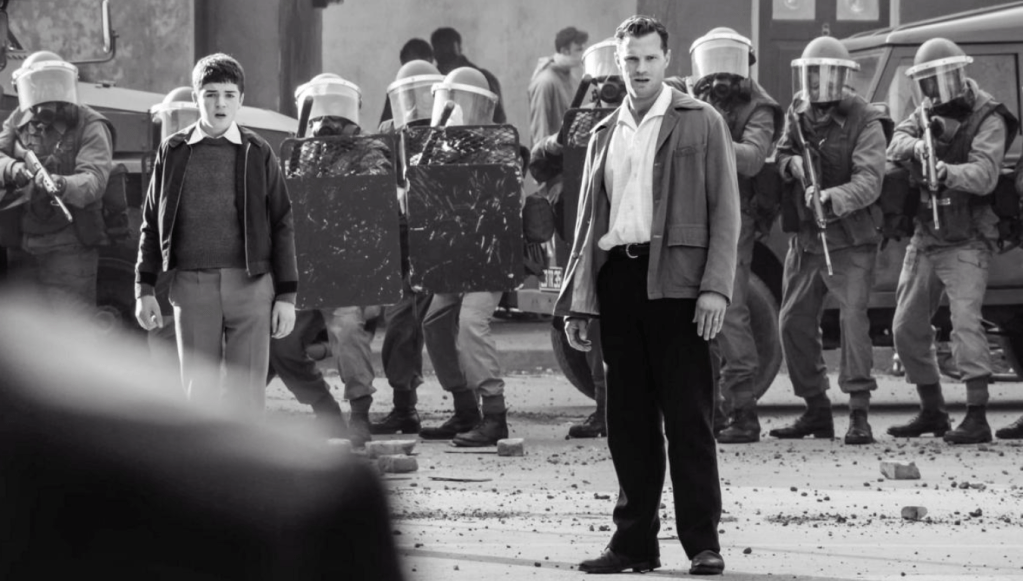
The true heart of Belfast lies within its story and its direction, all of which falls firmly on the shoulders of Branagh. This film is not just a memory of a childhood past, but it’s a love letter to the experiences of a child living in conflict; with games of football, trips to the park, the cinema and the theatre; all lovingly brought to life and tremendously staged, with the cinema and theatre trips in particular standing apart in full colour, contrasting with the black and white of the film’s personal action. I’ve seen Belfast referred to as a “Coming Of Age” film, but I can’t find myself agreeing with that. Coming of age cinema suggests to me the transition from childhood to adulthood; a film centred around teenagers figuring out their place in the world, and I would say that Belfast is the opposite of that. Branagh introduces Buddy to us as a child who knows and understands his place in the world; though his world is small and mostly contained to his street and his school; and by the end, Buddy is still a child who now realises that he doesn’t know where he fits in, as the conflict and the changes to his family-life pull him out of the place he knew so well and launch him into the unknown. All of this is supplemented by the fact this film is semi-autobiographical, and that Buddy’s story is not written from an independent viewpoint; Branagh is a biased author, and we see that reflected in the way certain scenarios are played out, often reflecting staging and tropes that connect to pieces of popular culture that we see Buddy himself enjoying. The climactic moment at the end of the third act, for example, is effectively staged like a high noon showdown in a spaghetti western, similar to one we see Buddy watching much earlier on in the film, but with the added historical context of sectarian violence and swarms of riot police; and it’s little touches like that which allow Branagh to not only reflect his deep love of cinema, but also to pay tribute to his own family for their actions during his life, as played out on screen.


Belfast is a triumph, a powerful drama about the struggles of family life with an unconventional backdrop of historical conflict which sets it apart from many films that would be comparable in style. Featuring some impressive debuts in central roles, and some powerful performances from more familiar, established actors; Branagh has clearly poured a lot of heart and soul into this piece. If you’re a member of the diaspora of the North then this is essential viewing; for everyone else, this is certainly one to watch, and deserves to be seen in the cinema if it’s safe and possible. Expect more awards.

Dave McGuckin is a theatre graduate, bar manager, former comedian and eternal film lover from Northern Ireland, now living in Canada. He began writing film reviews in 2016 for The Grade and then Great Central, both based in Leicester, England.

This site will collate these reviews, but also provides a platform for new reviews and essays on cinema, television, videogaming and (possibly) more

If you enjoy what you read, please consider sharing on social media, or leaving a small donation towards webhosting and content creation costs on Ko-Fi at http://www.ko-fi.com/davewritesreviews.

Check out the official social media links for Dave Writes Reviews below:

Marry Me

“If you sit in the question, the answer will find you.”

When a movie tells you that it’s been adapted from a graphic novel, most people would think of superheroes or monsters as being at the centre of the story; not the romantic trials of a pop megastar; but with Marry Me, adapted from a graphic novel of the same name by Bobby Crosby, that is exactly what we get; a new romcom starring J-Lo and Owen Wilson.

Pop megastar Kat Valdez (Jennifer Lopez) is due to marry her fiancé Bastian (Maluma) on stage at the end of the promotional tour for their joint track Marry Me. As she’s about to go on stage for the ceremony, she finds out Bastian was caught on camera cheating on her. She stops the show, sees local maths teacher and single father Charlie (Owen Wilson) in the crowd with a Marry Me sign, and brings him on stage to marry him, leaving his daughter Lou (Chloe Coleman) and friend Parker (Sarah Silverman) in the crowd. The act results in a media frenzy; but will Kat and Charlie forge an actual relationship  as a result?

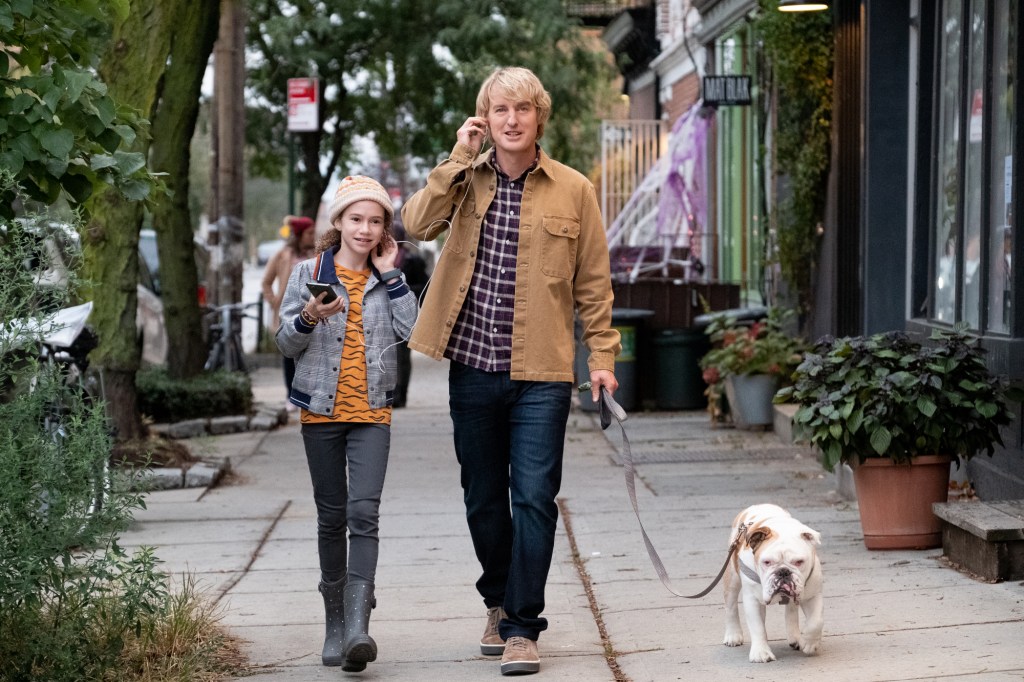
Parker (Sarah Silverman), Lou (Chloe Coleman) and Charlie (Owen WIlson) in the crowd for Marry Me

Let’s make one thing clear from the off; Marry Me is an absolutely ludicrous concept for a film, combining two different fish out of water stories with a surprisingly traditional romantic comedy. Both Kat and Charlie find themselves having to adapt to the life of the other; trying to blend their own existence with the existence of the person they have unexpectedly just found themselves marrying. Luckily, they do cover in the narrative that marrying someone you’ve just met without a proper licence is, technically, illegal; but it’s a minor point that is blown past quickly to focus on the characters themselves. Kat and Charlie are both engaging enough; Owen Wilson brings his usual laid-back attitude to Charlie with just a hint of neurosis; a kind and passionate man who wants nothing more than to have a quiet life with his daughter Lou and his ageing bulldog Tank (who is the real star of this film). Kat is the opposite; and Lopez does a great job of giving us a glimpse behind the curtain of what it takes to be a pop megastar in today’s society, with endorsement deals, constant content capture for social media, and the pressure to always appear perfect. Their lives don’t blend, but the course of the narrative is driven by them adapting to each other’s lives, with Kat turning up at Charlie’s school to meet the kids in his Mathalon club, and Charlie walking the red carpet alongside Kat for high-profile events. Wilson and Lopez don’t really feel like they have a huge amount of chemistry with each other for a lot of the film, but it may be that they’re doing a really good job of portraying the discomfort their characters have in their situation; though it’s possible I’m being generous here.

Kat Valdez (Jennifer Lopez) prepares for the wedding show of the century in Marry Me.

Luckily, they do have plenty of chemistry with the rest of the supporting cast; Charlie and Lou’s relationship feels incredibly realistic, as does the relationship Kat has with her manager Colin, played by John Bradley in a wonderfully subdued and empathetic performance. He’s mirrored by Kat’s high-strung assistant Melissa, played by an incredibly well-cast Michelle Buteau; whose quick delivery and natural sarcasm does wonders for her in this role. Maluma is great as Bastian, oozing sleazy charm pretty much any time he’s on screen, put also taking moments to display a more authentic emotion for Kat, even if he is still obviously  a slimeball. The stand-out member of the supporting cast is Sarah Silverman as Parker; the school’s guidance counsellor and one of Charlie’s only visible friends (aside from the music teacher, Mr. Pitts, played by Stephen Wallem in a charming turn) – Silverman is tragically underused here, and she steals practically every scene she’s in, both comedically and narratively, as Parker is essentially responsible for every positive key moment in the narrative, despite not receiving any of the credit for it from any of the other characters. The kids in Charlie’s Mathalon team also put in some good performances, with each kid getting at least one good moment, be it a good joke or a narratively relevant question or line, and none of their performances feel forced in any way.

A lot of the cinematography and settings are constructed to compliment the central themes of the narrative; with the lighting and feel of the scenes set around Charlie’s life being warm and inviting, but a lot of the atmosphere in scenes set in Kat’s life being quite cold and manufactured. As Charlie and Kat grow closer this changes; one scene that came to mind, when Lou visit’s Kat’s apartment for the first time, sees a drastic lighting shift to a warm, yellow glow for the first time, signifying a more equal partnership between Kat and Charlie. Soundtracking wise, John Debney provides an effective, if slightly stereotypical romantic comedy score; but the stand-out tracks are unsurprisingly the songs written for the film and performed by Jennifer Lopez and Maluma; Church is a bop; Marry Me itself is a cracker, and On My Way is a truly heartfelt ballad; all of which could end up doing well in the actual charts.

The supporting cast provide a lot of the heart of Marry Me, especially Romeo as Tank the Bulldog.

One of the things I enjoyed most about Marry Me is actually separate from the narrative, and it relates to the casting decisions – everyone is actually age appropriate for each other, with the exception of Maluma. Owen Wilson, Jennifer Lopez and Sarah Silverman are all in their early 50’s, where Maluma’s in his late 20’s. It’s pretty refreshing to see a film where the romantic leads are actually almost the same age; where the female best friend of the central male character is almost the same age; where the female lead is dating a guy who is a couple of decades her junior. While there’s nothing wrong with someone having friends who is younger than they are, it is such a notable event for a Hollywood movie to have a couple who are close together in age, and that age is in their 50’s that I wanted to make a note of it; because it would’ve been so easy to look at a younger singer/actress to play Kat Valdez, but that’s not what happened, and the film is better for it.


Marry Me is not going to win any awards. I actually would struggle to say that this is a good movie in terms of narrative quality or potential impact on cinema; but I went to see it with my fiancé, and I had a really nice time seeing it. It’s a very silly story portrayed quite convincingly by experienced leads, a great supporting cast and it has a lot of charm and fun at its core. You could do worse than see this film.

Dave McGuckin is a theatre graduate, bar manager, former comedian and eternal film lover from Northern Ireland, now living in Canada. He began writing film reviews in 2016 for The Grade and then Great Central, both based in Leicester, England.

This site will collate these reviews, but also provides a platform for new reviews and essays on cinema, television, videogaming and (possibly) more

If you enjoy what you read, please consider sharing on social media, or leaving a small donation towards webhosting and content creation costs on Ko-Fi at http://www.ko-fi.com/davewritesreviews.

Check out the official social media links for Dave Writes Reviews below:

The Power Of The Dog

“For what kind of man would I be if I did not help my mother? If I did not save her?”

When is a western not a western? When we talk about westerns in cinema, something very clear comes to mind for most. It could be the sound of jangling spurs ringing out as a mysterious stranger walks into the crowded saloon of a small frontier town; or perhaps the sight of two figures, face to face in a dusty street, hands by their pistols. The Power Of The Dog has none of those iconic moments; but what it does have is something compelling in a much different way.

In 1925 Montana, ranch-owning brothers Phil and George Burbank (Benedict Cumberbatch and Jesse Plemons) meet Rose Gordon (Kirsten Dunst) and her son Peter (Kodi Smit-McPhee) while staying at Gordon’s inn during a cattle drive. George finds himself to be taken by Gordon; whereas Phil’s abrasive nature sees him openly mocking Peter in front of his employees and mother. When George and Rose begin a relationship, the merging of the two families leads both to abusive mind games and to unlikely connections…

Benedict Cumberbatch puts in a career-defining performance as Phil Burbank in Netflix’s The Power Of The Dog.

Jane Campion’s back catalogue is relatively short, but impactful, and The Power Of The Dog joins that catalogue with much gusto and passion. Adapted by Campion from the novel of the same name by the late Thomas Savage, this film is a psychological drama which uses the desolate and lonely landscape of rural Montana to frame an intense and emotional narrative with beautiful, sweeping shots of dusty plains, balanced by tight and colourful shots of a flowing river, accented by the lavish interior of the Burbank’s ranch house. The cinematography is important to discuss early on because this film is beautiful beyond belief, and the work put in by Campion and her D.P. Ari Wegner to frame the narrative effectively is incredible. There are numerous moments where each of the central cast take a moment to observe the landscape ahead of them, in a variety of different locales; and the focus on what surrounds them (which is quite often hills of hot dirt) provides an element of claustrophobia in the narrative; the sense that despite being the presence of such a rolling, open space around them; these characters are trapped in their own lives; and that notion is important before discussing the characters themselves. It’s a feeling that is further punctuated by the soundtrack, written by Jonny Greenwood; a soundtrack that often finds itself relying on individual instruments; soft and welcoming piano or guitar, quick, tense violin; playful, yet threatening banjo. The undercurrent of emotion in each scene is electrified (ironically) by these acoustic performances; leaning on era-appropriate instruments to accentuate the tone of each sequence.

All of this works to elevate the performances, and Campion has truly brought out the best in her cast in The Power Of The Dog. Benedict Cumberbatch in particular brings everything he has to Phil Burbank; an aggressive, frightening, vicious man with a troubled past that informs his behaviour in the present. The reasons for his aggressive behaviour are slowly revealed during the course of the narrative, but not in a way which moves to excuse them; his instant dislike for Rose and Peter Gordon is never excused or justified, which is to the film’s credit. There’s a sneering arrogance to Phil which Cumberbatch portrays brilliantly; one scene, where Rose practises playing the piano and Phil mocks her by outplaying the same song on his banjo, is the perfect summation of the effortless cruelty which he shows her; quietly and effectively chipping away at her self-esteem in an attempt to drive her out of his home, despite his brother’s love for her. The conflict and rage within himself drives his encounters with others, and his villainy manifests not in booming shows of violence as per his previous antagonistic roles; but rather he is like a rattlesnake, tightly coiled and ready to strike, his pointed jibes at his fellow cast like the rattle that signifies a much darker, deeper danger lurking within; embroiled in a crisis of masculinity with which he cannot seem to come to terms; spending most of the film covered in filth, a physical manifestation of the rot that has set deep in his core; only appearing jovial when demonstrating his masculinity to the ranch hands, most often at the expense of his brother, or of the Gordons.

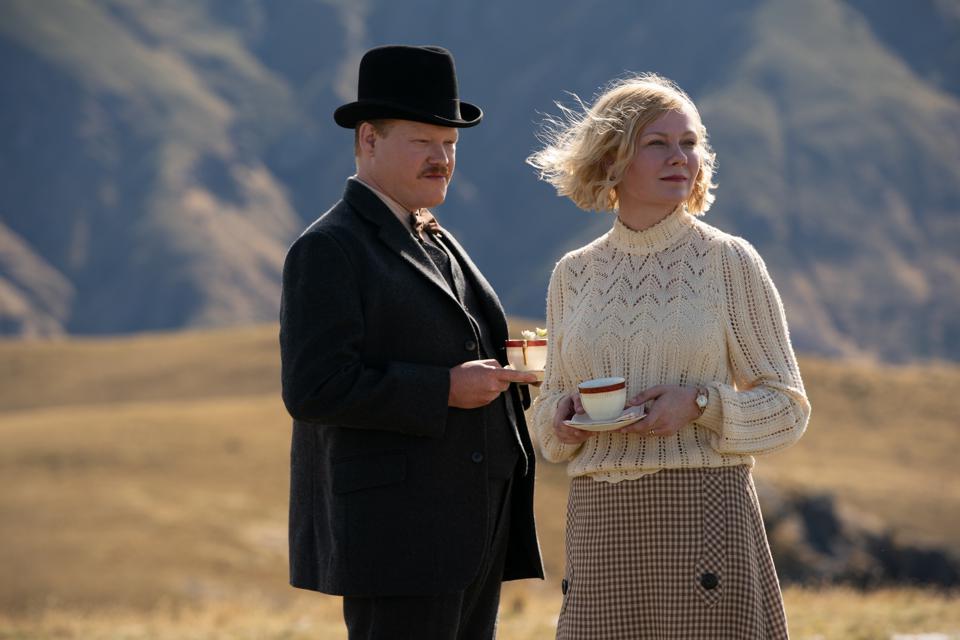
Jesse Plemons and Kirsten Dunst shine as George Burbank and Rose Gordon in Netflix’s The Power Of The Dog.

Standing apart from this cruelty and barbarism is his brother, George, who operates on the counter to his kin. Plemons brings a quiet dignity to George, portrays a man who is driven more by compassion, but also by appearance. Where Phil is characterised by his filth-covered denim shirts and leather chaps; George is more akin to a three-piece suit and bow tie; a more refined presentation for a man who wishes to be more than just a ranch owner. It is the tenderness within him that leads him to Rose; who responds in kind in a fashion which leads to romance. Plemons strength lies in the silences between the words; the demonstration of the difference in George’s emotional response to his love and to his brother; his desire to see Rose reach what he sees as her full potential, versus the fear he has that his brother will intercede in a way which ruins everything. However, his tenderness and kindness is not pure; and while he acts with the best of intentions, he displays his own variant of toxic masculinity with his wife, driving her towards certain pastimes that she does not want to engage with, because he believes that it would be proper of her in a way that would help their standing in society. Unlike Phil, he does not know that his behaviour is negative; and it is in Rose’s responses, beautifully portrayed by Dunst, that we really feel the effects of his drive.

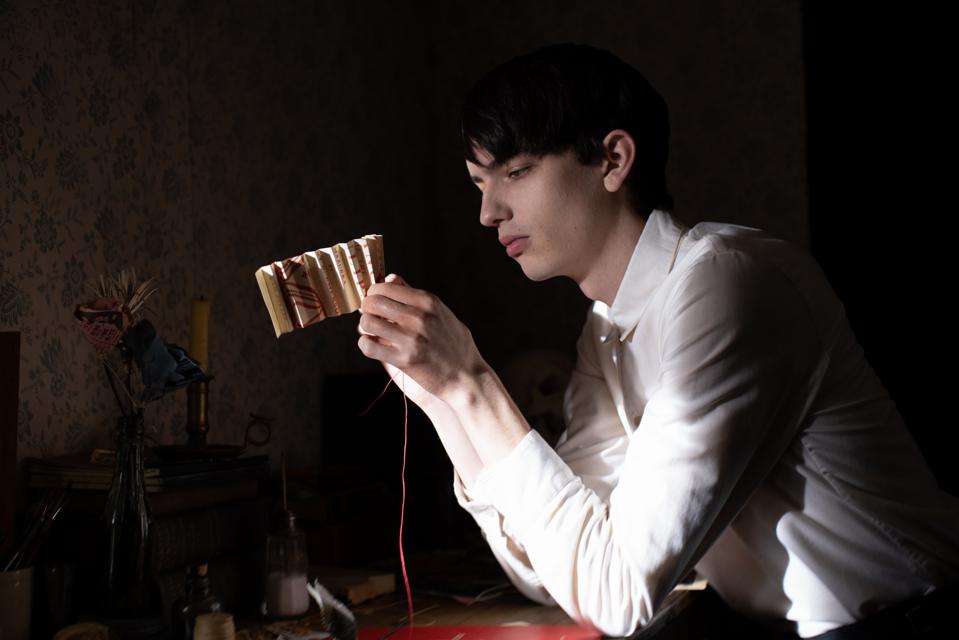
Dunst herself is a delight in The Power Of The Dog, bringing a performance that moves on so many levels, portraying a woman slowly being broken down by the two men who are closest two her; one intentionally and one by accident. Rose’s coping mechanisms are not at all healthy, and her descent from over-worked yet kindly inn owner to a woman on the verge of a breakdown is devastating to which, heightened by the strength of her performance.  Kodi Smit-McPhee also shines; though his role is shorter due to Peter’s time boarding at his college, when he does come to the ranch late in the second act; his presence alters the dynamics of the family in a fascinating way. Smit-McPhee brings a stunning duality to Peter in his performance; widening the character from a soft and kindly boy helping his mother as we see him in the film’s beginning to a character with more wit, an almost conniving angle on the stereotype of the momma’s boy. There is an underlying aggression to him which is left to bubble beneath the surface; his practice in his study to be a surgeon being the first glimpse we get of danger in the boy. He balances out the family appropriately for the final act, and his scenes against Cumberbatch are powerfully compelling; demonstrating that Smit-McPhee still has a lot to offer to cinema.
Kodi Smit-McPhee carefully crafts a book into a rose.
Kodi Smit-McPhee brings an understated strength to Peter Gordon in Netflix’s The Power Of The Dog


The Power Of The Dog is a dark, powerful, intensely emotional piece of slow-burning and character-driven cinema that is well-deserving of the slate of awards it has already won, and of the nominations it has achieved that are yet to be decided. This is a slow and considered film, with only brief spikes of action amongst the emotion; the performances are the reason to watch this film. This is probably a career-best performance for both Cumberbatch and for Dunst; with incredible performances from Plemons and Smit-McPhee as well. If this is the kind of cinema you enjoy, then you will love this film; because I did.

Dave McGuckin is a theatre graduate, bar manager, former comedian and eternal film lover from Northern Ireland, now living in Canada. He began writing film reviews in 2016 for The Grade and then Great Central, both based in Leicester, England.

This site will collate these reviews, but also provides a platform for new reviews and essays on cinema, television, videogaming and (possibly) more

If you enjoy what you read, please consider sharing on social media, or leaving a small donation towards webhosting and content creation costs on Ko-Fi at http://www.ko-fi.com/davewritesreviews.

Check out the official social media links for Dave Writes Reviews below:

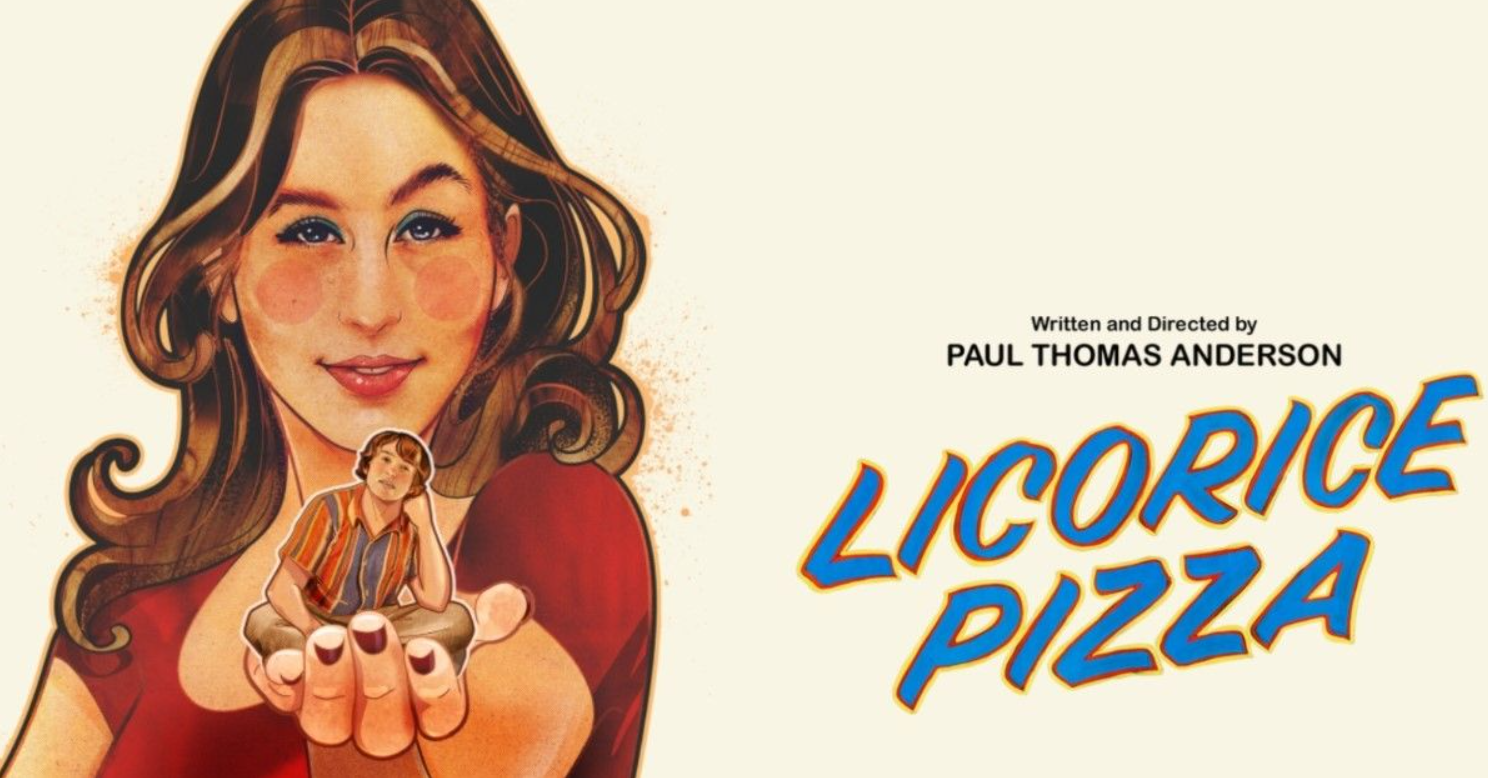
Licorice Pizza

I’m not going to forget you. Just like you’re not going to forget me.

Paul Thomas Anderson is no stranger to films with mature and controversial themes, with films like Boogie Nights and Inherent Vice on his resume; both of those also alluding to his love of the 1970’s as a setting. Anderson returns with Licorice Pizza; a coming-of-age tale that also embraces controversy with its narrative.

Gary Valentine (Cooper Hoffman), a 15-year-old child actor based on Gary Goetzman, meets the 25-year-old Alana Kane (Alana Haim) when she is in his school, assisting with picture day. Immediately taking a liking to her, he invites her to meet him for dinner, which she accepts; beginning an unusual friendship, and working relationship, as Gary uses his wealth from acting to start a number of unusual business ventures with Alana by his side, with the two clumsily navigating their deepening relationship.
Alana Haim and Cooper Hoffman shine in their debuts as Alana and Gary in Licorice Pizza

On the surface, Anderson took a real risk in casting two first-time actors as his leads from Licorice Pizza, but that’s not how it played out. Cooper Hoffman, son of Philip Seymour Hoffman, definitely takes after his father; and as Anderson seemed to know exactly how to get the most out of Philip, he gets a lot from young Cooper here as well. Gary primarily moves between confidence and arrogance as the outward display of his personality, despite clearly harbouring some insecurities beneath the surface, and Hoffman walks those lines with the skill of a much more seasoned actor here. It’s a performance that is complimented well by fellow newcomer Alana Haim, whose own prowess is something to behold here. Haim is a revelation; the range of emotion she can infer through nothing more than a look is astonishing and she can do even more with her vocal delivery; she stole nearly every scene she’s in (with one exception, which we’ll get to later). It’s a performance which should instantly be put into the Hall of Fame of debut film performances, and it’s frankly an insult that she hasn’t received an Academy Award nomination for this role, especially considering that Anderson doesn’t take the easy road by crafting a character with a fondness for singing; Haim barely uses the talent for which she’s already best well known, if she uses it at all (I don’t remember any scenes that feature her singing) and that is not a detriment to her performance at all.

While Hoffman and Haim take centre stage in the piece, there’s a broad range of supporting actors who build the world around them. Alana’s family is played by Alana’s real life family; her sister Este and Danielle and parents Donna and Moti. There’s a bevy of child actors on hand to play Gary’s friends, but it’s the adults we meet along the way who best shape the weird world that Gary occupies. Mary Elizabeth Ellis is criminally underused as Gary’s mother Momma Anita, and she essentially disappears after the first act; which is a shame, as she puts in an affectionate performance. Tom Waits and Sean Penn have a stand-out scene as Rex Blau and Jack Holden respectively, characters based on director Mark Robson and actor William Holden. Penn’s scene against Haim has a moderately uncomfortable element for those who are familiar with his proclivity towards… younger women, though he plays Holden as arrogant and appropriately sleazy for those of us who disapprove of that sort of thing, and he does it well. On a more positive note, Harriet Sansom Harris has a single dynamite scene as Gary’s agent Mary Grady; one which had the screening I was in openly in tears of laughter. Similarly hilarious, but for different reasons, was Bradley Cooper as film producer Jon Peters; a dynamite and scene-stealing turn that is hilarious and terrifying in equal measure, and is one of the most memorable performances in Licorice Pizza, which really has to be seen to be believed.

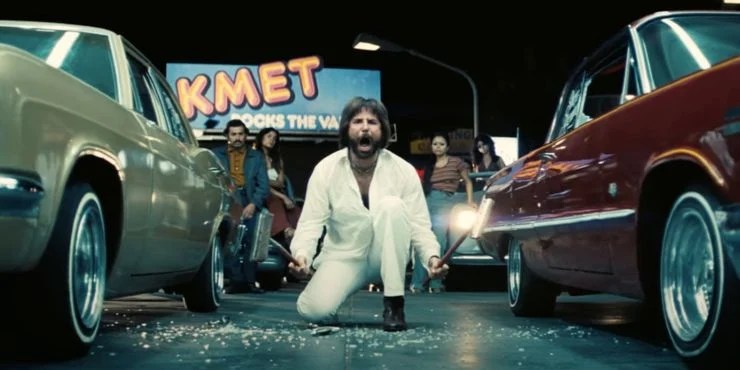
Bradley Cooper steals the show entirely when unleashed as Jon Peters in Licorice Pizza

John Michael Higgens also gives a memorable performance as Michael Frick, but for staunchly different reasons; and we’ll need to get a little into spoiler territory to really dissect it, so apologies here. An LA businessman who represents a more uneducated aspect of the 1970’s, Frick is the owner of a new Japanese restaurant, alongside his Japanese immigrant wife Mioko (Yumi Mizui), and Frick is outrageously racist; speaking to his wife in English with an incredibly over-the-top Japanese accent, and interpreting her answers, given in Japanese, without actually understanding what she’s saying. The first scene he’s in manages to demonstrate the overt racism and sexism that was a part of life in 70’s Hollywood, and there is absolutely no doubt that Frick’s behaviour toward his wife is racist. It is the combination of the almost cartoon nature of these moments, combined with the stunned response of everyone else around him when he does it (and, in fact, there is a particularly angry energy coming off Mioko in that first scene), that demonstrates that Licorice Pizza is in no way celebrating the attitude; but the narrative does rely on the moment for humour, and raises the question as to whether using scenes like this to that end is appropriate in modern cinema. I will admit that I did let out a startled guffaw at the first instance of it happening, though it was primarily motivated by my shock at its inclusion and was followed by a gasp; but when Frick returns in a later scene and repeats the behaviour, it did not spark the same response from me; and there was decidedly less laughter throughout the theatre I was in as well. It’s a small shadow, but it’s there; and while it isn’t the only moment where Licorice Pizza shines a light on outdated mindsets of the 70’s, it’s the only one that really doesn’t play out the way that Anderson probably intended it to.

Licorice Pizza doesn’t just rely on performance to build its world, and Anderson has built an incredibly believable look at 70’s LA through location, costume and set design. Contextual news clips are used effectively to both place the action and inform the narrative at times; with Alana’s turn as a volunteer for the mayoral campaign of Councillor Joel Wachs (played brilliantly by Benny Safdie) providing both context, a reflection on those aforementioned outdated attitudes, and some nice moments of character development for Alana. Classic cars rule the roads and Gary’s affection for striped shirts and flared chinos is ousted only by Alana’s array of floral-print shirts and purple corduroys. I managed to catch a screening of Licorice Pizza being presented on 70mm film, which I’m sure helped deepen the nostalgic framing through sets and landscapes; this film feels distinctly 70’s as it moves around our leads, and the soundtrack builds on that even more with artists like Nina Simone, David Bowie, Seals and Crofts and Gordon Lightfoot.

Sean Penn sleazes as Jack Holden in Licorice Pizza

It is that last artist who leads me to my other issue with Licorice Pizza; which unfortunately falls right at the film’s climax – but we’ve gotta get into it, so if you want to avoid spoilers for the end of the film, stop here and skip to the last paragraph – I’ll let you know when you can come back in. 

It is If You Could Read My Mind which is included on this soundtrack, which features the line;

“You won’t read that book again,

‘Cause the ending is just too hard to take”

…and it is the ending of Licorice Pizza that really skewed my response to the film, as it removes a certain level of ambiguity around Gary and Alana’s relationship and makes something explicit that should have been left vague. There is a ten year age gap between the two, which is not unusual in and of itself, but despite that Gary is characterised by having a confidence beyond his years, he is still explicitly a minor throughout the events of this film. Things which transpire in the closing scenes, despite how representative they may be of the inner confusion present within both Gary and Alana, go some way to making their relationship suddenly seem Not Okay, and I found myself feeling quite uncomfortable with how Anderson decided the piece should end. There’s some debate online involving terms like grooming, and I don’t think that is the intention of the film at all; in fact, the narrative is pretty clear that Alana is the resistant party in regards to a more romantic angle for almost the entire film… but I do feel that it would have made for a healthier climax if it had stayed that way, rather than playing out as it did.

Cooper Hoffman as Gary Valentine in Licorice Pizza

Okay, you can come back in for the end.

Licorice Pizza is an excellent character-driven film that builds a fascinating and engaging world around its central character. Nostalgic for and critical of the 70’s in equal measure, it’s an easy-going ride with some surprisingly challenging elements. The greatest takeaway should be the incredible debut performances of Cooper Hoffman and Alana Haim, as well as the sheer force of a fully unleashed Bradley Cooper; but the more morally ambiguous moments cast a shadow over those which Licorice Pizza may struggle to come out from under. You’ll have to see it yourself to decide.

Dave McGuckin is a theatre graduate, bar manager, former comedian and eternal film lover from Northern Ireland, now living in Canada. He began writing film reviews in 2016 for The Grade and then Great Central, both based in Leicester, England.

This site will collate these reviews, but also provides a platform for new reviews and essays on cinema, television, videogaming and (possibly) more

If you enjoy what you read, please consider sharing on social media, or leaving a small donation towards webhosting and content creation costs on Ko-Fi at http://www.ko-fi.com/davewritesreviews.

Check out the official social media links for Dave Writes Reviews below:

Don’t Look Up

“You guys, the truth is way more depressing. They are not even smart enough to be as evil as you’re giving them credit for.”

Adam McKay has a glowing resume of comedy movies, both realistic to fantastic; from Anchorman to The Big Short, and The Other Guys to Vice; his ability to satirise real-life events and place an overt comedic slant on them has been long celebrated. With Don’t Look Up, that talent is pushed to its limits, with a metaphor so broad that it hammers its point home with considerable gusto. How does it play out?

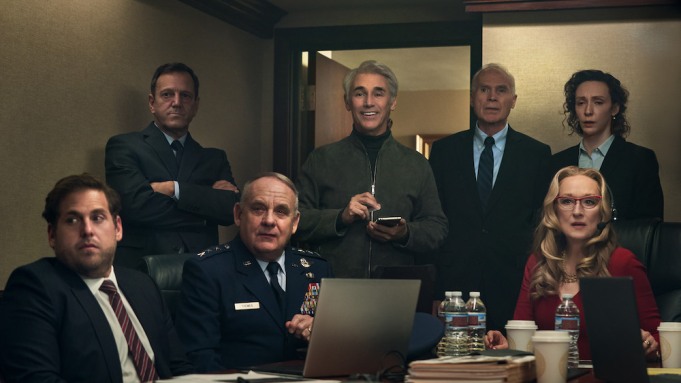
Graduate student Kate DiBiasky (Jennifer Lawrence) and her teacher, Dr. Randall Mindy (Leonardo DiCaprio) stumble upon an astonishing discovery; a comet, approximately 10km wide, is on a direct course to Earth and will impact in around 6 months with the potential to wipe out all life on the planet. When they contact NASA to share their findings, the head of the Planetary Defense Coordination Office, Dr. Teddy Oglethorpe (Rob Morgan) brings the pair to the White House to brief President Orlean (Meryl Streep), who decides to wait and assess. When the three then leak the news to the press themselves chaos ensues; as the scramble for an appropriate response leads to the existence of the comet becoming a politicised battleground.

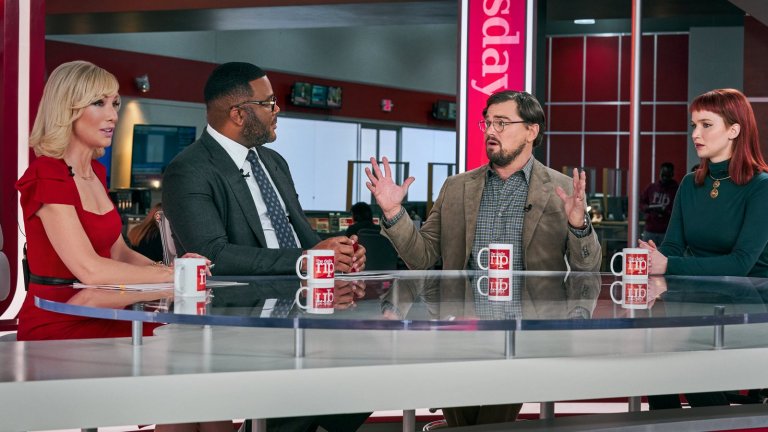
Scientists Dr. Minday (Leonardo DiCaprio) and Kate DiBiasky (Jennifer Lawrence) appear on morning TV with Brie Evantee (Cate Blanchett) and Jack Bremmer (Tyler Perry) to warn about the oncoming comet in Don’t Look Up

Don’t Look Up is not a subtle piece of cinema. McKay, who wrote and directed here, has a very clear point to make, and he does not waste time making it. This film as a metaphor for the world’s response to the rapidly-growing threat of climate change, and the way that the private interests of those involved in resource management have generated a sociopolitical environment around the topic that is so toxic, it’s seemingly impossible to get anything done that will actually move us towards saving the planet for future generations. The crux of that comparison is what makes Don’t Look Up so compelling; but real-world events have supplied an even deeper context to this film than what was originally intended; as two years into a world-altering pandemic, it’s not hard to see similarities to our current situation around Covid-19 in this piece as well. It’s an interesting scenario where knowing the basic direction of the overall story in advance of seeing the film is actually beneficial to the viewer, as you can spend time appreciating the smaller details instead. The trailer gives away one of the key plot points for the main narrative; that a billionaire tech mogul identifies that the comet is mostly comprised of mineable resources, which would stand to make the person who can access them obscenely rich – at the potential cost of the destruction of all life on earth. With the main narrative playing itself out in a pretty predictable fashion, it’s the smaller, more character-based plot threads that become the hook to reel the audience in, with every player having subplots that play out beneath the line of the main narrative to keep things ticking over. That is where the real joy in this film lies; the small moments that confirm President Orlean and her chief-of-staff, who is also her son, Jason (Jonah Hill) are completely morally bankrupt and are criminally naive beyond belief, in what is a direct and incredibly unsubtle parody of the U.S’s 45th President and his cavalcade of dullard children, or the romantic drama that springs up around Dr. Mindy when the press takes to him as the World’s Sexiest Scientist and the damage that his ego allows him to do to his own case – these are the threads that McKay expertly has woven in to keep the film interesting and engaging beyond the mind-blowingly reckless actions of the controlling powers at the centre of the effort to exploit the comet for financial gain. This film has something to say and it says it very clearly, but it is also deeply funny, and I found myself laughing out loud numerous times, including at some moments I would not have expected.

The performances perfectly compliment the script, and are anchored around Lawrence and DiCaprio. They are the grounding for the tale, and while they do have their moments of absurdity within the narrative, the overall buffoonery on display tends to be dialled back when they appear, especially with Lawrence. Despite the comet being named after her, DiBiasky ends up on the negative side of the press attention after a furious outburst on a fluffy morning magazine program as she tries to get the room to take the danger at hand seriously; and her narrative thread involves her slowly becoming more and more of an outcast as the political response to the comet continues to reduce her concerns to present as hysteria. Lawrence does great work, balancing DiBiasky’s fury with the comedic chops that McKay asks of his actors, making that rage incredibly funny at various points in the film, without reducing the impact of her emotional response. DiCaprio similarly puts in a great performance, though with a different emotional thread; the journey of the nervous astrologer as he becomes elevated higher and higher by both the trend-chasing media and the incompetent White House and the distraction that causes him being a great outlet for DiCaprio to develop the anxious, flustered and incredibly private man into a pressure cooker of contrived confidence, manipulated by those in power around him.

President Orlean (Meryl Steep), Jason Orlean (Jonah Hill) and Peter Isherwell (Mark Rylance) are at the centre of the scheme to
try and mine the comet for valuable resources in Netflix’s Don’t Look Up

Streep is perfect as President Orlean, channelling an incredible level of smugness alongside a clear demonstration of stupidity, which is enhanced by Hill’s portrayal of Jason as an over-groomed, arrogant dick (for want of a better term, but there really isn’t one). Some of his finest moments are in his playground-bully style torture of DiBiasky; his annoyance that the scientists went behind their backs to leak the news to the media driving a lot of his choices, and Orleans’ measuring of every potential step being directly connected to her desire to do well in elections and cover other suspect decisions as the narrative progresses. Cate Blanchett and Tyler Perry put in great showings as the Brie Evantee and Jack Bremmer, hosts of the aforementioned magazine show The Daily Rip; with their own awkward on-screen chemistry signalling at a subplot which never really gets fleshed out, with Evantee’s interactions with Dr. Mindy taking the fore and making great use of Blanchett’s ability to portray seduction and manipulation. Also of note is Mark Rylance as Peter Isherwell, owner of the BASH network, who operates as a stand-in for all of our favourite billionaires; somehow managing to accurately parody the likes of Elon Musk, Jeff Bezos and Mark Zuckerberg at the same time, without specifically referencing any of them together; but by taking elements of them all and bringing them together to create a truly dislikable character who everyone somehow seems to love, despite the fact his products are designed to infringe on his customer base’s privacy at seemingly every turn. Timothée Chalamet also puts in a good showing as the pseudo-anarchic Yule, whose increased presence from the second act to the end adds a nice counterpoint to the capitalistic desires demonstrated by the majority of the cast, while also demonstrating the other kind of unhelpful attitude when staring down an existential crisis such as the destruction of all life on Earth.

Nicholas Britell is on hand for the soundtrack, assisted for one key track by Ariana Grande and Kid Cudi, who also appear in the film as parodies of all modern celebrity relationships. That track, titled Just Look Up, operates within itself as a parody of the likes of Band Aid; an interesting direction to go in, but one that makes sense given the context of the narrative. The rest of Britell’s soundtrack is wonderful, with sweeping brass scores, overactive flutes and frenetic drum beats accompanying the more chaotic sequences of the film in an almost big-band jazz style; but giving way to more considered string moments for the quieter, more reflective moments. This is the third soundtrack Britell has provided for McKay’s films, the others being The Big Short and Vice, and he definitely understands how to craft a score that compliments the action that McKay has put together without overwhelming the scene, songs that can fade down into the background as required without losing their punch.

Kid Cudi and Ariana Grande perform the song Just Look Up as DJ Chello and Riley Bina in Netflix’s Don’t Look Up

Don’t Look Up is a metaphor that has been inscribed on to the head of the largest hammer McKay could find, then flung at the wall from a catapult; but its effectiveness comes from how unashamedly bold it is in that regard. A clever, funny and deeply passionate script and narrative are brought to life by compelling performances, and demonstrate a world that we can all understand, as it reflects the one we currently live in. It’s fair to say that your personal political ideology will go some way into determining how much enjoyment you get out of this film; but if you’re anything like me, it’ll do something for you. This one is worth a watch, as long as you’re prepared for the fact that subtlety is not welcome here.

Dave McGuckin is a theatre graduate, bar manager, former comedian and eternal film lover from Northern Ireland, now living in Canada. He began writing film reviews in 2016 for The Grade and then Great Central, both based in Leicester, England.

This site will collate these reviews, but also provides a platform for new reviews and essays on cinema, television, videogaming and (possibly) more

If you enjoy what you read, please consider sharing on social media, or leaving a small donation towards webhosting and content creation costs on Ko-Fi at http://www.ko-fi.com/davewritesreviews.

Check out the official social media links for Dave Writes Reviews below: