Night Teeth

What would you do if you knew tonight was your last night on Earth?

When it comes to horror tropes, it’s pretty safe to say that zombies and vampires have been most successful in making the transition into the mainstream. From Blade to What We Do In The Shadows, the breadth of possibilities as to how vampires can be incorporated into other genre styles is constantly being explored, and Night Teeth is the latest in a long line of experiments in that vein.

Los Angeles student Benny (Jorge Lendeborg Jr) takes the place of his freelance chauffeur and older brother Jay (Raúl Castillo), taking a job due to last all night; friends Blair (Debby Ryan) and Zoe (Lucy Fry), who are looking to do a tour of parties at L.A. clubs, bars and parties. Unbeknown to Benny; Blair and Zoe are vampires and their trip soon is revealed to be a little more than an all-night party bender, placing Benny directly in mortal danger…

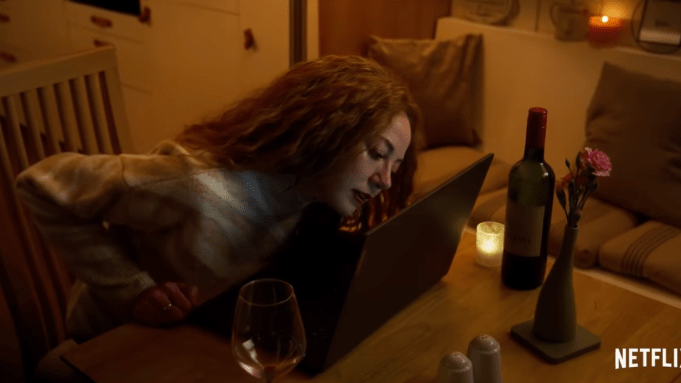
Benny (Jorge Lendeborg Jr) is the driver for Blair (Debby Ryan) and Zoe (Lucy Fry) in Netflix’s Night Teeth.

Night Teeth’s central premise is pretty simple; humans and vampires have quietly coexisted for centuries, with the existence of the latter kept quiet as part of the agreement. The film looks to take the vampire concept and weave into a gangland action drama; with the narrative built around the existence of various vampire families in L.A, mirroring the concept of crime families in major cities, and the chaos that ensues when one of those families goes rogue; not just sending the vampire world into disarray, but also threatening the arrangements made with the humans who maintain that peace. It also then works in a Romeo & Juliet style forbidden love angle, which enhances the roles of the central characters and their reactions to the overall plot in a mostly-effective way. It’s strong as a narrative concept, and writer Brent Dillon does good work in fleshing out how the family system works through that narrative; but there’s something about Night Teeth that somehow feels missing, and I couldn’t quite put my finger on what that was.

Stylistically, Night Teeth is a great-looking movie. Director Adam Randall leans into the aesthetics of modern downtown L.A. to shape the feel of the piece; with the opening establishment of Benny’s character framed by beautiful sunsets over the county, before moving into darkness and relying on headlights, streetlights, the neon signs of L.A. clubs and the glow of Benny’s dashboard to light the majority of the piece. It gives the same feeling that we get from the likes of John Wick, with the more naturalistic lighting reserved primarily for Benny, especially in the scenes with Jay and his Abuela (Marlene Forte); while Blair, Zoe and the other vampires more often find themselves in less naturalistics greens, purples and pinks; the glow of neon directed to enhance their unnatural, inhuman existence; with the lighting styles crossing where the two worlds meet, particularly the scenes where Benny is most directly at risk on his passenger’s tour.
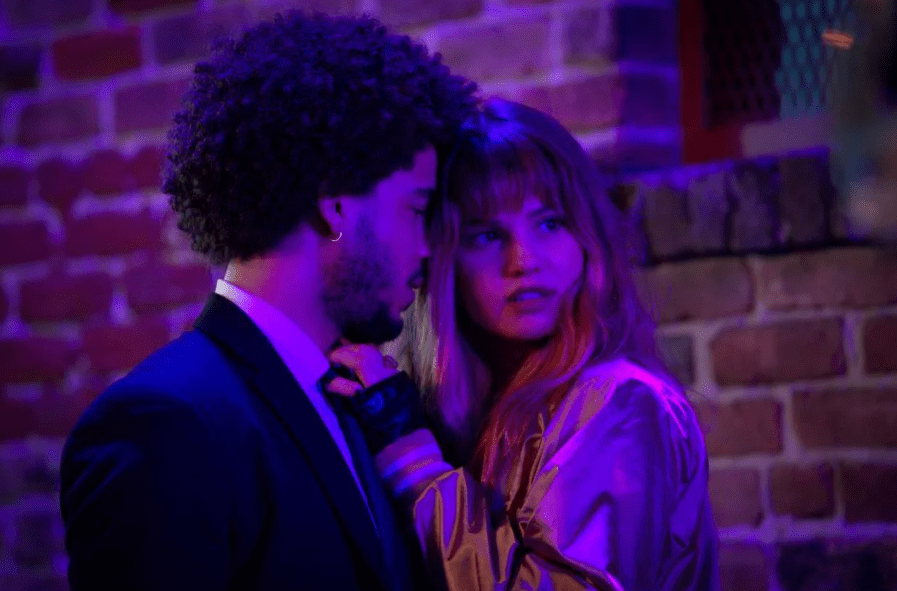
Bold colour choices enhance the narrative and action on offer in Netflix’s Night Teeth.

The feeling is enhanced by both the soundtrack and costuming; with the former consisting of original tracks created by a collaboration between Ian Hultquist and Drum & Lace; and a considerable number of modern hip-hop tracks from the likes of Saweetie, Rico Nasty and Wang Chung. It’s a slick and smooth soundtrack that seamlessly moves into the background as required, punctuating the dialogue as our central trio drive around town, and storming into the forefront as the action takes over and the dialogue eases off. Costuming is on point as well; with Benny’s ill-fitting black suit and white trainers presenting the semi-professional look one would expect of a teenage driver, contrasted by Zoe and Blair’s clubland, socialite attire; both looks being both mirrored and adapted by other characters in the film; with the vampires all sharply dressed, and the majority of the other human characters adapting a more street-level style.

Our central cast put in strong performances here, doing the most with Dillon’s script. Lendeborg Jr. is particularly believable as Benny, especially in the moments when he is weighing up his self-preservation options; and the growing disbelief in the things he has seen and been a part of as the journey is well put together. His chemistry with Ryan’s Blair is palpable, and as the more restrained of his two passengers, she manages to emit a quiet charm while not compromising the fact her character is an apex predator; allowing the audience in to the fact that vampires can, and do, have a softer side – paralleled brilliantly by Fry as Zoe, whose attitude towards violence is considerably more flexible, and she clearly is having a lot of fun playing a violent loose cannon here. All three work well together, with Fry and Ryan’s combination being both playful and dangerous, and Lendeborg Jr’s response to both being appropriately disparate that we can see clear lines of division within the three developing as the narrative continues, with Benny’s self-preservation instincts both working to cause dissension between the girls at some points, and bringing them closer together at others.

Lucy Fry seems to relish her role as the dangerous and unpredictable Zoe in Netflix’s Night Teeth.

The supporting cast have good showings too, with Raúl Castillo’s Jay exuding a grim determination and big brotherly love for Benny in a convincing way, while also maintaining enough of an air of mystery as to what other business he is involved in for his shorter time on screen to remain compelling. Marlene Forte also gets some noteworthy moments as their Abuela, demonstrating both compassion and strength in regards to the care of her grandchildren, and her reappearance towards the end of the second act was one of my favourite scenes in the whole film. Alfie Allen is on hand as the film’s overall villain Victor, essentially combining his role from John Wick with Stephen Dorff’s role from the original Blade; as head of one of L.A’s vampire families, it is his actions which have led to the chaos driving the narrative. Allen has had plenty of experience with roles like this, and he delivers here; a stand-out scene being a meeting with another vampire family head, played by modern scream queen Megan Fox in an effective cameo role.


Even with so many good things to say about Night Teeth, something about it makes me feel like it didn’t quite reach the potential of its premise. It borrows a lot of concepts from other films to piece itself together, which is certainly not a criticism as it does so very effectively; visually it looks great, the soundtrack is perfect for the premise and for the action, and it has strong performances from start to finish; but something about it just didn’t land in a way that I was hoping it would. This is a perfectly enjoyable film, more than appropriate for a Friday night viewing with good snacks and good company; if you like vampire movies, it’s worth a watch. Maybe one of you can figure out what it was that just didn’t quite click – and then let me know.

Dave McGuckin is a theatre graduate, bar manager, former comedian and eternal film lover from Northern Ireland, now living in Canada. He began writing film reviews in 2016 for The Grade and then Great Central, both based in Leicester, England.

This site will collate these reviews, but also provides a platform for new reviews and essays on cinema, television, videogaming and (possibly) more

If you enjoy what you read, please consider sharing on social media, or leaving a small donation towards webhosting and content creation costs on Ko-Fi at http://www.ko-fi.com/davewritesreviews.

Check out the official social media links for Dave Writes Reviews below:

tick, tick… BOOM!

“Everything you are about to see is true… except for the parts Jonathan made up.”

In 1991, stagewright and performer Jonathan Larson performed a workshop of his semi-autobiographical rock monologue 30/90 at the Village Gate Theatre in Greenwich Village. The play would be renamed tick, tick… BOOM! before being re-worked, following Larson’s death, from a solo performance with accompaniment into a three-actor stage musical by David Auburn. For the film version, writer Steven Levenson and director Lin-Manual Miranda have combined the three-actor version with Larson’s original monologue version to form the basis of this biographical musical of the stagewright as he prepares to present a workshop of his original musical and passion piece, Superbia; while also dealing with the pressures of turning 30 without having any real success in theatre.

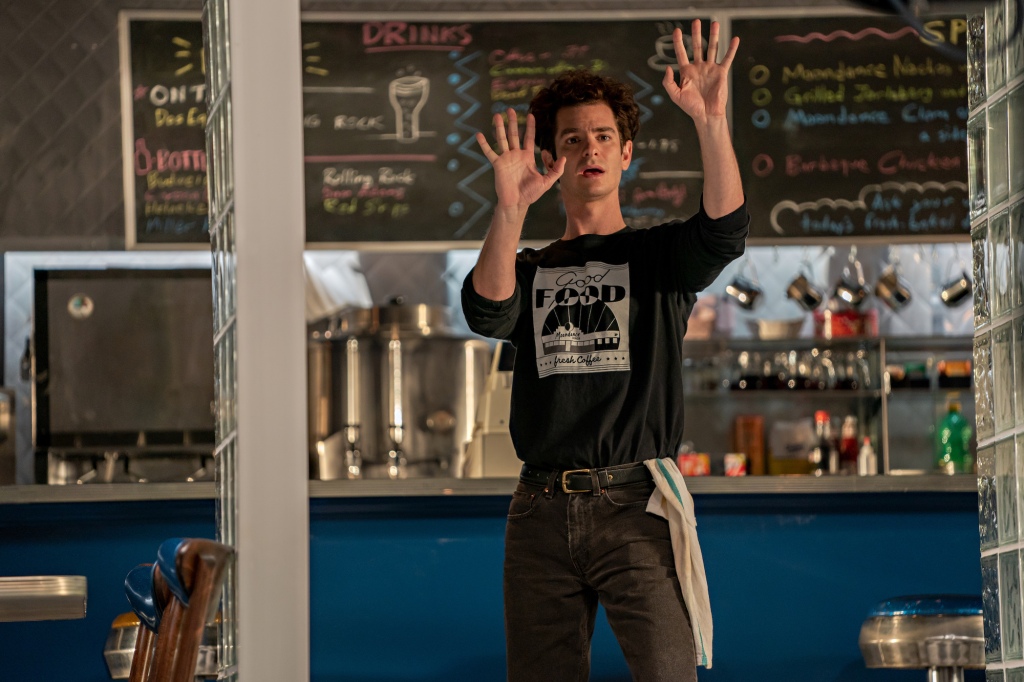
Andrew Garfield as stagewright & actor Jonathan Larson in Netflix’s tick, tick…Boom!

I went into tick, tick… BOOM! without really knowing anything about Jonathan Larson, aside from the fact he was the writer of Rent and that he had passed away on the morning of Rent’s first preview performance; so I was surprised to find that this film doesn’t really actually deal with that part of his life at all, and I think that was actually a great decision. tick, tick… BOOM! the musical provides such a tremendous insight into who Larson was as a person, that a dramatic recreation of the musical; with the scenes depicted in the show being acted out in full by a full cast, really brings the story to life in a new and fascinating way. Lin-Manuel Miranda, as someone who has been actively involved in both stage and film performance for the last 15 years, was the perfect choice to direct a project like this; being able to harness the theatrical sensibilities required for the shots of Larson’s workshop, while bringing his film and TV experience into the dramatic scenes as well. It’s hard to think of a project more perfectly fitted to a director in that regard; and his links to modern Broadway means that lots of recognisable faces (and, more importantly, voices) crop up during some of the larger ensemble numbers; including various members of the original cast of Hamilton, such as Phillipa Soo and Reneé Elise Goldberry, and add a true depth to the tribute being paid to the Larson. 

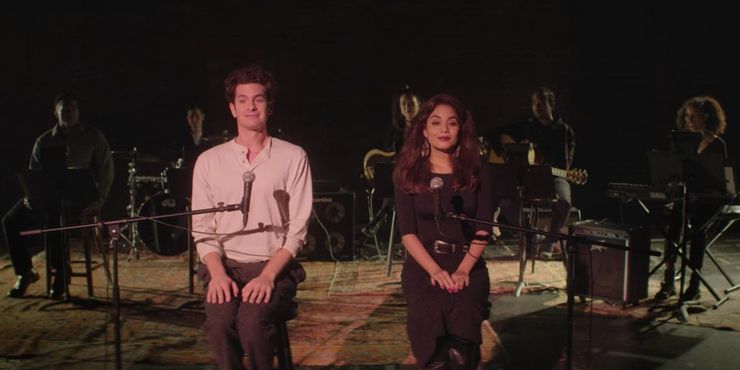
All of this is said without mentioning Andrew Garfield, the man on deck to play Larson; and Garfield demonstrates why he should be regarded as one of the finest young actors in Hollywood today. Garfield has admitted that, when he was cast, he had absolutely no idea whether he could actually sing; and though he did take lessons during preparation for filming, it can unequivocally be said that Garfield can sing, and he can sing incredibly well. His trademark frenetic energy works very well for his portrayal of Larson, and the moments where he displays his deeper stresses are carried off incredibly well. Some of Miranda’s directorial choices are incredibly bold, and one in particular hinges almost entirely on Garfield’s ability to differentiate between the real version of Larson and the on-stage version of Larson; as the workshop of the song Therapy by Larson and friend Karessa (Vanessa Hudgens), who is playing Larson’s girlfriend Susan; is intercut with a dramatisation of the actual argument between Larson and Susan (Alexandra Shipp). The sequence is a testament to Miranda as a director, to all the actors in the sequence, and to writing and editing team to make it work; as the performance of Therapy is highly-stylised, and cuts into an incredibly naturalistic performance of a real argument between two people in a crumbling relationship, and it’s a stunning sequence to behold; especially as Garfield manages to carry off Larson in a way that does not turn him into a villain, despite his actions in relation to Susan being pretty dislikable, which is what builds up to the argument in the first place. The film is full of dynamite acting moments from Garfield, and he brings a passion to Larson that one would expect from a young stagewright in New York; especially one who has gotten so close to a success that keeps slipping through his fingers.

Andrew Garfield & Vanessa Hudgens take to the stage to perform the song Therapy in Netflix’s tick, tick…Boom!

The supporting cast does their share of the heavy lifting too. Garfield is joined by the aforementioned Hudgens and by Joshua Henry for the stage sequences; and both were chosen for their theatre chops (Henry notably starred as Aaron Burr in the Los Angeles production of Hamilton, amongst others). Both get the opportunity to show off their chops, with their incredible singing voices taking the lead for their performances; but they also appear in ensemble scenes throughout the dramatised sections as the narrative moves toward the workshop of Superbia.

While Hudgens and Henry are playing Karessa and Roger, who both take on the roles of Larson’s friends for the tick, tick… BOOM! show; the actors who play Larson’s friends for the dramatic sequences also get the chance to show off their chops, with the performance of Come To Your Senses from the musical of tick, tick… BOOM! being shared by both Hudgens, performing it on stage, and Alexandra Shipp performing it as the real Susan; and the outcome is fantastic, both audibly and visually. Robin de Jesús plays Larson’s friend and roommate Michael and puts in a sterling performance; as do MJ Rodriquez and Ben Levi Ross as Larson’s friends and Moondance Diner colleagues Carolyn and Freddy; all of whom are key players in the direction Larson takes as he preps for his workshop. Bradley Whitford puts in a notable, if brief performance as Stephen Sondheim; though more notable is that Sondheim himself makes a brief, audio cameo as he offered to recreate a key answerphone message that he left for Larson following the Superbia workshop; a moment that feels all the more pertinent following the director’s own passing earlier this year.

Andrew Garfield and Robin de Jesús sing about a better life in Netflix’s tick, tick…Boom!

tick, tick… BOOM! is a wonderful film, centred on an incredible performance from Andrew Garfield and held up by a great supporting cast and an impressive directorial debut from Lin-Manuel Miranda. While the story cannot help but be desperately sad given that we know would happen to Larson following the events covered in the musical, and the film; it is a piece that is so earnestly filled with hope, and built upon the desire to chase a dream, that it can’t help itself but emanate a warm glow through beautiful performance, and is a great example of how musical theatre can be adapted to the screen, taking some interesting risks that overwhelmingly pay off; not least through presenting the dramatisation alongside a recreation of the stage performance. If you’re a fan of musical theatre then you absolutely must see this; and if you’re not, it might just make you change your mind.

Dave McGuckin is a theatre graduate, bar manager, former comedian and eternal film lover from Northern Ireland, now living in Canada. He began writing film reviews in 2016 for The Grade and then Great Central, both based in Leicester, England.

This site will collate these reviews, but also provides a platform for new reviews and essays on cinema, television, videogaming and (possibly) more

If you enjoy what you read, please consider sharing on social media, or leaving a small donation towards webhosting and content creation costs on Ko-Fi at http://www.ko-fi.com/davewritesreviews.

Check out the official social media links for Dave Writes Reviews below:
It’s Time To Retire The Wilhelm Scream

While motion pictures may still be less than 150 years old, we’ve made the most of our time with the format and have created countless films and television shows since the technology was created. It’s safe to say that visual media is now the dominant form of entertainment around the world, with the hype surrounding the releases of new film and TV projects often reaching a fever pitch. Who can forget the excitement around new seasons of The Sopranos, Breaking Bad and Game of Thrones? For better or for worse, the internet goes wild every time a new Marvel or DC movie comes out; people wait with bated breath for the announcement of a new project from the likes of Martin Scorsese, Quentin Tarantino and Edgar Wright; to see which of their favourite heroes will be brought to the big screen by Marvel or DC; to find out which tremendous new director is going to bring us a landscape-shaking new film, like Emerald Fennell or Chloé Zhao. However, not everything that has come out of the creation of cinema has been good; and while there are countless ideas I could be alluding to here, I am referencing one thing in particular today:

The Wilhelm Scream.

Private Wilhelm is shot in the leg with an arrow in The Charge At Feather River.

Originally recorded in 1951 for the film Distant Drums by the actor Sheb Wooley for a scene where a man is dragged into a river by an alligator, The Wilhelm Scream was made famous in 1953’s The Charge At Feather River, when Private Wilhelm is shot through the knee with an arrow, ending his career as an adventurer, and launching one particular sound effect into the cultural stratosphere. Part of the reason why the scream became so synonymous with The Charge At Feather River is not because Private Wilhelm’s arrow to the knee was particularly iconic, but because the same sound effect would be used two further times within that one film, and all for different characters; the use of such an identifiable scream on three occasions within the same film is going to make it stand out. However, that didn’t make it stand out as much as Ben Burtt did.

Ben Burtt was one of the sound designers on a small, independent film called Star Wars: A New Hope. While looking through the sound library for practical effects for the action scenes (required since micing up the stormtrooper helmets was not practical), Burtt stumbled upon a scream called “Man being eaten by alligator” and promptly placed over a scene of a stormtrooper falling from a platform after being shot by Luke Skywalker. Burtt renamed it for the film which made it famous, and LucasFilm would go on to use the Wilhelm Scream in every single Star Wars and Indiana Jones film, and they wouldn’t be the only ones; the Wilhelm Scream appears in Captain America; The First Avenger, Toy Story, Batman Returns, Family Guy, The Lord Of The Rings trilogy and so, so many more; and I am happy to tell you that I hate it.

A stormtrooper utters the Wilhelm Scream as he falls from a platform in Star Wars: A New Hope.

I watch a lot of films. If you’re going to have the arrogance to think that anyone will care what you think about them, then you really have to make sure you’re watching as many as possible. I would watch films every day if I had the opportunity; if this was my job, I would relish in that happily. There are a lot of things that can take a person out of a film; a strange line delivery, unconvincing CGI, an overly confusing or convoluted plot point are all common gripes about a film that ruins its own believability. For me, nothing removes from the action more than the sound of the Wilhelm Scream. The fact that the noise has become more than a sound effect, even becoming more than a trope is what does it; it’s essentially a meme at this stage, and while LucasFilm’s original use of it may have been perfectly innocent, it has become a cinematic in-joke which has, frankly, gone too far. There’s even a band called A Wilhelm Scream, referencing the over-used effect in a very bold and clear way. In an interview with Insider in November 2018, UCLA Film History Professor Jonathan Kuntz states that the Wilhelm Scream is, “for people who love movies… part of their enjoyment of it is finding this little insider detail.”

It’s now January of 2022, and I’m here to tell Professor Kuntz that his assertion has to be incorrect. The Wilhelm Scream has served its purpose over the last 70 years, and it’s time for less distinctive screams to come to the fore – but let’s not make any more sound effects into memes, unless we’re planning to only use them as a joke, please, Hollywood. And even then… we should maybe rethink that.

To watch the referenced Insider interview, which features its own history of the Wilhelm Scream, please click here.

Dave McGuckin is a theatre graduate, bar manager, former comedian and eternal film lover from Northern Ireland, now living in Canada. He began writing film reviews in 2016 for The Grade and then Great Central, both based in Leicester, England.

This site will collate these reviews, but also provides a platform for new reviews and essays on cinema, television, videogaming and (possibly) more

If you enjoy what you read, please consider sharing on social media, or leaving a small donation towards webhosting and content creation costs on Ko-Fi at http://www.ko-fi.com/davewritesreviews.

Check out the official social media links for Dave Writes Reviews below:
Promising Young Woman

“Who needs brains? They never did a girl any good.”

A push for societal change is often landmarked when it is raised and examined within popular entertainment; there are countless examples of films, television shows, songs, poems and more that deal with specific societal issues; the fight for LGBTQA+ rights, pushes for equality across racial, class or gender barriers; striving for greater accessibility for differently-abled people. The more that people can point to something in popular culture that speaks about their struggle, the closer we step towards effective societal change; and Promising Young Woman has the qualifications to be one of those landmark pieces of pop culture.

Cassie Thomas (Carey Mulligan) awaits her would-be rescuer in Promising Young Woman.

Cassie Thomas (Carey Mulligan) is a medical school drop-out who lives with her parents, works in a coffee shop, and spends her weekends pretending to be black-out drunk to trick predatory men into taking her home, so that she can frighten them off taking advantage of vulnerable women in future. When she unexpectedly connects with an old classmate, Ryan (Bo Burnham), revelations about their other fellow classmates sets her on a path of vengeance…

Promising Young Woman deals with difficult, but essential, subject matter in an utterly sublime way. Written and directed by Emerald Fennell in her cinematic debut, Promising Young Woman masterfully blends black comedy with psychological thriller to create a deeply compelling and shocking piece of cinema, one which can speak to the experience of countless women around the world. The gradual escalation of the weight and threat of Cassie’s past as the narrative progresses, slowly revealing new pieces of the puzzle to draw the curtain back on the story of how she became who she is, is utterly fascinating and, at times, entirely horrifying; and the lengths which she goes to in order to enact her revenge become more and more shocking as the narrative progresses; but while we may question her methods in the moment, Fennell and Mulligan never let us forget that Cassie is the hero of this story, no matter how dark her story gets. There is a reason why this film won an Academy award for Best Original Screenplay.

Cassie goofs off with love interest Ryan (Bo Burnham) in Promising Young Woman.

Carey Mulligan was nominated for an Academy award for this film as well, and it’s clear to see why. This is a career performance from her; carrying the entire weight of the film on her back as there is barely a moment where she is not somewhere on screen, and she takes us on a full emotional journey with her as she deals with the trauma of her past. Her fake drunk acting is superlative; the scene with Adam Brody where we see her trick play out in full is sublime, and her chemistry with Bo Burnham is charming and playful. Her ability to flip moods in a moment is well utilised at various points, especially in scenes where we see her with the targets of her vengeance. The nihilism behind her motivations is clear; and when her desire for vengeance against mankind as a whole is put at odds with her growing affection for Ryan, Mulligan does a great job of demonstrating when Cassie is in control of what’s happening around her, and when she has lost control – be it on purpose or not – and it is this aspect of Cassie’s journey, and Mulligan’s performance, which makes the character so utterly compelling, even when she is behaving at her most heinous.

The supporting cast also put in the work, and built an excellent framework for Mulligan to work off. Clancy Brown and (an uncharacteristically subdued) Jennifer Coolidge are Cassie’s beleaguered parents Stanley and Susan, and present exactly what you would expect from the parents of a 30 year old medical school drop-out who still lives at home. Burnham oozes charm and charisma as Ryan, providing the only truly bright light to shine on Cassie throughout the narrative; and Alison Brie gives a notable performance as one of Cassie’s marks, giving an excellent turn as the bitchy former friend in one of the stand-out scenes from the second act. A selection of America’s most beloved young male actors show up to take a turn as complete creeps; the aforementioned Adam Brody, Sam Richardson, Christopher Mintz-Plasse, Max Greenfield and Christopher Lowell all get the chance to demonstrate why self-proclaimed Nice Guys™ are usually the absolute worst, and all do it well; though arguably none better than Mintz-Plasse, who puts in an incredible turn that will probably make you hate him completely, unfortunately. These men were reportedly all cast due to having been previously cast as good, kind-natured men in previous projects, done to highlight that even the good guys can turn out to be dangerous, and every actor rises to the occasion in that endeavour.

Bright colours and bubblegum pop add an interesting lens to the thrilling narrative of Promising Young Woman.

Promising Young Woman is largely set in what looks like a quaint American suburb, with nicely decorated lawns and invitingly-painted houses and shops; further highlighting that sense that women can be in danger in any location. The bright locales contrast superbly with the dark and dingy bars and clubs in which we see Cassie fishing for Nice Guys™, and with Ryan’s apartment; which stands out as the only modernly furnished location we see for the duration of the film. The atmosphere is furthered enhanced by an excellent soundtrack curated by Anthony Willis, featuring a lot of bubblegum pop tracks; some of which presented in their original formats, and some covered by DeathByRomy to present a darker and more threatening presence on the soundtrack; the stand-out for me being a cover of It’s Raining Men. Notable now is a cover of Britney Spears’ Toxic, produced by Willis himself, which also featured in the trailer for Promising Young Woman and feels even more pertinent an inclusion following the full revelations and subsequent dissolution of Spears’ conservatorship. The fact that Toxic is credited as the starting point for the word’s adoption in modern vernacular to describe harmful personality types also makes it a perfect fit for this story; evidence that Willis absolutely knows what he’s doing.


Promising Young Woman is a challenging, dark, and incredibly intelligent psychological thriller that also takes time to be a superb dark comedy, deploying humour efficiently throughout an incredible narrative. With a career-defining performance from its lead, a host of stellar supporting performances from the rest of the cast, and a stunning feature debut from its writer and director; this film is essential viewing for anyone who loves good cinema – just make sure you brace yourself before you dive in.

Dave McGuckin is a theatre graduate, bar manager, former comedian and eternal film lover from Northern Ireland, now living in Canada. He began writing film reviews in 2016 for The Grade and then Great Central, both based in Leicester, England.

This site will collate these reviews, but also provides a platform for new reviews and essays on cinema, television, videogaming and (possibly) more

If you enjoy what you read, please consider sharing on social media, or leaving a small donation towards webhosting and content creation costs on Ko-Fi at http://www.ko-fi.com/davewritesreviews.

Check out the official social media links for Dave Writes Reviews below:
The Harder They Fall

“How long you been alive in this country? A rock and a hard place is what we call Monday.”

The Harder They Fall, the feature-length directorial debut of Jeymes Samuel, enters into a long line of Revisionist Westerns (whereby the traditional format of a clear good guy/bad guy narrative is abandoned in favour of a more morally grey plot). An all-star ensemble cast takes that notion and runs with it, bringing a story based on real life outlaws of the frontier; how does it fare in the long tradition of the American Western?

Nat Love (Jonathan Majors) is orphaned after his parents are murdered by Rufus Buck (Idris Elba) and his associate Cortez (Julio Cesar Codillo). 20 years later, Love is a notorious outlaw and gang leader, who hears that Buck is to be released from prison and plots his revenge…

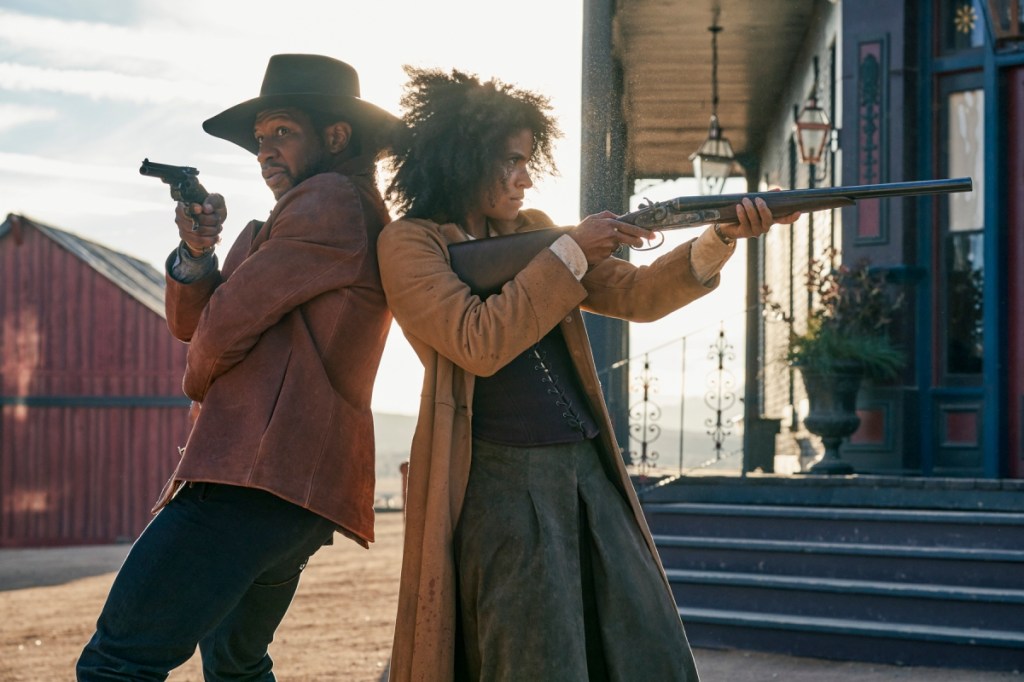
Nat Love (Jonathan Majors), Bass Reeves (Delroy Lindo) and Jim Beckwourth (RJ Cyler) stand their ground in The Harder They Fall.

Westerns are a genre that lend themselves to great ensemble performances, and Samuel has assembled a stellar cast for this one; led by Jonathan Majors and Idris Elba, Zazie Beetz and Regina King; with Danielle Deadwyler, RJ Cyler, Edi Gathegi, LaKeith Standfield, Delroy Lindo and Deon Cole. As one might expect from a cast list of this calibre, there are no weak links in this line-up; Majors and Beetz ooze charisma, Elba, King and Standfield bring layers of threat; and the rest of the cast rounds out the experience with differing energies, helping keeping each scene flowing in an engaging way, with everyone playing off each other brilliantly. Their energy really brings Samuel and Boaz Yankin’s script to life, and likewise, the script gives the cast plenty to get their teeth into; with nuance, flair and just enough melodrama to elevate the characters to a level where they appear almost superhuman at times – not like with the Marvel or DC character gallery, but more akin to the likes of Bond, telling a story of ordinary men and women doing extraordinary things, both for good and for ill.

This is the hook upon which The Harder They Fall really rests its hat; the narrative itself is perfectly constructed to make every character likeable, despite their obvious moral failings. As leaders of their respective gangs, Love and Buck are both responsible for some pretty reprehensible actions; yet their motivations are sometimes honourable, leaning heavily into the Revisionist Western style; though to discuss how that manifests specifically would be to ruin some of the finer narrative points of the piece, so we’ll leave it there.

Trudy Smith (Regina King) and Cherokee Bill (LaKeith Stanfield) break Rufus Buck (Idris Elba) out of his prison transport in The Harder They Fall.

While The Harder They Fall is very much an ensemble piece, Majors stands out as the central star of the film, and not just because the narrative revolves primarily around Nat Love. Majors brings a cool, calm and collected performance through Nat Love; with exceptional comic timing, charisma and sex appeal whenever required. His chemistry with Zazie Beets is exceptional, and the whole Nat Love gang is able to lean on his performance to really sell him as their leader, really selling the relationships throughout the film. Idris Elba provides the same figurehead on the opposite side, but his gang get a wider opportunity to sell themselves individually, with LaKeith Standfield’s turn as Cherokee Bill in particular being a highlight of the film. His competition with rival quick draw Jim Beckwourth, portrayed by R.J. Cyler, gives both actors the chance to demonstrate their differing personalities and deliverances, despite the characters being held in esteem for the same skills. The disparity in personality that Samuel & Yankin manage to create for the mirrored characters in each gang is impressive; and the cast are incredibly well utilised for their skills, with many of the cast getting the chance to show us a side of themselves which we may not have seen in previous roles; something which goes beyond the central cast – notable is Damon Wayans Jr, who has a brief but impactful appearance in a rare non-comic role, and he carries it off incredibly well.

The Harder They Fall stands out for more than just performances; this is possibly one of the most slick and stylish looking Westerns ever made. The set design is gorgeous, with bold-coloured buildings standing out against the dust of the western sun, the costuming is era-appropriate but not without a suitable amount of flair (if a character has silver buttons in his coat, those buttons have been well polished); and Samuel has curated some stellar tracks from the worlds of hip-hop, R’n’B and rap for the soundtrack, as well as writing and performing brand new tracks of his own; adding an extra layer of depth to the piece that naturally draws favourable comparisons to the likes of Hamilton; blending musical styles not traditionally associated with Westerns in with the action that makes one wonder why we haven’t had more rap tracks on Western soundtracks before now, frankly. All of this comes together best during the action scenes; with the aesthetics of the sets and costumes providing excellent focal points for Mihai Malaimare Jr’s impressive cinematography, mixing up traditional Western tropes with new approaches to catching gun-slinging action.

Nat Love (Jonathan Majors) and Stagecoach Mary (Zazie Beetz) stand their ground in The Harder They Fall.


The Harder They Fall is a slick, attractive and highly entertaining entry into the long lineage of great Westerns. With a top-class stellar class, a great narrative, fantastic action and tremendous settings and soundtrack; this film is well worth your time to check out, and also suggests that we have a lot more still to see from Jeymes Samuel. This is worth the cost of a month on Netflix alone.

Dave McGuckin is a theatre graduate, bar manager, former comedian and eternal film lover from Northern Ireland, now living in Canada. He began writing film reviews in 2016 for The Grade and then Great Central, both based in Leicester, England.

This site will collate these reviews, but also provides a platform for new reviews and essays on cinema, television, videogaming and (possibly) more

If you enjoy what you read, please consider sharing on social media, or leaving a small donation towards webhosting and content creation costs on Ko-Fi at http://www.ko-fi.com/davewritesreviews.

Check out the official social media links for Dave Writes Reviews below:
Death To 2021

“I forgot what cinemas were like, you can’t pause the film to go to the loo. So I had to go right there in the seat.”

As much as we all would probably like to stride away from 2021 and leave it in the dust, there’s something to be said for shining a comedic light over a year and going out of it on a high. This is something that Charlie Brooker knows all too well; his Screenwipe and Weekly Wipe spin-off specials for the BBC, recounting the year’s news in a satirical fashion, would eventually lead to Death To 2020 as a result of his deal with Netflix; an hour-long comedy special featuring popular actors from both sides of the Atlantic lampooning the year’s news in a considerably partial fashion. The concept returns with Death To 2021, with a few changes; both positive and negative

Longtime Brooker-collaborator Diane Morgan is back as Gemma Nerrick in Netflix’s Death To 2021

If you read my review of Death To 2020, you’ll know that I enjoyed it; and Death To 2021 is mostly the same as we got from the first. A number of cast members return; most notably Hugh Grant as British historian Tennyson Foss OBE, Diane Morgan as “member of the public” Gemma Nerrick and Cristin Miloti as Trump-supporting, conspiracy theorist housewife Kathy Flowers. Notable debuts include Lucy Liu as journalist Snook Austin and Stockard Channing as journalist Penn Parker. The loss of some actors is out felt, primarily Lisa Kudrow’s excellent turn as Jeanetta Grace Susan, but her replacement is a re-purposed Tracey Ulman as fake Fox News host Madison Madison, who is much better utilised in that role than she was as The Queen in Death To 2020.

While Death To 2021 is not afraid to wear its left-leaning politics on its sleeve (and every other item of clothing), in a style traditional to Brooker-led programmes, the show does suffer by Brooker not taking a more active role in the writing room this time around. That is not to say the jokes aren’t there, and lead writer Ben Caudell, as a long-time collaborator of Brooker and Annabel Jones still manages to maintain the expected tone, but this outing still feels like it lacks a little something, like a pot of chili which is missing the paprika; though when the script does find its more cutting lines they cut hard, and some of narrator Laurence Fishburne’s lines are particularly devastating, perhaps enhanced by a lessening in the overall vitriol present in the piece.

Cristin Miloti once again steals the show as Kathy Flowers in Netflix’s Death To 2021.

Cristin Miloti is, again, the stand-out star of Death To 2021, building on the excellent characterisation of Kathy Flowers in Death To 2020 in an incredible way. Without spoilers, the footage created to demonstrate her activities over the course of the year is incredible, and one early revelation was so well put together that I almost choked on water because it caught me so by surprise. Hugh Grant also puts in another strong showing, with his more conservative character getting multiple opportunities to display the characteristic hypocrisy from the original, and Diane Morgan returns to essentially play the same character she has always played for Charlie Brooker, but that’s a good thing because she is just that damn good at it. William Jackson Harper debuts as a social media network CEO, essentially replacing Kumail Nanjiani in the role from the previous show, and arguably falls into that role better than Nanjiani did with a very enjoyable performance. Joe Keery is back as social media influencer Duke Goolies, and it’s here that some of the breaks in the script show the strongest, with the team lampooning the idea of social media influencers, especially TikTokkers, in a way that says more about the age of the writing room than it does about the actual effect of social media in the modern world; but Keery is engaging enough to make those segments enjoyable, regardless of the skewed perspective.


The takeaway from Death To 2021 is pretty easy; if you enjoyed Death To 2020, there’s something here for you to enjoy as well. If you didn’t like the original, you probably won’t like this (and you definitely won’t like it if your politics skew to the right, because you are not the hero of this story). Regardless, I feel like there are a lot of us who are still hoping to see Brooker return to his original annual review format down the line, as unlikely as that may be.

Dave McGuckin is a theatre graduate, bar manager, former comedian and eternal film lover from Northern Ireland, now living in Canada. He began writing film reviews in 2016 for The Grade and then Great Central, both based in Leicester, England.

This site will collate these reviews, but also provides a platform for new reviews and essays on cinema, television, videogaming and (possibly) more

If you enjoy what you read, please consider sharing on social media, or leaving a small donation towards webhosting and content creation costs on Ko-Fi at http://www.ko-fi.com/davewritesreviews.

Check out the official social media links for Dave Writes Reviews below:
Jungle Cruise

“If you’re lucky enough to have one person in this life to care about, then that’s world enough for me.”

Way back in 2003, Disney released a new film based on an old Disneyworld attraction. Pirates Of The Caribbean: The Curse Of The Black Pearl went on to spark a five film franchise, and launched numerous actors hurtling towards stardom; most notably bringing a mainstream light onto Johnny Depp, presenting the action skills of Keira Knightley, and securing the leading man status of Orlando Bloom (until Troy ruined it for him, but that’s another intro). Nearly 20 years later, Disney have tried to make lightning strike twice by making a film around another beloved theme park ride; Jungle Cruise.

The year is 1916, and Dr. Lily Houghton (Emily Blunt) and her brother McGregor (Jack Whitehall) travel to the Amazon in search of The Tears Of The Moon, a tree believed to have the power to heal sickness, injury and curses; in order to revolutionise British healthcare and assist the war effort. They find themselves at odds with the German prince Joachim (Jesse Plemons) and, having secured the services of independent river cruise operator Frank Wolff (Dwayne Johnson), set out on a dangerous journey that will see them attacked by cursed conquistadors, local tribes, wildlife and a German U-boat in their efforts to find the tree.

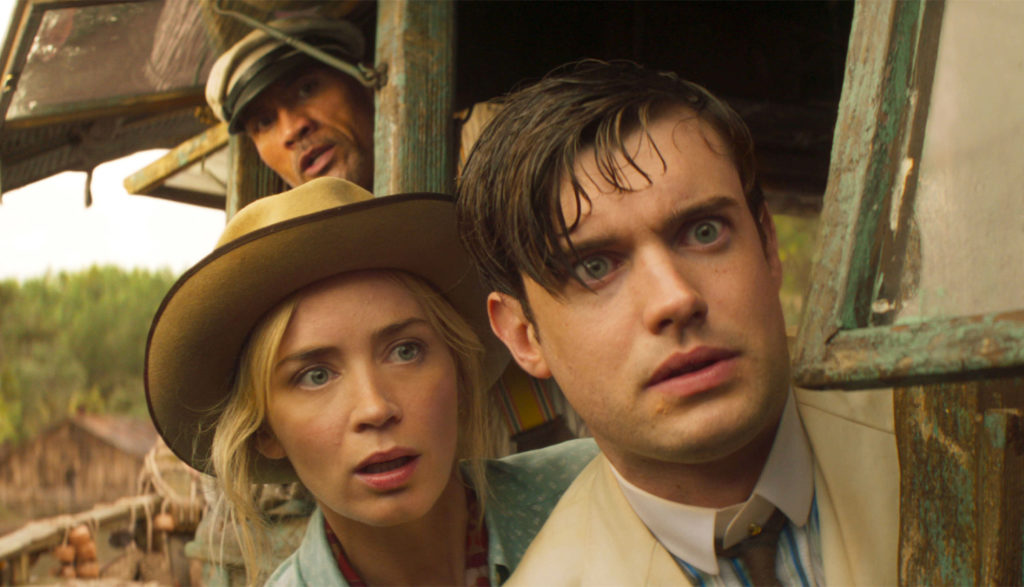
Dr. Lily Houghton (Emily Blunt) and her brother MacGregor (Jack Whitehall) hire the services of Frank Wolff (Dwayne Johnson) for their Jungle Cruise

Disney’s attempt to make lightning strike twice may have come a little too literally, as the studio presents a narrative that is essentially an amalgamation of all the Pirates films. This is not necessarily a bad thing, from a narrative perspective; after all, curses are always a fun plot point in any high-action family fantasy drama – but the influences from the Pirates series, such as enemies who have become one with their surroundings (like the crew of the Flying Dutchman), cursed by a treasure they had no right to claim (like the crew of the Black Pearl), connected to a life-giving mystical place connected to tears (like the Fountain of Youth in On Stranger Tides). However, it must be reiterated that while the story influences are not exactly hidden; they do come together to make a compelling enough story, and one that is well acted by its leads; though this is certainly not the best film from either Blunt or Johnson – it probably is the strongest cinematic outing for Jack Whitehall so far, though not without flaws.

The primary issue with Jungle Cruise is really that it just lacks depth, both in its narrative and in its characterisation. Lily Houghton is a stereotypical rendition of a suffrage-era, tomboyish female adventurer; where the focus of her characterisation is not that she is an accomplished scientist determined to blend a tale of legend with reality for the good of society, but that she is a woman wearing trousers who can throw a half-decent punch (though we don’t get to see her even do that much). Similarly, while MacGregor does get the opportunity to demonstrate some actual character growth throughout the narrative, it’s not for positive means; we’re introduced to a nervous, foppish young man, who goes on to reveal that his nature is due to him being gay (though not in so many words, given Disney’s desire to court all possible markets without offending any, no matter how archaic their views); thus rendering would could have been an actually interesting character note to be null and void by crafting it around a tired stereotype. Frank suffers similarly, though the second act revelations about his character’s history are actually interesting insofar as they really have to be in order to drive the central narrative, but other than that Frank essentially seems to be Disney wanting to bring Johnson’s 2016 Popeye costume that he wore for Hallowe’en onto the screen, stumbling only over the fact they don’t own the intellectual property required to make their own Popeye film. Still, the cast play their roles well; and the three central leads have a decent chemistry between them, though nothing that’s likely to set the world on fire in any way.

Prince Joachim (Jesse Plemons) somehow brings a u-boat to the Amazon in Disney’s Jungle Cruise.

There’s plenty of action for Johnson and Blunt to get their teeth into; and the film is arguably at its best when they are at full gear, and when they’re allowed to be a little more goofy, with Johnson’s charm driving enjoyably shady Frank during his antics, and Blunt’s crisp responses to his nonsense elevating the relationship further. The script is at its worst when the characters are making glib quips and one-liners, surely an unfortunate side-effect of being made by the same company that owns Marvel Studios, where committees perhaps don’t realise that we can’t do this in every film we make, or else they’ll all end up blending into each other for no reason. It’s at its best when it allows its cast to have a little more freedom with it; the moments of high peril that require realistic responses, the moments of genuine emotion between the characters; the more dramatic exchanges between Johnson and Blunt. That is not to say that it isn’t a funny film, it has its fair share of good jokes; it just also has a reasonable helping of jokes that aren’t as good, that can’t always be saved by the natural wit and charm of its cast; and credit for humour must go to Jesse Plemons as Prince Joachim, who chews the scenery in nearly every appearance as the fanatical royal, while also providing a genuine sense of threat; despite the historical context required for his presence being thin on the ground (the Germans had very little impact as a colonial force in South America), and his accent by steadfastly ludicrous (though given Paul Giamatti’s similarly ludicrous accent, this may have been entirely purposeful as a decision).

Plenty of threats await our heroes in Disney’s Jungle Cruise

Visually, Jungle Cruise is certainly a modern live-action adventure movie made by Disney; there’s plenty of colour and action on screen to keep the viewer engaged, and the moments where the action slows down are still bright and enjoyable. The soundtrack from James Newton Howard is suitably enjoyable, though is punctuated by two unexpected inclusions of an instrumental, full-orchestra recording of Metallica’s classic track Nothing Else Matters, which while engaging enough for the scenes it covers, isn’t exactly tonally appropriate for a film set in Brazil in 1916, and I did find its inclusion took me out of the moment somewhat when it was utilised.


All in all, Jungle Cruise is fine. It’s certainly not a bad film by any stretch of the imagination; but in relation to its closest sibling, it certainly lacks that x factor that Curse Of The Black Pearl had upon its release. Maybe it suffers from the 20 years it took to make after Pirates Of The Caribbean proved that this sort of experiment could actually work; or perhaps it suffers from the company adopting too much of what makes Marvel’s output work and shoehorning it into its disconnected properties; but while it’s an appropriately fun family action-adventure, it’s certainly not as could as it probably could have been, and that’s more of a shame than anything else. If you have Disney+ it’s a fun enough way to pass two hours, especially for those with older kids/younger teenagers; but it’s not one to search out if you didn’t already want to see it, because it probably doesn’t have anything revelatory for you.

Dave McGuckin is a theatre graduate, bar manager, former comedian and eternal film lover from Northern Ireland, now living in Canada. He began writing film reviews in 2016 for The Grade and then Great Central, both based in Leicester, England.

This site will collate these reviews, but also provides a platform for new reviews and essays on cinema, television, videogaming and (possibly) more

If you enjoy what you read, please consider sharing on social media, or leaving a small donation towards webhosting and content creation costs on Ko-Fi at http://www.ko-fi.com/davewritesreviews.

Check out the official social media links for Dave Writes Reviews below:

Encanto

We’re not just protecting what we have, but all that could be and everything that should be.

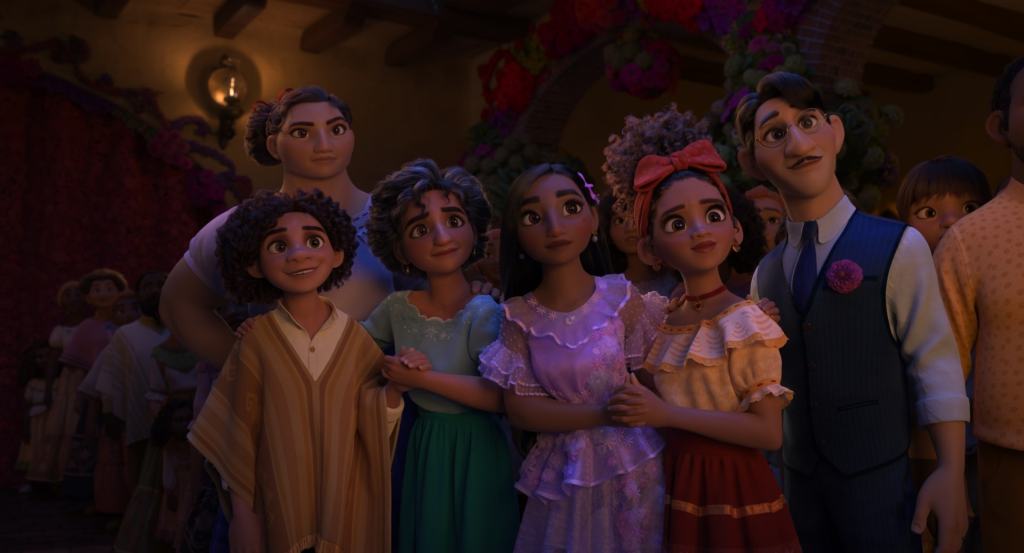
It’s no secret that Disney Animation has dominated the animated movie market since animation became a viable method of cinematic expression. Disney’s newest offering, Encanto, brings the story of Mirabel Madrigal (Stephanie Beatriz), one of the youngest members of the magical Madrigal family, whose matriarch Abuela Alma (Maria Cecilia Botero) established the community around a magical, sentient house created by a magic candle; created after her husband Pedro sacrifices himself to save them from marauders attacking their hometown. Mirabel is the only member of the Madrigal family not to receive her own personal magical gift; and when the candle’s flame starts to fade, she races against time to find out whether she can restore it – or whether she is to blame.

Mirabel Madrigal (Stephanie Beatriz) introduces us to her family through song in Disney’s Encanto

Encanto continues the modern tradition of Disney’s animation of moving away from adaptation of established fairytales, choosing instead to create a new story crafted around folklore and spirituality from a specific region (much like Moana or Raya And The Last Dragon); this time leaning on Latin American culture, specifically that of Colombia, influenced heavily by the experiences of Juan Rendon and Natalie Osma, who worked with screenwriters Charise Castro Smith and Jared Bush to craft the world of Encanto, along with input from Byron Howard, Jason Hand, Nancy Kruse and Lin-Manuel Miranda, the latter of whom also crafted the excellent soundtrack. As with all Disney musical adventures, the music is at the heart of this story; and Miranda has arguably produced some of his best work for this film; building on the excellent soundtrack to Moana and his experience in bringing Latin American music into mainstream productions to create an incredibly accessible and entertaining soundtrack – one could say that it’s a bop, if one was so inclined. The songs are fronted heavily by Stephanie Beatriz (whose singing voice was an unexpected treat); but in traditional Disney style, everyone gets their chance to shine at various points, and it’s no surprise that the primary ensemble narrative song, We Don’t Talk About Bruno, is the one which has currently sprung to the top of the music charts following Encanto’s Disney+ streaming release, given Miranda’s experience with stage musicals, but any of these tracks could easily stake a claim on a number one spot – as is now standard, I’m listening to the soundtrack while writing this review and I’m genuinely struggling to stop the rest of my body from grooving along while I try to type. I don’t know which song from this soundtrack will be pushed for the Oscar nomination, but I think it’d be a real shame if Miranda misses out again (I’m still salty about City Of Stars from La La Land beating out How Far I’ll Go from Moana in 2016).

Music is not the only contributing factor to Encanto, of course, and the voice cast is on top form. Stephanie Beatriz’s masterful control over the pitch of her voice allows for a range of emotional response that many would not necessarily be able to achieve, as well as adding a depth to her singing performances, and it’s a surprise that she hasn’t been tapped for more voiceover work. The passion and determination she evokes from Mirabel on her quest to restore the family’s magic is matched only by the range of emotion she pulls from the character, and her comic chops get their run out as well; allowing her to bring forth a perfectly-rounded central character for the audience to take their point of view from. The rest of the family Madrigal rely on stereotypes related to their magical abilities to build their characterisation from, in traditional fantasy style, and the supporting cast does a great job of bringing this to life. Particular shout-out goes to Adassa, who makes her big-screen debut here as the Mirabel’s cousin Dolores, who can hear everything that happens in the town and only ever speaks at a hurried whisper; enhanced by her parts in the soundtrack leaning into her reggaeton performance background by being performed in a rap tamber, against the rest of the cast’s more traditional Latin-American singing style, which allows Dolores to stand out performatively. Diane Guerero and Jessica Darrow also impress as Mirabel’s sisters Isabella and Luisa, and the sisterly rivalry the three have with each other bubbles under the surface of the primary narrative in a satisfying way, fuelling Mirabel’s quest in a subtext that will speak to everyone with siblings.

Adassa makes the most of her big-screen debut as Dolores Madrigal in Disney’s Encanto.

The older generations get their time too, and are also brought to life with as much care and love as the youngsters; Maria Botello shines as Abuela Alma, carrying not only the authority of the matriarch of both the family and the town, but also the love and fear that comes with leading a family. John Leguizamo is a joy as Bruno, putting in a performance that can’t be discussed at length without spoilers, but sells the character perfectly for the narrative. The rest of the family is rounded out by Mirabel’s parents, aunt and uncle and cousins; all of whom have a less impactful role in the narrative, but are still brought to life in a passionate and considerate way. Angie Cepeda gets her moment across from Beatriz as Mirabel’s mother Julietta, as does Wilmer Valderrama as her father Agustin; and it’s only upon reflection that I realise they had a more limited role in the narrative itself. That is certainly not a criticism, and the key scene that Mirabel and Julietta share together is deeply important for Mirabel’s journey (perhaps more so than any other isolated aspect of the story); but it does highlight the difficulty in highlighting performances in an ensemble piece such as this, where every supporting character plays as important a part in the hero’s quest as everyone else.

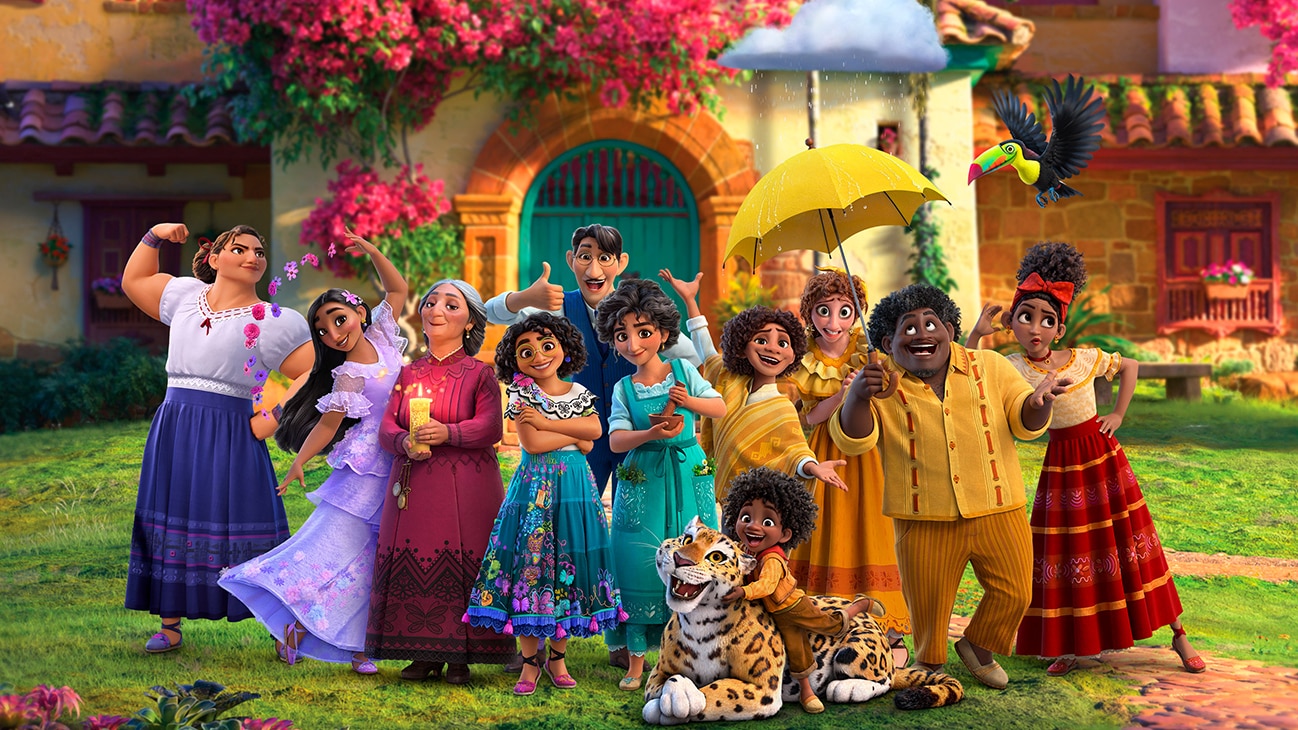
The family Madrigal is realised by a wonderful ensemble cast in Disney’s Encanto.

One member of the ensemble cast whose impact is less felt in the narrative, but on that I feel should be highlighted, is Alan Tudyk; who is credited as the voice of a toucan, continuing the trend of casting Tudyk as animal companions in Disney animated films, and one which I hope continues in perpetuity for as long as Tudyk wishes to keep doing it, because it makes me laugh every time I watch the credits of a modern Disney feature.

It would be remiss not to mention the animation, and while it does not look to break boundaries in the same way that Sony Animation are with the likes of Spider-Man: Into The Spiderverse; Encanto is an unashamedly beautiful film. The animators have lent into the magical nature of the town to craft a bright and vibrant world for the Madrigal family to occupy, enhanced by their own magic for the better, and there is an obvious joy of creation that emanates in every scene. From the detail of the colours on the animals, such as the aforementioned toucan, to the diversity of the flowers bloomed by Isabella and the dynamic weather effects created by Mirabel’s aunt Pepa (Carolina Gaitan); or the mysterious green glow through the shadows surrounding the depictions of Bruno; this film is a visual delight; perfectly complimenting the bright joy of the soundtrack to create a feast for the senses.

Disney’s Encanto took inspiration from Colombian towns for its location, brought to life with beautiful visuals.

The highlight of Encanto for me, again following on from Moana and Raya And The Last Dragon, is that this film does not have a villain, in the true sense of the word. There certainly is threat, and danger and suspense; but there is no singular person around whom that threat is built, and that method of narrative construction resonates in such a powerful way for me. This film is not about defeating the bad guy; it is about overcoming personal self-doubt, anxiety and fear; deeply personal concepts and constructions that everyone can relate to. Disney’s pivoting in its animations to telling stories that can inspire confidence and belief in one’s self, establishing that it is love and friendship and family that we have to support is, is such a fascinating direction to take, and one that I am deeply enjoying watching develop and grow.


Encanto is a joy to watch, with a fascinating story brought together by an excellent cast, incredible music and beautiful visuals. I cannot recommend it enough, especially for a family movie night.

Dave McGuckin is a theatre graduate, bar manager, former comedian and eternal film lover from Northern Ireland, now living in Canada. He began writing film reviews in 2016 for The Grade and then Great Central, both based in Leicester, England.

This site will collate these reviews, but also provides a platform for new reviews and essays on cinema, television, videogaming and (possibly) more

If you enjoy what you read, please consider sharing on social media, or leaving a small donation towards webhosting and content creation costs on Ko-Fi at http://www.ko-fi.com/davewritesreviews.

Check out the official social media links for Dave Writes Reviews below:

Spider-Man: No Way Home

You have a gift. You have power. And with great power… there must also come great responsibility.

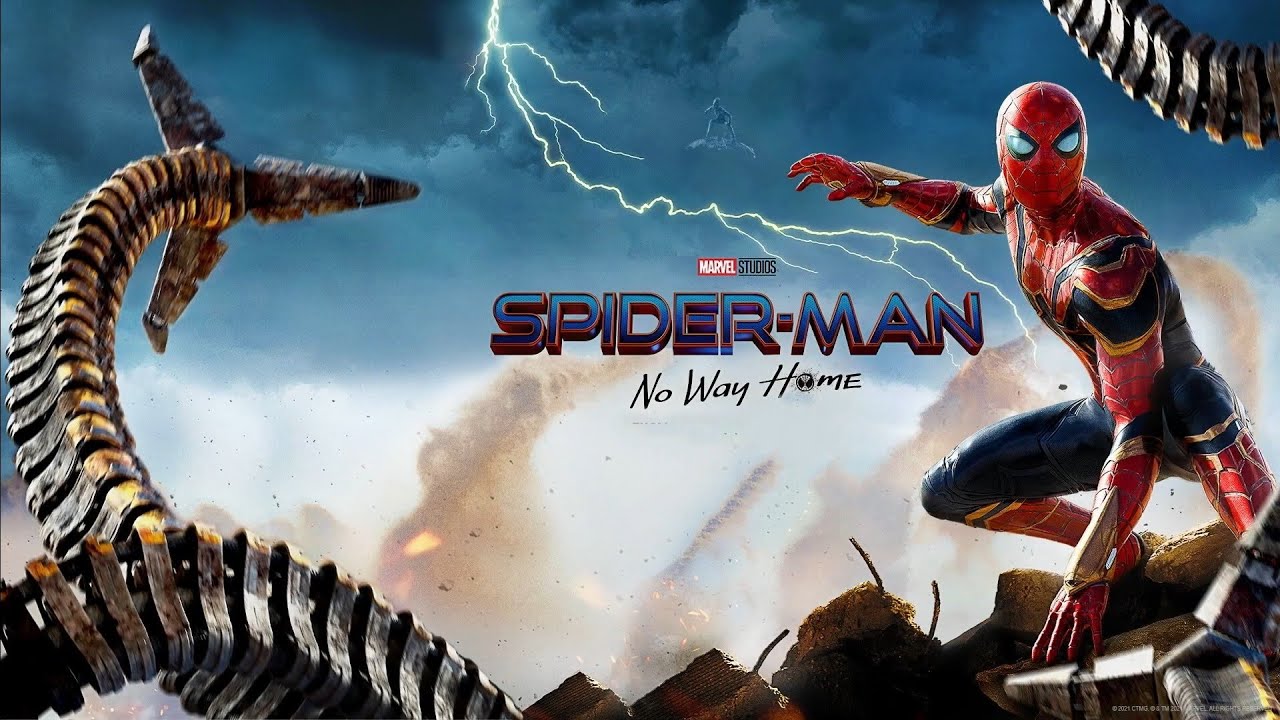
Spider-Man is, arguably, one of the most beloved superheroes on the planet; and even more arguably, the most beloved of Marvel’s superhero roster. 60 years of comic books, TV shows and movies; the latter starting with Sam Raimi’s highly-regarded Spider-Man in 2002, have had no small part in building that love for the character to the point that unparalleled excitement gripped Marvel fans when it was announced that Sony and Disney had reached an agreement that would allow Peter Parker to appear in the MCU, debuting in 2016’s Captain America: Civil War. The five years and five movies that built up to 2021’s Spider-Man: No Way Home was exciting enough for most; until it was revealed that Alfred Molina, Jamie Foxx, Willem Defoe, Rhys Ifans and Thomas Haden Church would all be reprising their roles from the Raimi Spider-Man trilogy and the two Amazing Spider-Man films; drawing the other big screen outings for the webhead into the Marvel Cinematic Universe by means of multiversal shenanigans. So… did they pull it off?

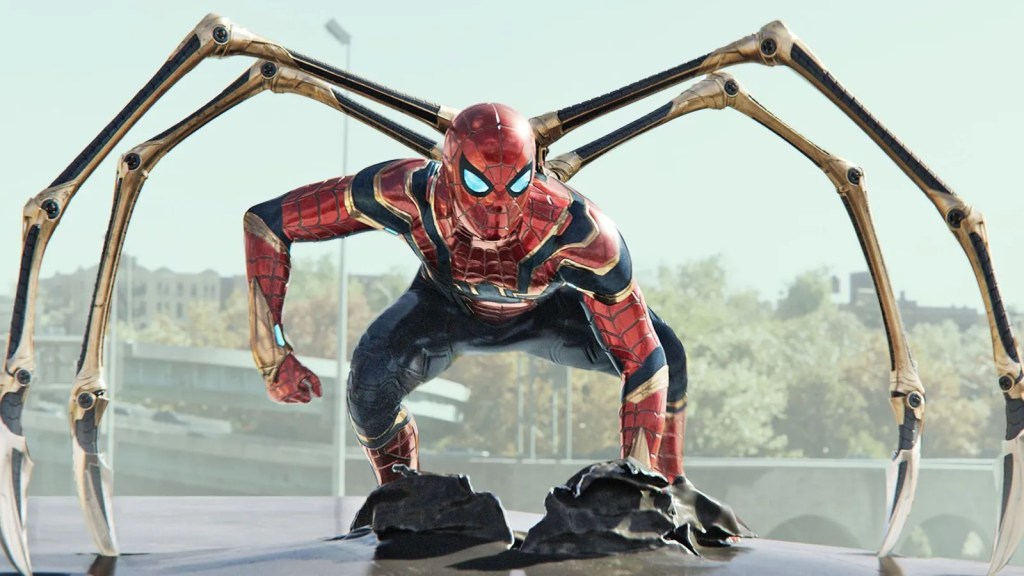
Spider-Man is poised, ready to fight, with his mechanical arms deployed.
Spider-Man (Tom Holland) is ready to fight in Marvel’s Spider-Man: No Way Home

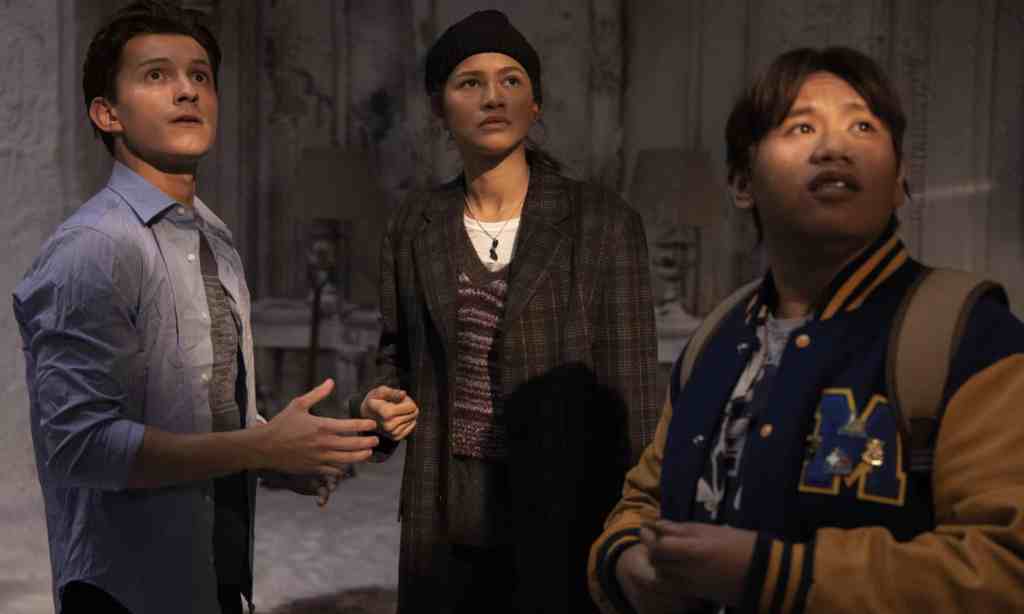
Following Mysterio’s final act of revealing Peter Parker’s (Tom Holland) secret identity to the world and sullying his name; we join Peter, MJ (Zendaya) and Ned (Jacob Batalon) as they tries to figure out how to deal with Peter’s unexpected notoriety, and sudden murder charges. Distraught, he reaches out to Dr. Strange (Benedict Cumberbatch) for help; but when Peter interferes in the spell Strange creates to make the world forget that he is Spider-Man; villainous visitors from other parts of the multiverse begin to appear in New York City, putting everyone’s lives at risk…

As regular readers will already be aware, I endeavour to keep my reviews entirely spoiler-free so that you can go away and enjoy the film for what it is in terms of narrative, with my own recommendations being based more on the technical and performative aspects of the film to present a recommendation. For Spider-Man: No Way Home, this really does leave me with a much smaller amount that I can talk about, certainly less than I want to talk about with this movie, so I’m going to get the recommendation in now before I carry on – if you like Spider-Man movies, or if you like superhero movies; you need to watch this film. Ideally, if it is safe to do so, you would go and watch it on the biggest cinema screen you can find (though I am aware that right now, that is a considerable ask); but this is arguably the best live action Spider-Man film ever made; and it quite likely is the best live action superhero film ever made (that “live action” addendum is in there because I still think Spider-Man: Into The Spider-Verse is the pinnacle of both categories). Now, this recommendation does rely somewhat on nostalgia, as the inclusion of the previous two series’ villains does mean that this outing has essentially had 20 years of build-up, and the sheer intrigue around how they managed to make the narrative work with any villains from entirely narratively disconnected Spider-Man movies, never mind with five of them (when we all know one of the worst things a superhero movie can do is shoehorn in too many villains) was one of the driving factors in me wanting to see it as earnestly as I did, but the writing duo of Chris McKenna and Erik Sommers absolutely knocked it out of the park in that regard. While not every villain gets an equal amount of screen time, with Dr. Octavius (Aflred Molina), Norman Osbourne (Willem Defoe) and Electro (Jamie Foxx) really getting the focus of the narrative (which may potentially have been caused by scheduling issues around the pandemic, if press reports are to be believed); all 5 actors get their moments to shine and nobody feels like they were there by accident, and everyone definitely seemed to be having a lot of fun with reprising their previous roles, with Defoe in particular absolutely chewing up the scenery whenever he gets the chance.

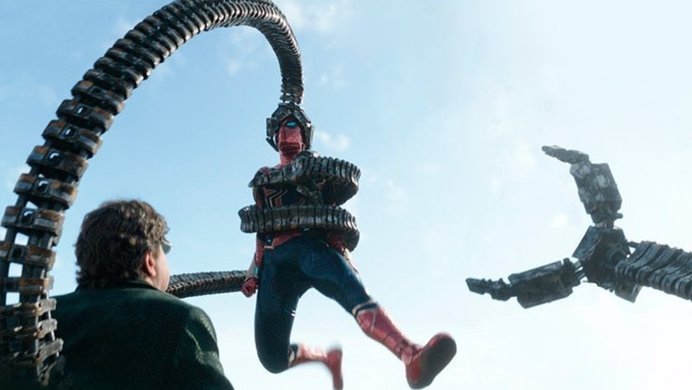
Dr. Octavius holds Spider-Man in his mechanical arms.
Dr. Otto Octavius (Alfred Molina) gets to grips with a new Spider-Man in Marvel’s Spider-Man: No Way Home

While the returning villains are a lot of fun, it’s the central cast of Holland, Zendaya and Batalon who make this outing what it is, and demonstrate they have the chops to keep Spider-Man going further into the journey of the MCU, if that is what the future holds for them. While the debate over who the best Spider-Man actor is will likely never end; McKenna and Sommers provided Holland with a script that he could really get his teeth into in this outing, and director Jon Watts somehow manages to bring even more of that trademark Parker hope and earnestness out of Holland for their third project together. A lot happens to Peter, and to Spider-Man in this film; and Holland holds on to all of it with both hands and wrings it dry of depth and emotion at every turn, with a few scenes in particular demonstrating that Holland has so much more to offer as Peter Parker beyond cool flips and goofy one-liners, as all Spider-Man fans would be expecting from a character whose history is bound to numerous deep, emotional moments.

Peter Parker, MJ and Ned Leeds stand in the foyer of the Sanctum Sanctorum.
Peter Parker (Tom Holland), MJ (Zendaya) and Ned Leeds (Jacob Batalon) pay a visit to the Sanctum Sanctorum in Marvel’s Spider-Man: No Way Home

Zendaya and Batalon benefit from the extended runtime of this film, with more screen time allowing them to flesh out their characters that little more, and the fact that neither of them have to hide that they both know that Peter is Spider-Man allows them to get closer to each other as well; something which elevates the “guy in the chair” moments as they support Peter on his journey. However, it’s when Peter is not wearing the mask that these two come into their own, and the film’s opening act (before Spider-Man puts in his request to Dr. Strange) sees the three dealing not only with Peter’s unexpected infamy, but also with the normal aspects of being a high school senior; applying for colleges, dealing with schoolwork and part time jobs. We get more insight into the home lives and backgrounds of Ned and MJ here, and it does a lot to solidify their connection to Peter beyond the fact they go to the same school, and the two actors make the most of their time as both emotional guides to Peter, and as comic relief when needed.

Comic relief also comes in the form of the rest of the extended cast from the MCU Spider-Man trilogy; primarily Happy Hogan (Jon Favreau) and Flash Thompson (Tony Revolori), with other small appearances from the likes of Betty Brant (Angourie Rice) and, of course, J.K. Simmons reprising his role as J. Jonah Jameson, still reimagined into his new podcasting/Info Wars-esque persona (though his return comes with its own Raimi-trilogy easter eggs and references). Marisa Tomei reprises her role as Aunt May, and while her relationship with Happy Hogan continues to provide comedic interludes, she steps into a bigger role as an emotional focal point for Peter in this outing; providing guidance and assistance for him as he struggles with the weight of his ever-changing circumstances, and with the difficulty of dealing with his inter-universal adversaries. Dr. Strange is also on hand to help Peter deal with the latter; though, as some people were concerned that he is simply replacing Peter’s bearded father figure now that Tony Stark is gone; I will put minds at ease that Strange is not here to take that place; and his relationship with Spider-Man is actually much more complicated, in a very positive way for the narrative.

Peter Parker watches as Dr. Strange casts a spell to make people forget that Peter is Spider-Man.
Peter Parker calls on Dr. Strange (Benedict Cumberbatch) for help in Marvel’s Spider-Man: No Way Home

Aside from the strong (and numerous) central performances; this film is also visually and atmospherically breathtaking. While a lot of it is down to the ever-improving CGI coming out of Marvel Studios; Jon Watts uses his set-pieces very well, especially during the battle scenes – not only do they look impressive, but they’re an excellent opportunity to show off exactly what Peter is really capable of; both as Spider-Man and as Peter himself (who, lest we not forget, is an incredibly intelligent young man in his own right). Fans of the recent Spider-Man games on the PlayStation systems will get a kick out of some of the moves executed in the fight scenes; and this is the first time in this trilogy (and possibly in every Spider-Man film so far) where I felt that we truly see the power that Spider-Man possesses, as there are various moments where he is much less restrained in his own attacks. The action is beautifully complimented by the score from Michael Giacchino; who takes the playful MCU Spider-Man theme and dials it up to 11; layering greater depth of emotion at all points (even if the actual soundtrack has some very silly track titles, presumably to avoid any spoilers in itself. Check that out on your favourite streaming service if you want to see what I mean) and turns the soundtrack into an epic score befitting such a huge movie.

To get into anything else would be to tempt spoilers, so once again; I highly recommend this film. It is one of the best of Marvel’s outings so far, and if you’re a Spider-Man fan, it’s packed with so much great stuff that it’s going to be almost impossible not to love every second of it. I’ve never been more excited to see what happens next.

Dave McGuckin is a theatre graduate, bar manager, former comedian and eternal film lover from Northern Ireland, now living in Canada. He began writing film reviews in 2016 for The Grade and then Great Central, both based in Leicester, England.

This site will collate these reviews, but also provides a platform for new reviews and essays on cinema, television, videogaming and (possibly) more

If you enjoy what you read, please consider sharing on social media, or leaving a small donation towards webhosting and content creation costs on Ko-Fi at http://www.ko-fi.com/davewritesreviews.

Check out the official social media links for Dave Writes Reviews below:
Last Night In Soho

“This is London. Someone has died in every room, in every building, and on every street corner in this city.”

I don’t think it’s a controversial statement to say that Edgar Wright may be one of the greatest film directors of the current generation. Having started his career both writing and directing his own short films and British comedy TV series, his work alongside Simon Pegg and Nick Frost resulted in an appropriate notoriety, with the Cornetto Trilogy of rom-zom-com Shaun Of The Dead, buddy cop movie Hot Fuzz and action sci-fi flick The World’s End giving us an insight into Wright’s flexibility when it comes to genre. This is something which he has continued to demonstrate, bouncing from the likes of comic book adaptation Scott Pilgrim Vs. The World to heist action in Baby Driver, taking pit stops along the way with music videos, a Sparks Brothers documentary, and more. Now he returns with Last Night In Soho, his first foray into horror since Shaun Of The Dead, but in a much more serious way. Has Wright nailed another genre film?

Ellie Turner (Thomasin McKenzie) mirrors Sandie (Anya Taylor-Joy) in Last Night In Soho

Eloise Turner (Thomasin McKenzie), known as Ellie, moves from Cornwall to London to attend the London College of Fashion. After a horrible first night living in student accommodation, she moves into the top floor room of a bedsit owned by the kind, but firm, elderly Ms. Collins (Diana Rigg). Ellie has an unusual gift; the ability to see ghosts, which to that point had manifested only in seeing her deceased mother in mirrors. However, on her first night in the bedsit, she begins to dream of aspiring 1960’s singer Sandie (Anja Taylor-Joy); dreams which become more harrowing as time goes on… dreams which start to affect Ellie’s everyday life…

Years of jump scares have affected what the general public may think of when a film is described as a horror film. Last Night In Soho doesn’t really contain any jump scares, and for some, that may mean the horror tag is a misnomer – and for a good duration of the film, I would have agreed; instead wanting to attribute it with a tag of something along the lines of “supernatural thriller” instead. When I walked out of the cinema, I realised that actually wouldn’t be right; in fact, horror is the correct term, and I think that was mostly informed by the body-covering goosebumps that remained on my arms until long after I had gotten home from the theatre. Wright’s iteration of horror harks back more to the mindset of the likes of Alfred Hitchcock and Terence Fisher; presenting a building, creeping dread that manifests both through and around Ellie throughout her dreamworld trips to the 60’s, becoming more and more nerve-wracking when her visions begin to manifest themselves in the waking world as well. Wright uses his special effects carefully and poignantly to this end, and as the historical manifestation come further away from dreamlike trips to a time which Ellie idolises and present themselves in a more horrific way around her, the overlapping of the reality of her modern surroundings and the ghoulish visions she is subjected to blend wonderfully through the CGI, the lighting effects and through Steven Price’s atmospheric score, which perfectly complements the bevy of licensed songs from the era which Wright uses to great effect in the piece. That reserved attitude towards special effects is a trademark of Wright, and Last Night In Soho carries with it Wright’s dedication towards practical effects; with his use of technical mirror acting (in which a mirror is not actually present) and sweeping shots used to exact quick actor swaps and repositionings being key for a lot of the shots, all accented by beautiful sets, bustling crowds and audiences and crafted together with that aforementioned score and wonderful, atmospheric lighting. In terms of aesthetics and screen presence, this could be the most “Edgar Wright” that an Edgar Wright movie has ever been.

Ellie watches aspiring singer Sandie perform in Last Night In Soho

Dedication to location is also pertinent in Last Night In Soho, and Wright’s utilisation of Soho is tremendous. It’s become a cinema cliché that New York is a character in films set in the Big Apple; but it’s clearly not the only location which can hold a character role, as the lights and sounds of Soho, both in the modern and in the past sequences of Last Night In Soho, play as much of a part in establishing the emotional tone of a scene as the score, the effects and the actors do.

Speaking of the actors; Wright has assembled an incredible cast for Last Night In Soho, and clearly knows how to get the most out of them. Thomasin McKenzie may already have had an impressive output for such a young actor, but I have no doubt in my mind that Ellie Turner will be one of the roles which defines her as an actor for the duration of her career. Ellie is kind, empathetic and passionate; an introverted oddball who doesn’t really fit in with modern society and whose gift eventually puts her in direct harm. McKenzie sells Ellie not just with with the script, but her physicality in this film is exquisite, especially at the height of the horror scenes. Ellie’s personality is offset by that of Sandie’s, brought to life perfectly by Anya Taylor-Joy; who radiates confidence and charm with every step and flatter of her eyelashes. The juxtaposition creates something almost aspirational, and McKenzie does an excellent job demonstrating how her visions of Sandie begin to influence her life for the positive, only to come crashing down around her as the narrative progresses. The two actors don’t directly interact often, but Wright’s directorial skill is demonstrated during the sequences where they literally mirror each other during Ellie’s visions of Sandie, as the two actresses often swap in and out, most notably during a sequence of Sandie dancing with her teddy-boy manager and love interest Jack (Matt Smith).

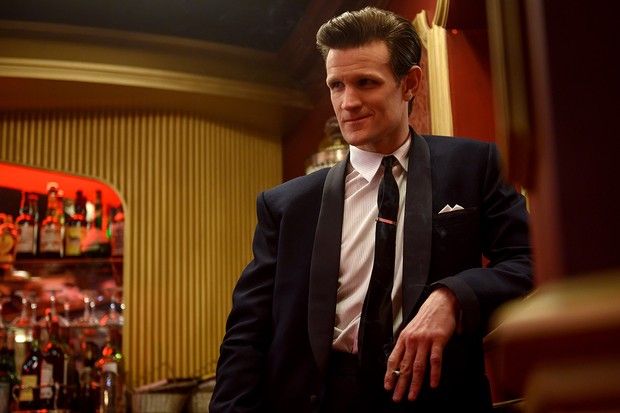
Matt Smith oozes both charm and danger as Jack in Last Night In Soho

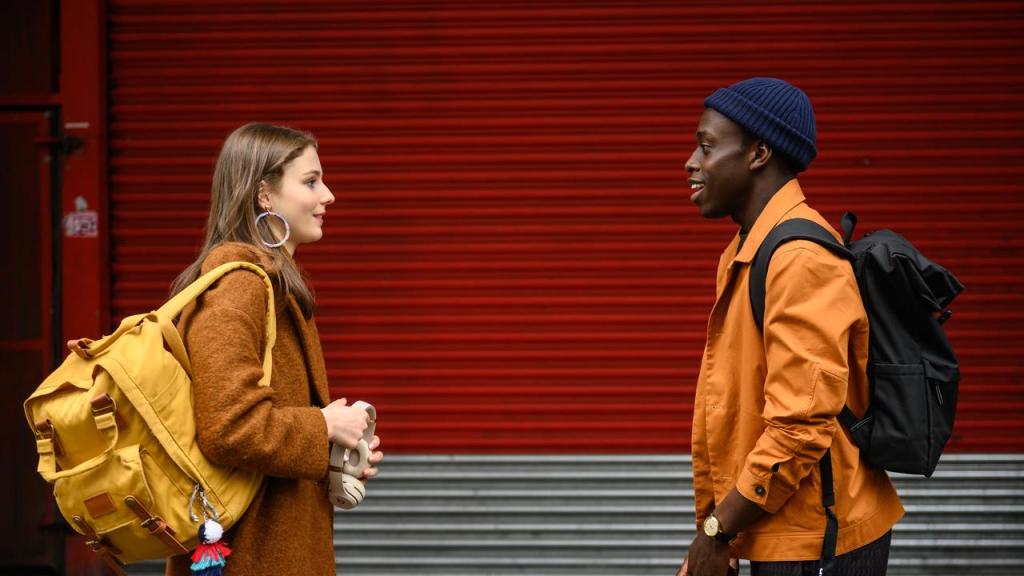
As with Taylor-Joy, Smith does an excellent job of displaying Jack’s confidence and swagger, and even during the more tender moments we see of him with Sandie, he still manages to present a certain level of threat beneath the surface; though Taylor-Joy’s performance easily leads the audience to believe that she is more than capable of looking after herself around his ilk; thought that begins to slide as the narrative progresses and the danger Sandie is in becomes more apparent. Sandie is not the only one with a romantic interest, and Ellie’s classmate John (Michael Ajao) creates a stunning juxtaposition with Jack; as the warning from Ellie’s grandmother initially leads her to be wary of all men, but Ajao brings a deeply kind and empathetic performance in his first cinematic performance since 2011’s Attack The Block. John bolsters our grounding in reality as Ellie’s ability to distinguish what is real around her fails more heavily; and he also provides a lot of the more light-hearted moments, excellently placed within the story to ease the tension and give the audience a respite from the creeping dread. Last Night In Soho was also the final performance of the late Dame Diana Rigg, and though it is a small role, it still gives the titan of stage and screen plenty to do with her time. Her impact on the narrative is important, and her moments on screen are the perfect summation of what made Rigg such a compelling talent for such a long career.

Ellie chats with love interest John (Michael Ajao) for a moment of respite in Last Night In Soho

There’s not much else that can be said without risking wandering into spoiler territory, which I absolutely do not want to do; this is a film which must be seen fresh to get its full effect. If there are cinema screenings near you and they are safe to attend then I heartily recommend you do so, as Wright’s ability to create cinematic experiences is rivalled by very few in this day and age;  but this will also be worth watching when it becomes available on smaller screens as well. If you are like me and are often put off by the notion of horror movies due to the influence of what modern horror often looks and feels like, then trust my recommendation that this is a classic piece of thrilling, suspenseful cinema that uses horror tropes effectively and impactfully, and is worth the time of anyone who enjoys winding, intricate narrative cinema presented by a skilled director working at his absolute best, delivered through an excellent cast.

Watch this film.

Dave McGuckin is a theatre graduate, bar manager, former comedian and eternal film lover from Northern Ireland, now living in Canada. He began writing film reviews in 2016 for The Grade and then Great Central, both based in Leicester, England.

This site will collate these reviews, but also provides a platform for new reviews and essays on cinema, television, videogaming and (possibly) more

If you enjoy what you read, please consider sharing on social media, or leaving a small donation towards webhosting and content creation costs on Ko-Fi at http://www.ko-fi.com/davewritesreviews.

Check out the official social media links for Dave Writes Reviews below: