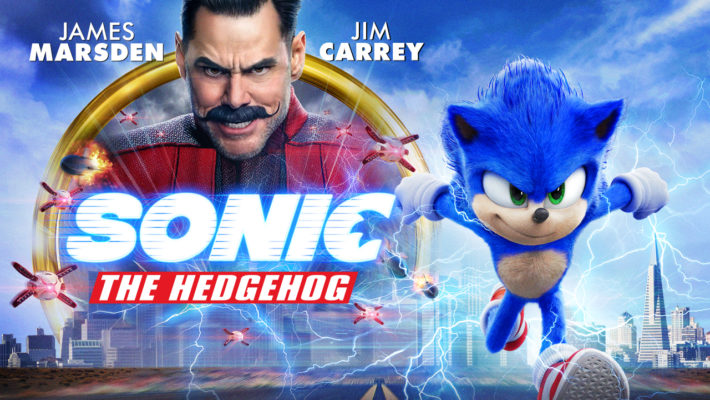
Sonic The Hedgehog

“I wouldn’t call it spying. We were all hanging out, and no-one knew I was there.”

When I was a kid, my brother had an accident on the playground and ended up with a concussion. He was taken to hospital, where they decided to keep him overnight for observation. When we went to visit him, we found him in the playroom using something I had never seen before – a Sega Mega Drive. He was playing a game with a bright blue hedgehog, and a fox with two tails, navigating a series of platforms, traps, and robots in a strange set of purple and orange caves – the Mystic Cave Zone in Sonic The Hedgehog 2. The blue blur became Sega’s platforming mascot in 1991, and after 30 years of consistent representation in video games and TV shows, Sonic was ready to make his live action cinematic debut in Sonic The Hedgehog. So, how did he do?

On a faraway planet, a young supersonic hedgehog named Sonic (Ben Schwartz) is sent to Earth to hide from a tribe of echidnas, who want to try and steal his power of speed. After spending 10 years in isolation, hiding on the outskirts of the town Green Hills; an accidental overuse of his speed abilities results in a huge electromagnetic pulse, knocking out power to half the eastern seaboard. This attracts the attention of the US military, who send eccentric scientific genius Dr. Robotnik (Jim Carey) to ascertain the cause. Knowing he’s in danger, Sonic attempts to use the magic rings that brought him to Earth to escape to a new planet, but a chance encounter with local sheriff Tom Wachowski (James Marsden) results in Sonic losing his rings and enlisting Wachowski’s help in retrieving them.
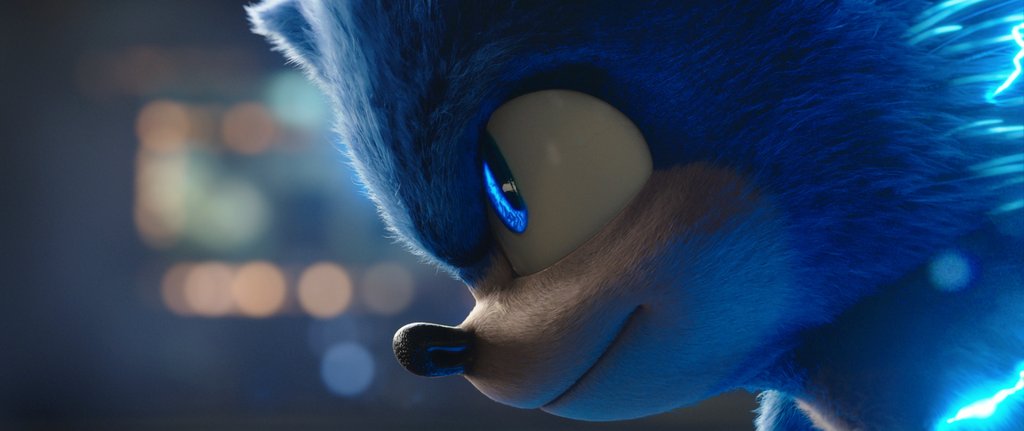
Sonic (Ben Schwartz) is ready for action in Sonic The Hedgehog.

Video game movies traditionally get a bad rap, and often justifiably so. Adapting something which comes with a lot of baggage and lore is difficult at the best of times; but adapting a medium which is so interactive into a spectator experience has always come with issues. The early Sonic games were two dimensional action platformers, with a focus on getting through each level as quickly as possible as part of the core gameplay loop, but even as stories became bigger and the animation became more advanced; most modern Sonic games have maintained that as a central feature (when playing as Sonic himself, anyway). For Sonic The Hedgehog the film, the focus of a lot of the action is very much on Sonic’s speed; and while the representation of that speed does fall into fairly stereotypical territory at times (do we need a sequence of every character with super speed getting up to shenanigans in slow motion, Hollywood?), that focus keeps the action of the film anchored around that central theme. As with the expected slow-motion sequences, there’s also a lot of perhaps unnecessary animation around Sonic’s speed itself; with the art direction taking from the likes of DC’s The Flash series in adding extra colour and electricity effects to Sonic when he’s moving at top speed. Beyond the establishing EMP story beat, it’s not really necessary for the visualisation throughout the rest of the film – though given how the character received a complete visual redesign after the initial trailer, I won’t speed too long griping about effects. The CGI is pretty impressive for Sonic The Hedgehog, particularly with Sonic himself, and with Dr. Robotnik’s army of drones. This should come as no surprise, given that director Jeff Fowler’s background lies in CGI animation; and he demonstrates he can handle live-action too here, in his full-length cinematic directorial debut.
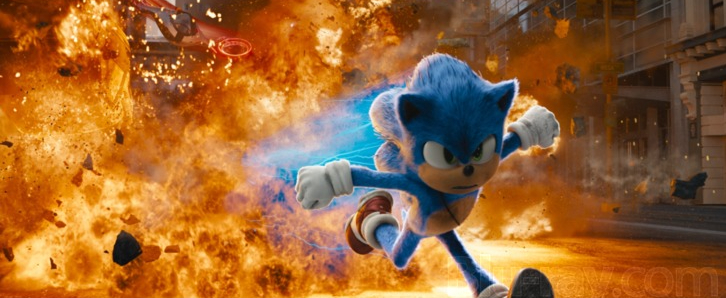
Nobody can deny that the redesign of the blue blur for Sonic The Hedgehog was a good idea.

Now, this review has hit on a few negative points right off the bat, which may make it appear like this is going to be the tone of the piece; but not so, because I have to say that I really enjoy this film, and there’s a lot that they got right with it. Firstly, and most importantly, this is a family film which is establishing a potential franchise, and the creative team have approached this in exactly the right way. I’ve already mentioned the problem with adapting video games with dense lore, and a lot of issues that films face revolve around both relying too heavily on said lore, or ignoring it altogether. The good thing about the Sonic The Hedgehog games, and wider multimedia franchise, is that while the series does have 30 years of lore; a lot of the games are stand-alone adventures that make it a lot more adaptable if you keep the central themes. The primary strength of this film is that writers Pat Casey and Josh Miller do just that – the core tenets of what makes Sonic an engaging character over the years have been maintained, there are central story concepts that rely on established Sonic history in a refreshed way; and there are also other elements of Sonic’s history that are included as smaller references or Easter eggs (perhaps setting up future sequels, such as the inclusion of the echidna tribe in the opening sequence). The result is a story which has enough nods to the video game (and TV show) history to satisfy longer-term fans, but a new presentation which will avoid overwhelming newer fans; be they younger children with a limited introduction to Sonic as a character, or to parents who weren’t fans of Sonic growing up but are watching this piece with their Sonic-fan kids. That mindset also comes to the script as a whole; with a good range of gags for kids and some more subtle, sharper jokes for the adults as well – it’s cheesy, but in a good way. Really, the only time the script lets itself down is when it allows itself to have some product placement awkwardly shoe-horned in; I refuse to believe anyone likes Olive Garden enough to actually say their tagline out loud to their partner in private, but I’m not American, so maybe I’m wrong there.
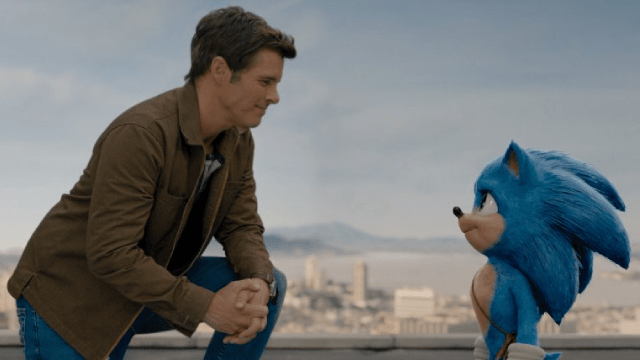
Tom Wachowski (James Marsden) checks in with Sonic on their unlikely buddy road adventure in Sonic The Hedgehog.

Sonic himself is wonderfully brought to life by Ben Schwartz, whose eternally-youthful voice and pinpoint comedic timing make him an excellent choice in voicing the adolescent supersonic hero. When the time came for Sonic to adopt a personality beyond Gotta Go Fast in his original television debut, the writers of the mid-90’s devised that a brash, sarcastic and quip-filled hero was the way to go; and Schwartz does a great job of bringing that attitude to Casey and Miller’s dialogue for the blue blur. Schwartz does a good job of keeping Sonic funny, rather than annoying; even at the moments when the character is supposed to be frustrating the other characters around him; which is a tough line to walk, and one he walks effectively. The majority of his patter comes from back-and-forth with James Marsden, who must also receive acknowledgement for presenting a surprisingly empathetic and natural performance against a central lead who was not there for any filming. While this is certainly nothing new in modern cinema; the amount of time we spend with Sonic and Tom as a duo is considerable, and at no point does Marsden’s performance give any inclination that Schwartz was not with him on set, dressed as a 4 foot tall anthropomorphic blue hedgehog.

It would be remiss to talk about performances and not discuss Dr. Robotnik, as Jim Carey is doing the most with this role. It’s been a while since we’ve seen a Carey performance that allows him to let loose in all of his most cartoonish glory, and it certainly seems that he was having a lot of fun bringing Robotnik to life. What could easily have been written off as stunt casting to get people in the theatre really pays dividends in terms of performance, and even while allowing his goofiest over-acting to flow forth; Carey still brings a lot of malice and threat to Robotnik, and works effectively in bringing the re-imagined long-time Sonic foe to life. His limited interactions with Schwartz and Marsden are highly enjoyable, but he’s at his best with his assistant Agent Stone (Lee Majdoub); who puts in an excellent straight-man performance to give Carey something to bounce off when they’re together on screen. Tika Sumpter and Natasha Rothwell also put in good work as Tom’s partner Maddie and Maddie’s sister Rachel respectively, despite not having a whole lot to do; but Sumpter’s empathetic support for Marsden and Rothwell’s comic relief for when Sonic and Robotnik are not front and centre are well-placed and used effectively within the narrative (though both actors deserve more to do if they come back for any sequels).
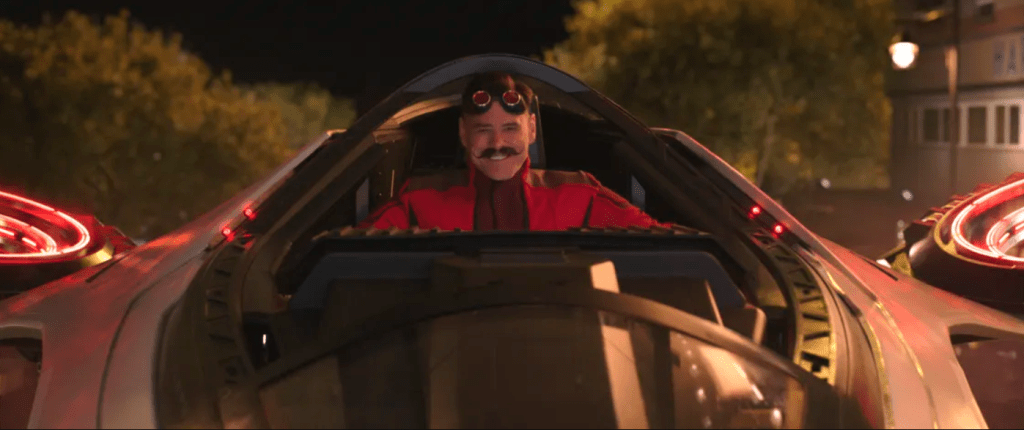
Jim Carey is on top form as eccentric robotics genius Dr. Ivo Robotnik in Sonic The Hedgehog.

All in all, Sonic The Hedgehog is a fun, goofy, family-friendly movie that brings plenty of action and comedy to a beloved character, and marks a pretty successful move to the big screen for the blue blur. There’s something in this movie for you if you’ve played every Sonic game, or if you haven’t played any; and it stands up as a great option for a movie night, be it with the family or not.

Dave McGuckin is a theatre graduate, bar manager, former comedian and eternal film lover from Northern Ireland, now living in Canada. He began writing film reviews in 2016 for The Grade and then Great Central, both based in Leicester, England.

This site will collate these reviews, but also provides a platform for new reviews and essays on cinema, television, videogaming and (possibly) more

If you enjoy what you read, please consider sharing on social media, or leaving a small donation towards webhosting and content creation costs on Ko-Fi at http://www.ko-fi.com/davewritesreviews.

Check out the official social media links for Dave Writes Reviews below:
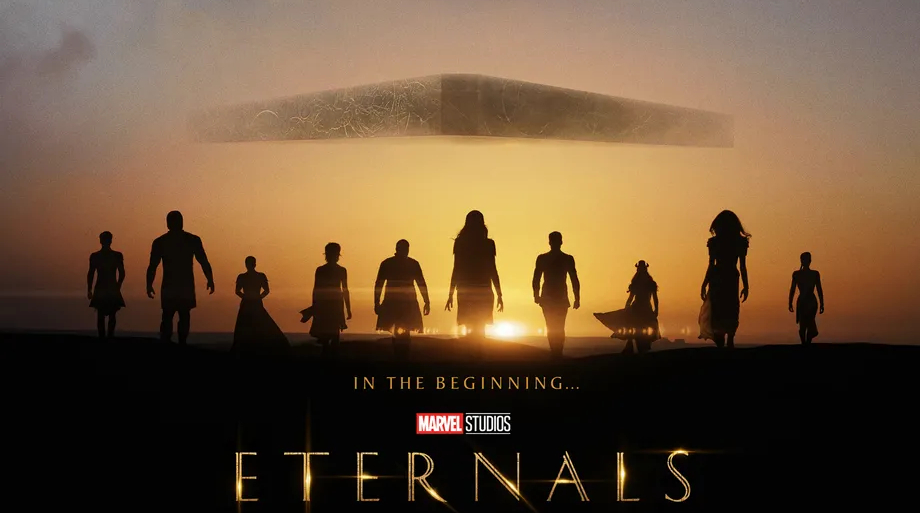
Eternals

“We have loved these people since the day we arrived. When you love something, you protect it.”

The Marvel Cinematic Universe continues to step out into new territory following the end of The Infinity Saga with Avengers: Endgame. Academy award winning director Chloé Zhao was tapped by Marvel Studios to direct Black Widow, but she declined; instead coming to Kevin Feige with a pitch for a film based on Jack Kirby’s high-concept Eternals series; a film that would introduce a new level of cosmic space-god nonsense into the MCU. Can a series like Eternals work on screen?

The Eternals are ready to defend the Earth from The Deviants in Marvel’s Eternals

Thousands of years ago, god-like cosmic entities called the Celestials sent a group of superbeings called The Eternals to assist early humans, who were being hunted to extinction by a group of aliens called The Deviants. Led by Ajak (Salma Hayek), the 10 Eternals each have a unique ability to assist humans with their advancement and are split into two groups. The fighters are Thena (Angelina Jolie), Ikaris (Richard Madden), Makkari (Lauren Ridloff), Gilgamesh (Ma Dong-seok, credited as Don Lee) and Kingo (Kumail Nanjiani); the builders are Sersi (Gemma Chan), Druig (Barry Keoghan), Phastos (Brian Tyree Henry), Sprite (Lia McHugh) and Ajak herself. Believing the Deviants to have been eradicated after thousands of years of fighting, the Eternals go their separate ways; but when Sersi and Sprite are unexpectedly attacked by a Deviant in present-day London, the team must come back together to get to the bottom of the re-emergence…

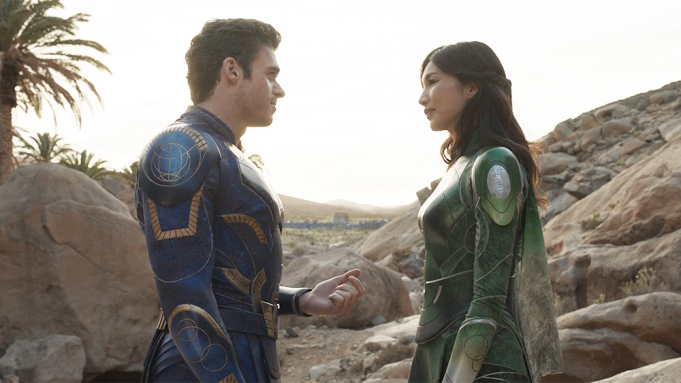
Eternals is an ambitious project, and one which comes with a different approach to previous MCU outings. Zhao clearly approached this project with a specific goal, and the complexity of the Eternals backstory makes this the perfect chance to take some risks with the Marvel format, and the results are… mixed. While it’s not the first time that Marvel have launched a new segment of their universe with an ensemble cast; the Eternals squad is significantly bigger than that of Guardians Of The Galaxy, which is the first obstacle that Zhao has to overcome. For the narrative to work in a reasonable time (and at 2 hours and 36 minutes, reasonable is a big choice of word); not every character can have the in-depth personality establishment that previous Marvel debut films have provided. The result is we have a central POV character in Gemma Chan’s Sersi; and it is primarily her thoughts, actions and relationships which work to drive the narrative forward. In that we get a more nuanced look into her history during the recaps of the Eternal’s time on earth (primarily through her relationship with Ikaris); but when we do return to the action in the present day, she is the catalyst for where we pick up the story, and the driving force of the decisions made as the plot unfolds. Having the team be separated across the world provides an effective method of piecing the narrative together, with their journey to pick up the other Eternals allowing them to further investigate current events, but also providing an appropriate jumping-off point for the next flashback sequence, layering together the modern day action with historical clues as to how they reached this point. It’s also a good method of folding in the history of each new character who is being re-added to the team; with the flashbacks structured to provide a little more character insight on each of the Eternals as we are re-introduced, and expanding on how the team’s relationship, for better or worse, resulted in each team member landing where they did and why (and, in some cases, with whom).

The relationship between Ikaris (Richard Madden) and Sersi (Gemma Chan) is the emotional centre of Marvel’s Eternals.

This method is effective at giving an insight into each character, and the struggles and challenges they’ve faced, without requiring a full movie for each one – and while a full solo movie would obviously give a much greater insight into the Eternals, it would also probably produce a number of pretty dull films, in all reality. The history of these characters is unavoidably woven together; even when they are separated, the places they end up are as a result of who they are as a team, as much as who they are individually. Zhao gives us enough of a taste of each individual Eternal to let us understand their motivations in the present, which is really the most important thing to consider – and as that modern narrative unfolds, the flashbacks to the past continue to deepen our understanding in a way which serves the film well.

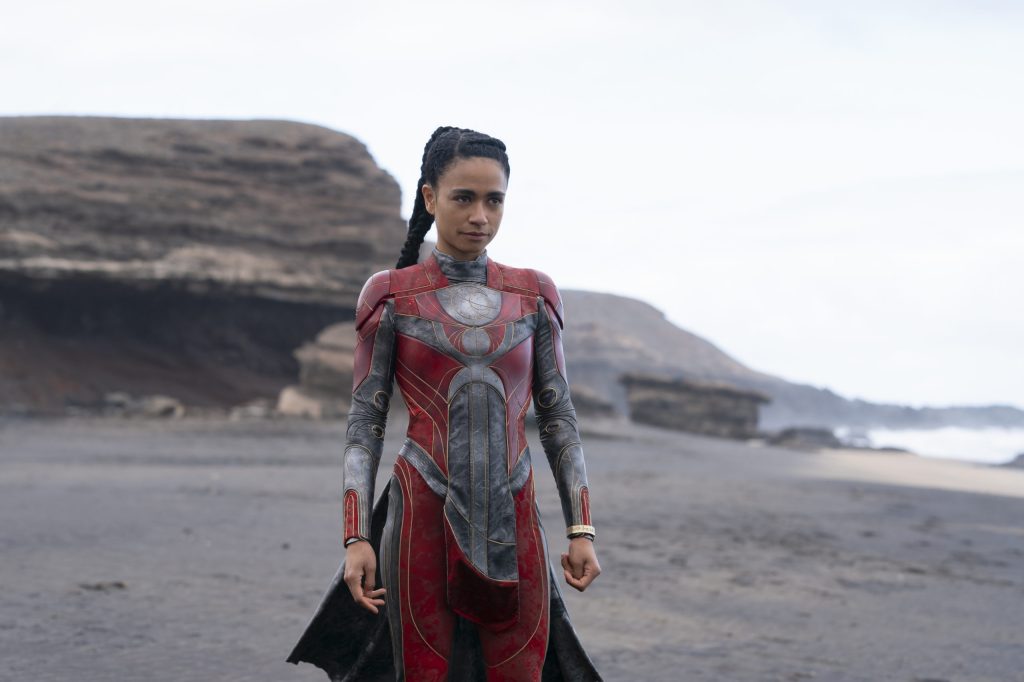
The method is supported by the performances, and all of the Eternals put in good work here. The ensemble format takes the pressure off a little, but the 10 Eternals do all have some particular character traits to put across – Ikaris is stoic, Sersi is gentle and considerate, Sprite is mischievous (actually, most of them are pretty mischievous, but in differing ways), Ajak is regal and noble. Everyone is pulling their weight, though Chan and Madden do a lot of the heavy lifting – not just because they’re at the centre of the story, but also because they carry a lot of the emotional weight of the film on their shoulders. Kumail Nanjiani’s Kingo also puts in the work, bringing a lot of the humour of the film; much of it through his back and forth with his valet Karun (Harish Patel); who has been wise to Kingo’s immortality for some time, and his presence on the globetrotting trip to bring the Eternals back together is frequently a comedy highlight. Ma Dong-seok’s Gilgamesh also gets his fair share of laughs, though while Kingo’s comedy is weighted somewhat on his performative arrogance, Gilgamesh also gets to show off his more tender side through the subplot with the tormented Thena. Lia McHugh and Lauren Ridloff also  get their share of gags, though again, with a different angle to Nanjiani and Dong-seok; and Sprite’s distress at forever looking like a teenager also provides some quieter, self-reflective moments for McHugh to play with. Ridloff is perhaps the most under-utilised talent on screen; as she impresses in every scene, and will hopefully get her chance to shine in future MCU appearances.

Lauren Ridloff impresses as Makkari in Marvel’s Eternals

While there is humour to be found, Eternals does step away from the more gag-filled Marvel fare to adapt a slightly more lofty tone; something reflected in the excellent score from Ramin Djawadi, but also in the structure of the narrative. At its core, this is a film by Chloé Zhao, and it is important to remember that – Marvel give this job to her because they wanted a Marvel film by Chloé Zhao, and not a Marvel film by anyone else, or else they would have hired someone else to make it. The result is a different scope, and the overall narrative of Eternals and the origins of the characters presented (which, while changed from the original Jack Kirby origin and even from the reworked Neil Gaiman version, is still pretty faithful to the comic origins) requires a different tone to some of the more recent Marvel outings – although that is a trend we are beginning to see, as Black Widow and Shang-Chi And The Legend Of The Ten Rings also allowed themselves some time to deal with some pretty heavy concepts, as have most of the Disney+ MCU shows. Aside from dealing with some more intimate representations of love (all of which were handled wonderfully by Zhao, and some which we’re seeing in the MCU for the first time), our heroes are seen at the centre of some of humanity’s most destructive moments, and are heavily implied to have been partially responsible for them, which at times is controversial – here lie spoilers, but I do want to talk about this. Phastos’ supposed involvement in the creation of the atomic bomb being heavily hinted at during a short scene set in Hiroshima, which perhaps went a little further than was absolutely necessary in terms of the technological interventionist plot. While it’s not specifically stated that Phastos helped develop that particular weapon, he does blame his assistance in the creation of advanced weaponry for the attacks, so even the more passive interpretation does lay the blame of human conflict at the feet of an alien race, rather than on the hands of those who implemented it – and though it does ultimately feed into certain revelations towards the end of the film, it could perhaps have been presented a little differently. It’s also an interesting position to take, given that the Eternals are forbidden from interfering in human conflict – so surely Phastos should be bound to not help create weapons? The scene creates confusion where none needed to be found, even if the emotion at the centre of it is poignant to Phastos’ character.

A globetrotting and time-hopping film like this brings with it some pretty fantastic scenery, and the combination of real world locations and the more CGI-based locales is well-balanced and carefully crafted; the film as a whole is beautiful. Ancient cities rise out of the desert in beautiful colourings, contrasted with scenes hidden in the darkness of South American forests; and one particularly charming sequence on the set of a Bollywood film. The sets use plenty of colour to offset the slightly more muted appearances of the Eternals themselves; who when they aren’t in their full superhero regalia (beautifully realised in deep colours, offset by gold) tend to just be in casual, everyday human clothes; with the notable exception of Thena, whose costumes take full advantage of the fact that they’re on Angelina Jolie. The Eternals powers are also well-realised, not just in their impressiveness on screen, but also in that they have a common colour despite doing different things and emanating from different places on each character; that coordinated colouring helps drive home that these characters are a team who are intrinsically linked at a level beyond the conscious, and also helps sell them as an alien race, as opposed to a group of people who happen to have superpowers. The character designs of the Deviants are also noteworthy; while they all have physical shapes that appear to be influenced by Earth’s most notable predators, their design is so otherworldly that there can be no doubt that they are from another planet. The contrast between these hulking beasts and the humanoid Eternals is excellent; but also the fact that a number of them look like mythical beasts, such as the Minotaur and the Chimera, adds further subtext to the Eternals presence throughout ancient civilisations, with the battles of these heroes becoming myth in the societies they fought to protect.

Kingo (Kumail Nanjiani) throws down with a Deviant in Marvel’s Eternals


Eternals is certainly a Marvel Cinematic Universe film, but not really like one we’ve seen before. With a different pace, tone and structure to the standard MCU film we’re used to, Chloé Zhao has refreshed the concept of what a Marvel superhero can be, and introduced a number of interesting and exciting concepts into the wider MCU as a whole; as well as a crop of fresh characters who it would be interesting to return to. It’s not a perfect film, but it’s certainly different; and it’s a spectacle worth watching – especially if you enjoy the more cosmic side of superhero comics.

Dave McGuckin is a theatre graduate, bar manager, former comedian and eternal film lover from Northern Ireland, now living in Canada. He began writing film reviews in 2016 for The Grade and then Great Central, both based in Leicester, England.

This site will collate these reviews, but also provides a platform for new reviews and essays on cinema, television, videogaming and (possibly) more

If you enjoy what you read, please consider sharing on social media, or leaving a small donation towards webhosting and content creation costs on Ko-Fi at http://www.ko-fi.com/davewritesreviews.

Check out the official social media links for Dave Writes Reviews below:

Red Notice

“It doesn’t matter what you do; what only matters is what they think you’ve done.”

When Netflix announced its slate of upcoming original releases for 2021, one project in particular caught a lot of attention. Dwayne Johnson, Ryan Reynolds and Gal Gadot were revealed to be on location making a brand new heist movie called Red Notice, exclusively for Netflix. With the world’s largest streaming site hiring three of Hollywood’s biggest and most bankable stars to appear together for the first time, expectations were high for the piece. Could Red Notice live up to that expectation?

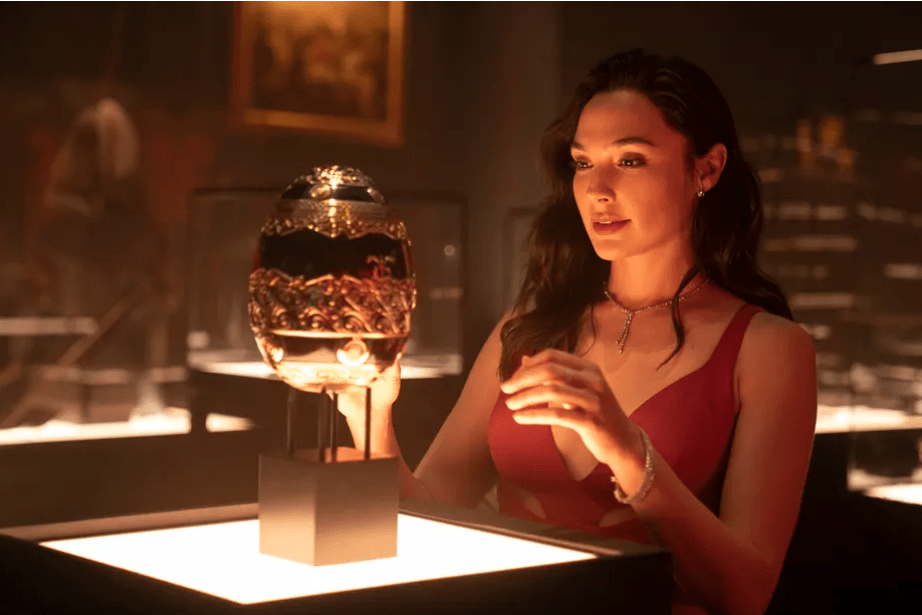
The central plot of Red Notice is constructed around the race to find three ornate eggs, given to Cleopatra by Marcus Antonius as a wedding gift. Two were found by a farmer in 1907, with the third still lost to history. Special Agent John Hartley (Dwayne Johnson) of the FBI is assigned to assist Interpol officer Urvashi Das (Ritu Arya) in stopping the theft of one of the eggs in Rome, after an international art thief known only as The Bishop (Gal Gadot) tipped him off that fellow art thief Nolan Booth (Ryan Reynolds) was planning a heist, part of an attempt to find all three eggs and deliver them to a billionaire buyer. Naturally, shenanigans ensue from here; with Booth and The Bishop chasing the eggs, while Hartley & Das attempt to foil them both… or so it seems.

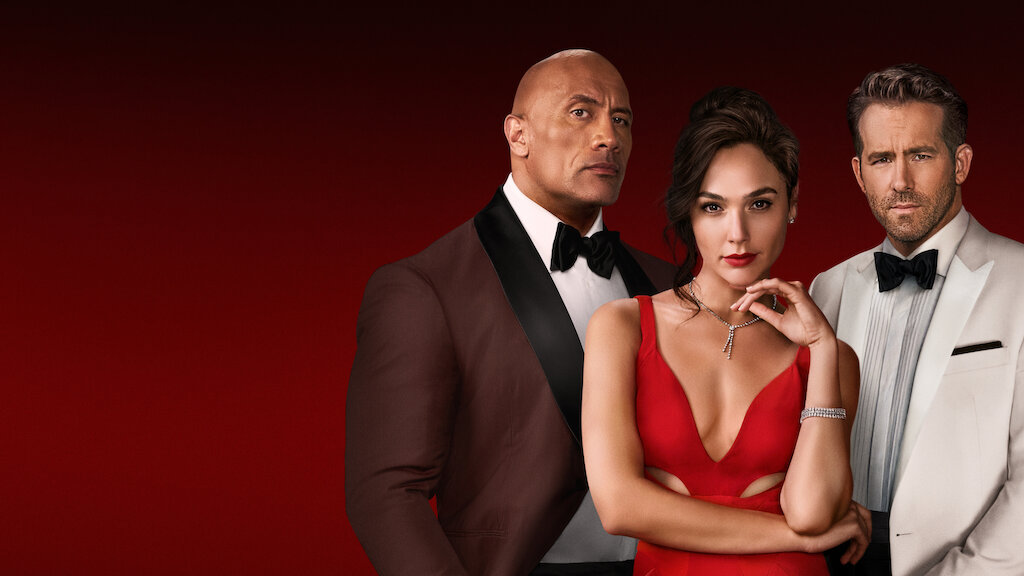
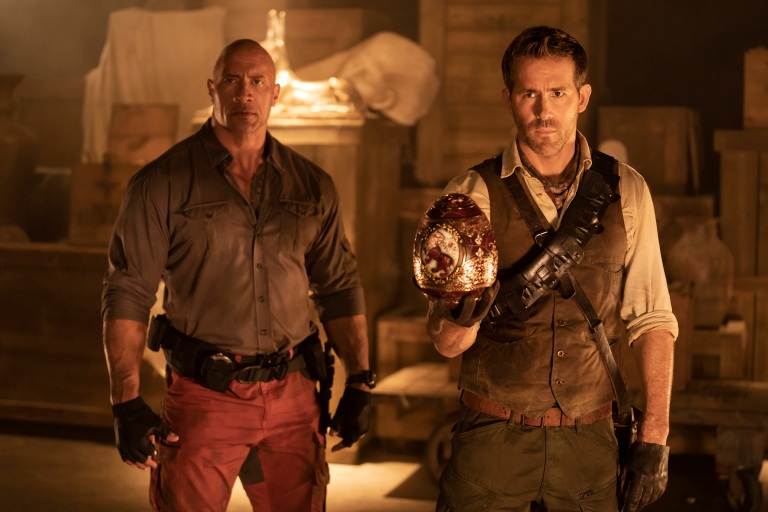
John Hartley (Dwayne Johnson) and Nolan Booth (Ryan Reynolds) get their hands on Cleopatra’s egg in Red Notice

On the surface, Red Notice seems like a film that can’t really fail. Three incredibly charismatic actors with a penchant for action, coming together to both work with each other and compete against each other in a transcontinental heist movie seems like a no brainer for a good time; and yet, Red Notice drops the ball by trying to be far too much movie for its own good, and bloats itself to a degree that it becomes almost tiring to watch towards the end. For starters, this film has more twists than the Monaco Grand Prix; with so many double-crosses going on that the viewer would need a degree in mathematics to keep up with the duplicitous nature of the central cast. This is barely a spoiler, it’s alluded to heavily in the trailer and it’s certainly not a bad device for a film with a story like this. There does, however, come a point when the next twist starts to make earlier segments in the film feel disingenuous; asking the audience to believe scenarios that go beyond the realm of human beings playing tricks on each other, and asking us to reassess these characters as the greatest character actors on the planet, to be able to so convincingly bamboozle each other in the way that they do, which becomes more difficult as the narrative moves forward.

This is not to discredit the effort of the central cast; as our three leads demonstrate exactly the performances that we would expect from them in this piece. There’s no doubt in my mind that the script for Red Notice had these three in mind when it was written; Johnson was a principal producer on the piece so was guaranteed to be a part of it. Their lines are tailored to their performance style; with Johnson getting the stoic, serious yet flirty side of the script; Gadot bouncing from sensual to threatening, and Reynolds filling his standard goofball role, with plenty of puns and elaborate insults to his castmates. If you enjoy these three actors then you’ll have no problem with their performances, as they deliver exactly what you would expect from them; but if you dislike any of them, be aware that this film is absolutely built around their personalities and that may start to grate on you over time – I’m lucky to enjoy Reynolds brand of performance and humour (I even enjoyed Blade: Trinity), but this one may be a stretch for you if you’re not into these performers.

Ritu Arya does not get enough to do as Inspector Urvashi Das in Red Notice.

One actor who didn’t get enough time on screen to really demonstrate what she can do is Ritu Arya. Urvashi Das chases these thieves across the world, consistently showing up to try and catch them in the act; but Arya doesn’t really get a lot of screen time or dialogue beyond a demonstration that she’s in the room when the central actors are engaging in whatever shenanigans are required for that scene. This is a shame, as Arya has been consistently demonstrating that she has above average ability and comedic timing in her other projects over the last few years, and she could have been utilised a lot more here to break up the continuous interactions between Johnson, Gadot and Reynolds in a refreshing fashion; which could have benefitted the film overall.

Outside of the performances, the action of Red Notice is slick; a globetrotting experience takes the cast across Europe and into South America in search of the eggs, and the action sequences do well to lean on the cast’s strengths at every point, much like the script does. One sequence during the opening scene, featuring Reynolds seeing off Italian guards on a set of scaffolding, does a lot of excellent work to establish Booth’s style as a character, but also allows Reynolds to engage in some physical comedy work beyond implied clumsiness, which is refreshing. However this also ties into the primary disappointment of Red Notice; in that it wants to be too many films. There are scenes which could be seen to pay tribute to the likes of the Ocean’s series, the Indiana Jones series, to Bond and to Mission Impossible; but these film series are not all the same in their nature, and the result is that the narrative of Red Notice doesn’t really seem to know what it actually wants to be, especially when combined with the aforementioned twists. There’s no harm in allowing previous works to influence your film; but when the narrative is moving from a careful, methodical, high-tech heist in a millionaire’s Spanish mansion to a rugged trip to the jungles of Argentina in the search for a Nazi vault; it’s possible that your story has lost its focus a little and is relying too much on those predecessors for its content.

The Bishop (Gal Gadot) has her eyes on the prize in Red Notice


On the surface, Red Notice is a flashy, exciting heist film with a charismatic and dynamic central cast; but the desire to pack in as much as possible into the runtime creates a convoluted, over-written plot that relies too heavily on the tricks and locations of better films for its narrative, rather than allowing itself to be built around the talents of its impressive talent. At its highest points it is an enjoyable crime romp, but at its lowest it’s nothing more than fine; and the lower points seem all the more prevalent as the runtime counts down. If you have Netflix at home then it’s alright to kill an evening with nothing else going on; but don’t waste your money trying to find it in a cinema; it doesn’t deserve the extra effort.

Dave McGuckin is a theatre graduate, bar manager, former comedian and eternal film lover from Northern Ireland, now living in Canada. He began writing film reviews in 2016 for The Grade and then Great Central, both based in Leicester, England.

This site will collate these reviews, but also provides a platform for new reviews and essays on cinema, television, videogaming and (possibly) more

If you enjoy what you read, please consider sharing on social media, or leaving a small donation towards webhosting and content creation costs on Ko-Fi at http://www.ko-fi.com/davewritesreviews.

Check out the official social media links for Dave Writes Reviews below:
Dune: Part One

“Dreams make good stories, but everything important happens when we’re awake.”

Frank Herbert’s Dune novels have been remarked to be “unadaptable”, both due to the breadth of content with the series’ lore and narrative, and to the passionate insistence of some of the novels’ most die-hard fans that no part of the story can be left out and have the narrative still function. Despite this, numerous adaptations of various parts of the book series already exist; held in varying regard by Dune fans. Hopes were high in late 2016 when Denis Villeneuve stated that he wished to adapt the series for a new film; raised even higher when Brian Herbert (son of Frank and author of the later Dune books) announced that Villeneuve would be heading up the new project. Has his ambition delivered on the anticipation?

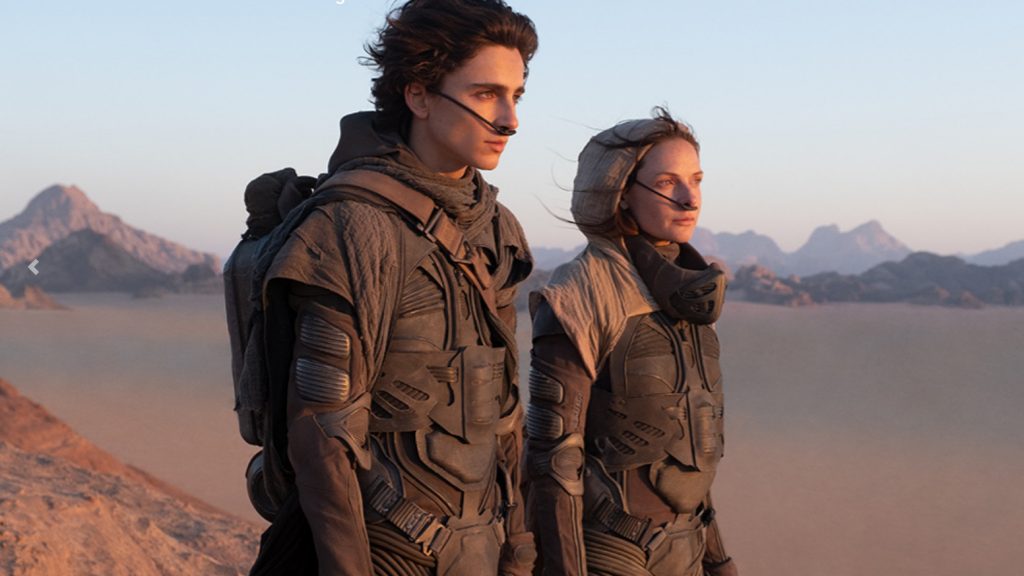
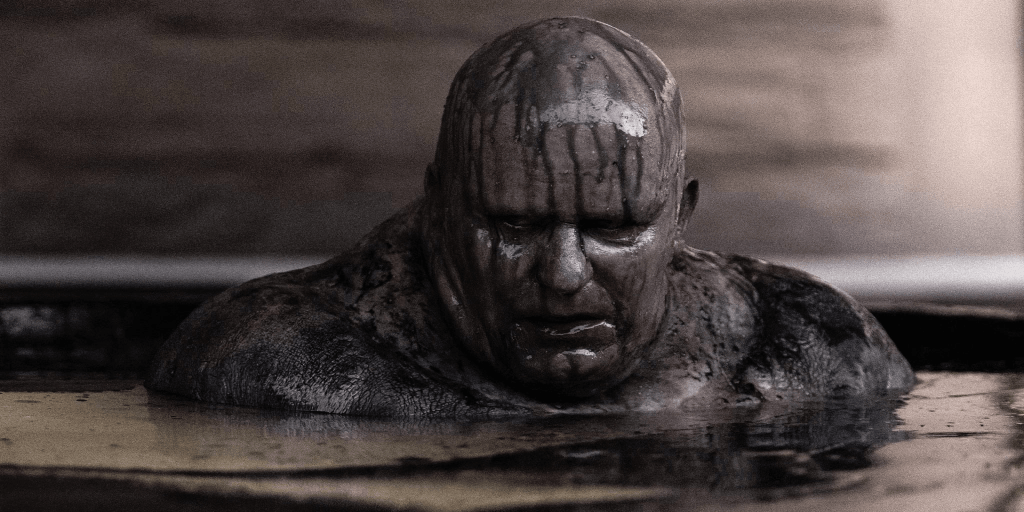
In the year 10191; Duke Leto Atreides (Oscar Issac) has been given dominion over the desert planet Arrakis by Emperor Shaddam Corino IV; replacing Baron Vladimir Harkonnen (Stellan Skarsgård) as its steward, and affording him dominion over an invaluable resource called spice, which is required for safe and effective space travel. The Duke leaves Caladan with his concubine, Lady Jessica (Rebecca Ferguson) of the Bene Gesserit, his son and heir Paul Atreides (Timothée Chalamet; and moves with his forces to the city of Arrakeen to begin his stewardship; but it quickly becomes clear that all is not what it seems on Arrakis…

Paul Atreides (Timothée Chalamet) and Lady Jessica (Rebecca Ferguson) survey the land in Dune

The cast of Dune is expansive and impressive, but before they have a chance to impress; Villeneuve’s world building sets the scene for the cast to bring their talents. The introductory sequence, narrated by Chani (Zendaya); a member of Arrakis’ indigenous Fremen, gives Villeneuve the opportunity to quickly demonstrate the scope of his effort before we even enter the central narrative. Arrakis is an extremely dangerous, arid terrain; mined for spice by huge behemoth machinery and guarded by brutality at the hands of House Harkonnen’s forces, led by Beast Raban Harkonnen (Dave Bautista). Even though this sequence shows House Harkonnen withdrawing from the planet; the sheer scale of the mining equipment, the forces present on the planet, and the ships that they depart in is a perfect introduction into how enormous this film is going to be. By showing us Arrakis before anything else, Villeneuve also allows us to understand how tough the transition for House Atreides is going to be before we even meet them; as the next shot of an ornate mansion, nestled in greenery atop a cliff facing the sea on Caladan could not present a more striking opposing image to that of the sandstorm-buffeted desert world we have been shown mere moments before. The other planets we see, though our visits are brief, also work in opposition to what we have already seen; with the Harkonnen homeworld of Giedi prime being a dark, foreboding world of rock and imposing structures. The worlds reflect the personalities of those who live upon them; with only Arrakis serving as hostile to all those who set foot on it to varying degrees.

The vehicles of Dune also carry personality with them as well as being effective in demonstrating scale. The spaceships are enormous; with cold, angular, Brutalist designs that demonstrate function above aesthetics; though even they are dwarfed by the huge Space Guild ships that are seen holding orbit around the various worlds. More personality is given to smaller craft; with the Ornithopter being the true star of Dune’s vehicular showing; a type of light aircraft that flies by flapping a series of narrow wings together and looks like a giant mechanical dragonfly. In a piece where most of the other vehicles have a cold, abrasive personality; having a craft laden with such a warm and fun personality is welcome; and the scenes where they are seen in flight leaves one wondering whether such a craft is even technically viable – though quick research reveals that it is, and now I wonder why nobody has bothered to build one for themselves. Regardless, these vehicles work best when seen against the huge, desolate sandscapes of Arrakis; and Villeneuve does well to use them to highlight the unforgiving nature of the terrain; with plenty of huge, sweeping shots designed to demonstrate the beautiful, lonely planet that the Atreides find themselves inhabiting.

Chani (Zendaya) leads Paul Atreides on a dangerous quest in Dune.

This film is backed by an incredible score from Hans Zimmer, who has risen to the challenge of soundtracking this ambitious science fiction epic with a skill and gusto that one could only expect from a composer of his status. Personal musical stings are well thought out and executed, such as the use of bagpipes from House Atreides, though it is with the landscapes of Arrakis where Zimmer is at his best here. The sound of the desert has perhaps never been better represented through music, with the score at its best when Zimmer makes heavy use of deep, booming base; sending a sound that is not satisfied to simply stimulate the audience’s ears; but instead vibrates throughout the viewer’s entire body in a way that brings a deep, emotional connection to the dangers of the desert, tying the audience to the risk that vibration gives to those who cross the sands on foot…

Villeneuve appears to have opted to limit his use of CGI effects where possible for this piece; and while they are still prevalent throughout a lot of the film (one does not simply wait for a sandstorm to film a scene that requires one), they mostly are at their most effective on the smaller scale. Individual defensive shields adorn the soldiers of Dune, and during the more bombastic action sequences, the flashing of blue and red light around the troops like a reactive aura helps the audience gain a more immediate understanding of who is fighting well and who is falling in battle. I say that the smaller scale is mostly the most effective as there is one particular instance where the CGI effects stand out, and that is the famous Arrakis sand-worms. These giant monsters are revealed slowly throughout the film; and when we finally see one raised fully above the sands; the sheer immensity of it fills the screen with an impact that I can’t remember any other film creating. The impartial violence of the sand-worms is breathtaking, and the scope of their destructive power is established early and reinforced multiple times; but their presence is not over-used, and the threat is maintained all the way through this piece.

Duke Atreides (Oscar Isaac) consults with Gurney Halleck (Josh Brolin) after arriving on Arrakis in Dune

With the universe thoroughly established; Villeneuve carefully places an excellent cast amongst the danger. While this is an ensemble piece; there’s no doubt that Paul and Lady Jessica are at the heart of this story, and Chalamet and Ferguson do an excellent job of shouldering the narrative. Chalamet in particular does excellent work here; Paul is being bombarded with unexpected life-changing information pretty much from the start of the film, and he continues to take it on board and rise to each challenge with a surprising level of grace and maturity, for the most part. His upbringing as both the son of a duke and the son of a sister of the Bene Gesserit (who are essentially, for want of a better term, witches) is key to the central narrative; and it allows for Duke Atreides and Lady Jessica to impart wisdom and guidance on him in equal measure. Isaac and Ferguson make for a powerful couple, and they sell their relationship well; alongside their higher responsibilities within the plot. Lady Jessica’s description as a concubine does not do justice to the strength which the character possesses, and Ferguson’s strength of will is in full force for Dune, with her experience in monarchy-based dramas coming into play as well. Ferguson, Isaac and Chalamet all have excellent chemistry with each other; and that chemistry is extended beyond to the Duke’s closest aides in Duncan Idaho (Jason Mamoa) and Gurney Halleck (Josh Brolin); both of whom are skilled military operatives at the service of the Duke, but also demonstrated to have a deeper personal connection with the Atreides family as a whole. Idaho in particular is leant upon for the majority of the levity in what is quite a serious film; though he is not the only one who gets some funnier lines. While the occasional comedic input is certainly welcome; the gravitas of Dune is not discouraging; in fact, the film is all the better for taking its source material seriously, and the more refined tone with which it treats its characters is a welcome change amongst a release schedule filled with quips and one-liners, and is tonally appropriate for the nature of the story which is being presented. Brolin and Mamoa also get chances to show off their physical flair; which once again lends itself directly into the overarching narrative in an impressive fashion – no movement is wasted when Villeneuve is behind the camera.

Baron Harkonnen (Stellan Skarsgård) cuts an imposing figure in Dune

House Atreides is not the only group who have a strong showing; the Harkonnens cut an imposing presence, with David Dastmalchian embodying the traditional role of the snivelling advisor in Petir De Vries, paralleling with the heavily imposing nature of Skarsgård and Bautista as the Harkonnen men. While most of the rest of the supporting cast get a much more brief time on screen; Zendaya, Javier Bardem and Babs Olusanmokun all shine as our primary introduction to the Fremen – and special mention must go to a practically unrecognizable Charlotte Rampling as Reverend Mother Mohiam of the Bene Gesserit; who arrives early in the narrative and presents an impressively intimidating character who stands tall before both House Atreides and House Harkonnen at various points, and commands the screen in an impressive way during her time on it. I don’t know if her character would be due to show up in the next installment based on the novels (as I have not read them), but I sincerely hope so, as I feel like Rampling has a lot more to give us out of Mohiam.

Denis Villenueve’s Dune is a sweeping, ambitious science fiction epic that takes time and care over its source material. The central cast is performing at their best, with Timothee Chalamet and Rebecca Ferguson putting in some particularly strong turns; and a supporting cast who are utilised succinctly and effectively. With impressive landscapes, tight world-building and an incredible score from Hans Zimmer; Dune is a film which could well go down in history as an essential piece of science fiction cinema; especially if Villenueve sticks the landing with the sequel…

Dave McGuckin is a theatre graduate, bar manager, former comedian and eternal film lover from Northern Ireland, now living in Canada. He began writing film reviews in 2016 for The Grade and then Great Central, both based in Leicester, England.

This site will collate these reviews, but also provides a platform for new reviews and essays on cinema, television, videogaming and (possibly) more

If you enjoy what you read, please consider sharing on social media, or leaving a small donation towards webhosting and content creation costs on Ko-Fi at http://www.ko-fi.com/davewritesreviews.

Check out the official social media links for Dave Writes Reviews below:
Shang-Chi And The Legend Of The Ten Rings

“If you aim at nothing, you hit nothing.”

I hear there’s been some sort of pandemic? I hadn’t noticed. I had always been planning to spend the last 2 years at home. Regardless, when the time came for the service and hospitality industry to re-open, movie companies began to line up their releases to test the waters for the return of audiences. With Black Widow landing a dual-release on Disney+ alongside a theatrical release in markets where cinemas had re-opened, Disney and Marvel were keen to get their newest release to as many theatres as possible; but with a risk – given that it’s the first outing for a superhero who is arguably the least well-known to more casual comics fans in Shang-Chi. Did the risk pay off?

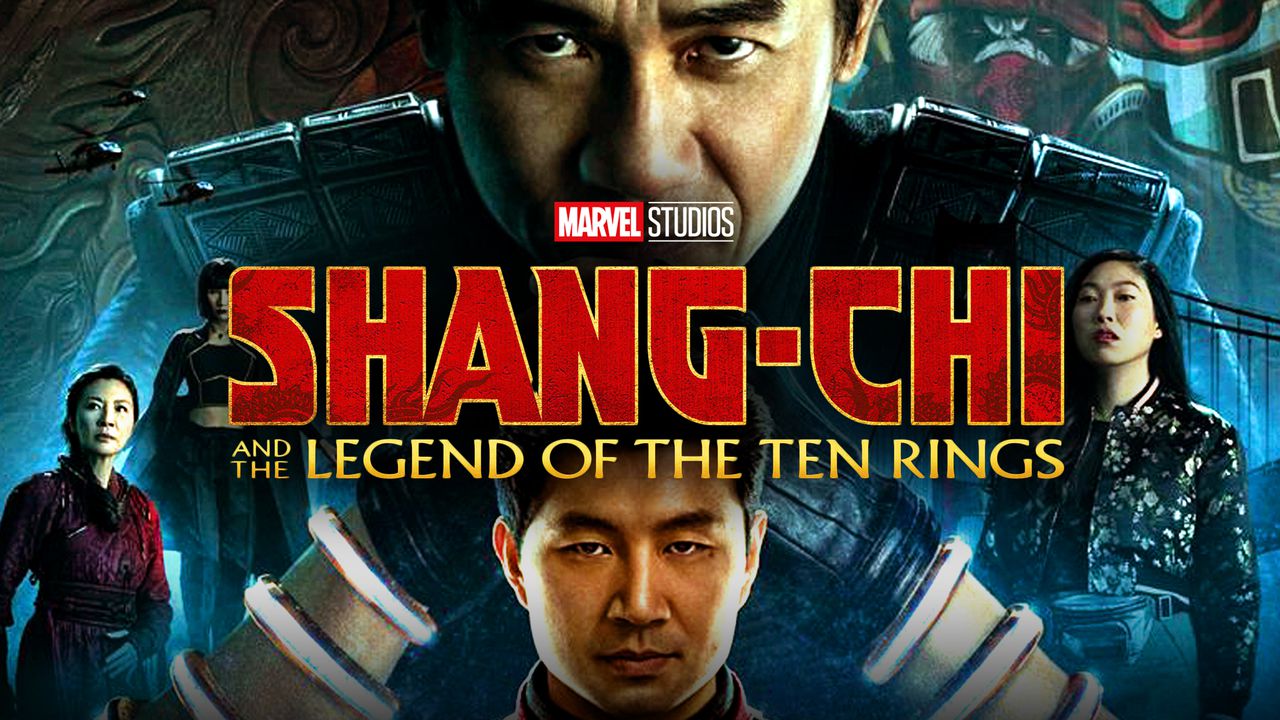
In Shang-Chi And The Legend Of The Ten Rings, we join Shaun (Simu Liu) in San Francisco, enjoying a quiet life with his best friend Katy (Awkwafina). When his father Xu Wenwu (Tony Chiu-Wai Leung), the leader of the legendary Ten Rings criminal organisation, sends assassins to find him and a steal pendant given to him by his deceased mother Li (Fala Chen); Shaun reveals his true identity to be that of Shang-Chi, and begins a journey to save his sister Xialing (Meng’er Zhang) and stop his father’s plans…

Shang-Chi (Simu Liu) is ready to fight in Shang-Chi And The Legend Of The Ten Rings

In the history of Marvel comics, Shang-Chi is known as The Master Of Kung-Fu, and is a character who dates back to the 1970’s. His history includes teaching Spider-Man how to fight in a way that best utilises his spider abilities, membership of The Avengers, and as a founding member of The Protectors. However; Shang-Chi’s comics backstory has been reworked and partially disregarded for the film version (in part due to him being created by white guys in the 70’s), so the interpretation presented by writers Dave Callaham and Andrew Lanham and writer and director Destin Daniel Cretton was in part influenced by a license from Marvel to rework the character’s personality and lore to better represent the experiences of the modern Asian community, encapsulating the experiences of first, second and third generation Asian-American immigrants as a part of the history of the character. Shang-Chi himself is, technically, a first generation immigrant; while Katy is third generation Asian-American, and the differing experiences they have in relation to their family history is quietly layered into their relationship in a warm and affectionate way. Awkwafina and Liu have great chemistry, which boosts the dialogue & direction from Cretton and sells the relationship wonderfully, to the level that in the moment, I didn’t stop to question why Katy would voluntarily tag along with Shang-Chi as he endeavoured to travel halfway around the world and save his sister from his father’s mercenaries.

Katy (Awkwafina) and Shang-Chi (Simu Liu) spend their days working valet parking when we meet them in Shang-Chi And The Legend Of The Ten Rings

Shang-Chi doesn’t just play on the immigrant experience in its reverence to Asian culture, but also takes influence from traditional Asian cinema, especially Hong Kong martial arts films in its construction of the fight scenes (but also influences from Korean and Japanese cinema too). Shang-Chi lives up to his name as The Master Of The Martial Arts in this piece, and the first scene where we see him throw hands (set on a San Francisco bus) is a slick and well-crafted sequence, showing off Simu Liu’s impressive fighting skills, and showcasing superhero fight scenes in a way that gives a different feel to many of the action sequences in previous Marvel outings; with everything from soundtrack to cinematography style feeling fresh and inspired. That feeling continues throughout most of the film; with only the more bombastic and fantastical final act allowing itself to revert back to the traditional Marvel formula a little more; but even that sequence carries a certain flair and subtle variations of style and execution that keep that fresh feeling until the film’s climax.

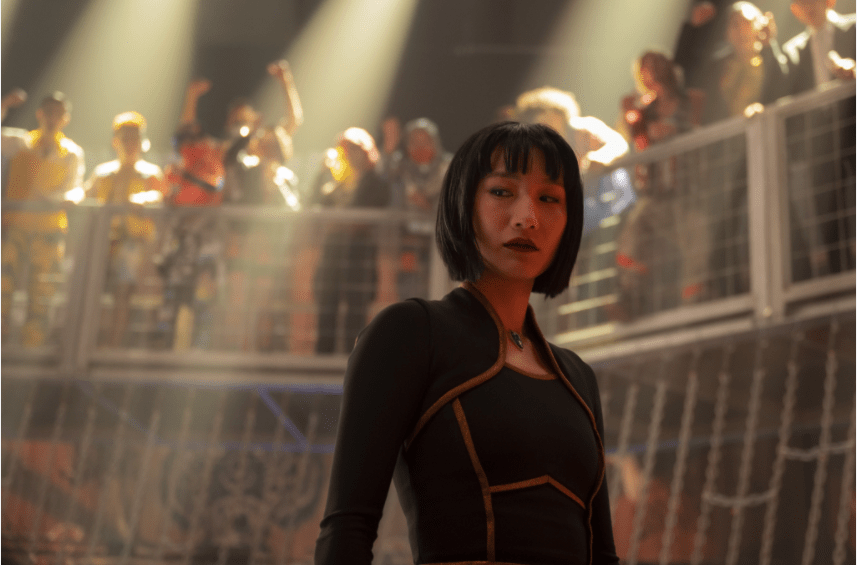
Xialing (Meng’er Zhang) brings the heat in Shang-Chi And The Legend Of The Ten Rings

The casting for Shang-Chi is noteworthy for a number of reasons beyond the chemistry between Liu and Awkwafina. Liu’s big screen debut demonstrates that he is well suited as a film lead; with his natural warmth, charisma and comic timing all coming through. While his chemistry with Awkwafina is a highlight, it is not his only strong on-screen relationship, as he demonstrates great chemistry with all of the extended cast, especially Meng’er Xang and Tony Leung. Meng’er Zhang is also a noteworthy casting choice here, as not only is this her big screen debut; it’s her any screen debut (though she does have a history in Chinese theatre). There are no signs that she has never acted for screen before; whether it be raw talent or the direction and assistance of Cretton and her more experienced castmates, Zhang flourishes in her role and brings a level of charisma and passion to rival that of Liu and Awkwafina, giving us glimpses through Xialing’s ice-queen exterior to a warmth underneath at appropriate moments, and arguably putting in a more impressive display than Liu does in the action sequences, which has a certain dramatic irony when considering the stories each character tells about their upbringing (but you’ll have to watch the movie to understand what I mean here. No spoilers).

Tony Leung, a legend of Hong Kong cinema, makes his Hollywood debut in Shang-Chi after a prestigious 40 year career, and demonstrates to Western audiences why he is held in such high regard in Eastern cinema. His cool, calm and considered portrayal of Xu Wenwu fits perfectly into Marvel’s underlying theme of Dads Who Don’t Know How To Dad, and he poignantly and acutely demonstrates the depth and complexity of emotion Wenwu has around his wife and children with as a little as a look; cruising through scenes and commanding attention from the audience every time he is on screen. The rest of the principal cast seem almost as transfixed in their scenes with him, and it is obvious that Liu and Zhang made the most of the opportunity to work with an actor of Leung’s calibre. Even with the CGI nonsense adding a fantastical level to Leung’s action scenes, his skill as a martial artist still comes through; and one particular showdown with Shang-Chi rivals the aforementioned San Francisco bus scene in terms of its power of engagement.

Xu Wenwu (Tony Leung) searches for power in Shang-Chi And The Legend Of The Ten Rings

The rest of the supporting cast is rounded out by both more high-status Asian actors and up-and-coming Asian stars; including the legendary Michelle Yeoh as Ying Nan on one end (a role which gives Yeoh a chance to display her own martial arts skills, alongside her signature brand of empathetic acting), and The Daily Show correspondent and up-and-coming comedian and actor Ronny Chieng on the other (Chieng, in particular, does a lot with a relatively small amount of screen time and would be a very welcome returning character in any potential sequel movies or series down the line). Florian Munteanu and Andy Le both put in strong action performances as Razor Fist and Death Dealer; with Munteanu also getting a few opportunities to show off his own comedic chops at points.


Shang-Chi And The Legend Of The Ten Rings is both an exciting return to the big screen for Marvel, and the suggestion that Marvel may be looking to experiment with the formula as we move into Phase 4 and away from the after effects of Avengers: Endgame. Strong, charismatic performances from the central cast, interesting and exciting direction from Destin Daniel Cretton and a story that blends cosmic Marvel nonsense with elements of traditional folklore from a variety of Asian cultures; Shang-Chi And The Legend Of The Ten Rings not only breaks conventions in terms of Hollywood film production, but also presents one of the most interesting, engaging and diverse films out of Marvel since Black Panther; something that works to the benefit of the Marvel Cinematic Universe as a whole. If you like Marvel movies; watch this movie. If you like martial arts movies, watch this movie.

Venom: Let There Be Carnage

“Responsibility is for the mediocre.”

If you didn’t check out my review of Venom (which you can see here); the symbiote’s first outing was somewhat of a surprise to… well, everyone. An unexpectedly goofy script was bolstered by an energetic performance from Tom Hardy as the titular Venom and his host, Eddie Brock, and supported by solid supporting performances by Anne Weying, Riz Ahmed and Reid Scott, among others; and held together with action and direction reminiscent of some of the most iconic horror and sci-fi films in cinema history. Encouraged by the overwhelmingly positive audience feedback, Sony gave the green light to a sequel featuring an iconic character teased in the mid-credits scene of the original; the cinematic debut of Carnage.

In Venom: Let There Be Carnage we rejoin Eddie Brock, who is adjusting to life with his alien symbiote, Venom. After being requested by the serial killer Cletus Kassidy to tell his life story, Eddie & Venom set off a chain of events that result in the creation of a brand new, much more dangerous symbiote called Carnage; who bonds to Kassidy and helps him escape from prison…

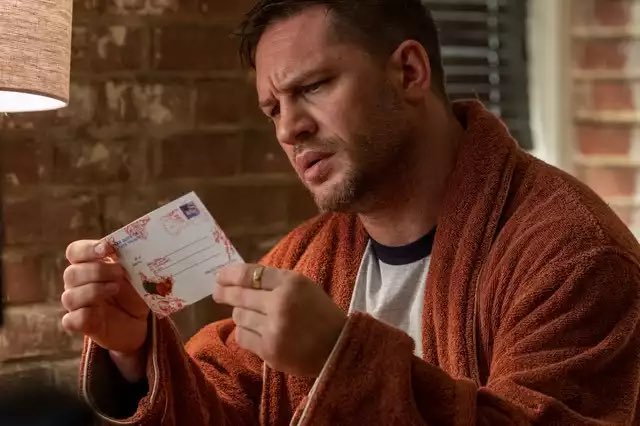
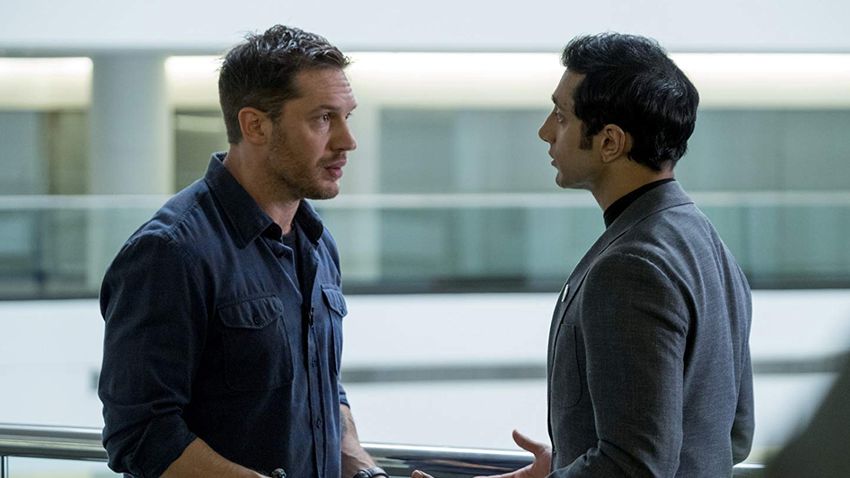
Eddie Brock (Tom Hardy) inspects a postcard sent by serial killer Cletus Kassidy (Woody Harrelson) in Venom: Let There Ben Carnage

It’s safe to say that Sony were paying attention to what worked for audiences in the original Venom, as the weight of Let There Be Carnage is once again carried by the relationship between Brock and Venom, and the excellent chemistry that Tom Hardy has with himself. This time, Hardy also worked on the story with script writer Kelly Marcel, which invariably helped cater the dialogue of both Brock and Venom to Hardy’s strengths. Once again, his charisma shines through; and he brings the same chaotic, manic-depressive energy to Brock as in the first outing; while also fulfilling an almost parental role with his symbiote. Venom, however, has seen some interesting character development in the time between the two films; while also falling into the role of child within their relationship (and rather a petulant one at times); he’s also the one who is most enthusiastic about living the life of a hero; wanting to take to the streets as the “Lethal Protector”, putting him at odds with Brock’s desire to stay hidden and have a quiet life. Even when Venom helps give Brock’s career a boost as a result of the interaction with Kassidy, they fall out over the implications; and their relationship drives a lot of the humour and the emotion through the narrative.

Naomie Harris taps into her dark side Frances Barrison, also known as Shriek, in Venom: Let There Be Carnage

Relationships are somewhat of a central theme of Let There Be Carnage; with a variety of different sets of dynamics playing out on screen. When Brock & Venom aren’t tearing it up in San Francisco, we spend a lot of time with Cletus Kassidy. Woody Harrelson’s casting as Kassidy was of little surprise when it was revealed at the end of Venom; and Harrelson channels the same kind of energy he brought to Natural Born Killers to bring both Kassidy and Carnage to life. While Harrelson brings the expected energy to both roles and has a lot of fun chewing scenery when given the chance, the script doesn’t provide as much for him to get his teeth into as you might expect from a casting this tight. The opening of this piece is a flashback to Kassidy’s time in a boarding house for violent children, and we are introduced to the secondary villain here as well, Naomie Harris putting in an engaging performance as Frances Barrison, also known as Shriek, who also serves as Kassidy’s love interest for the film. Kassidy’s escape from prison leads him to find her and break her out of Ravencroft (a facility specifically designed for holding super-powered criminals); and together with the Carnage symbiote they begin a rampage through both San Francisco and their own pasts. The dynamic is made more interesting by the fact that Shriek’s superpower is the manipulation of sound; something which the symbiotes are sensitive too; and the love between Kassidy and Barrison creates an interesting juxtaposition to the animosity between Barrison and Carnage, both emotionally and, at times, in terms of the action. However, there is an element of believability that is lost between the young Kassidy and Barrison being portrayed as being the same age, when Harris and Harrelson have a noticeable age difference between them; but it’s negligible enough that the story can help you ignore it during the more action-packed sequences.

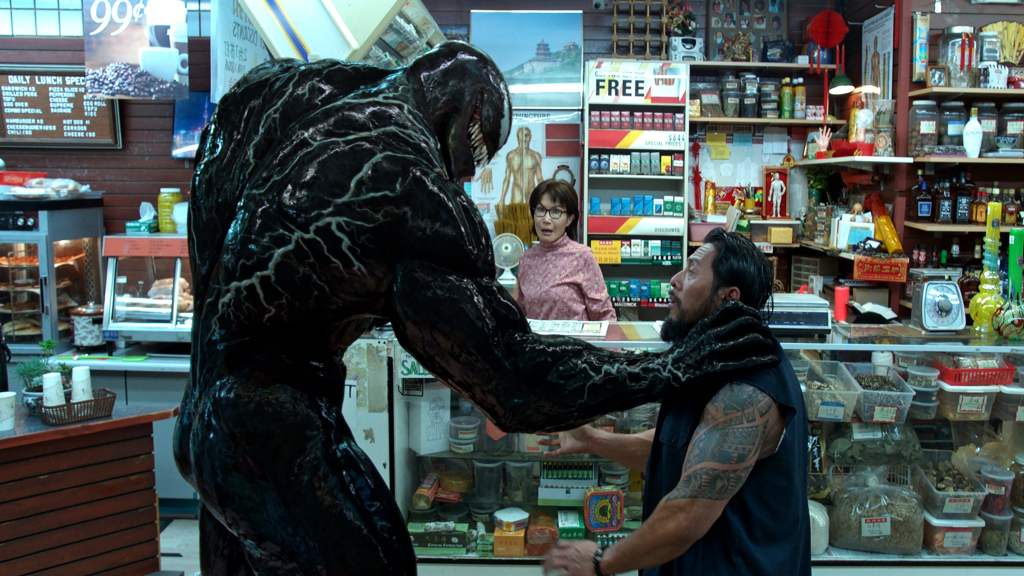
Michelle Williams also returns as Anne Weying, and Reid Scott reprises his role as her “new” partner Dan Lewis; and both fulfull the same roles as they did in the original. It is once again a joy to see Williams in a role where she gets to have some fun; getting the opportunity to flex a little more of her comedy muscles in this outing. One scene in particular, of Anne flirting with the Venom-controlled Chinese shopkeeper Mrs. Chen (played once again by Peggy Lu) is a particular highlight of the entire film, and Dan even gets a chance to shine in one of the action scenes as well as providing comedic foil for both Williams and Hardy at various points.

The symbiote Carnage (Woody Harrelson) makes his first appearance in Venom: Let There Be Carnage

The action also delivers once again too. With Venom director Ruben Fleischer unavailable due to still working on Zombieland: Double Tap, Sony made the excellent decision to bring Andy Serkis in to direct Let There Be Carnage. The master of motion capture definitely brought out the best in the actors for the fight sequences, though the blend of mo-cap and CGI is what really stands out. Carnage’s powers manifest in a number of different ways to Venom’s, extending even beyond the abilities of main villain Riot from the original, and the blending of motion capture for Carnage’s core movements with the CGI required for his extending tendrils. One effect that stood out to me in particular was the transformations from Kassidy to Carnage; while Brock becoming Venom essentially looks like Brock putting on a weird, gross hood; Kassidy’s entire body twists and deforms as Carnage emerges from his body in a transition that would be very at home found in the midst of John Carpenter’s The Thing. Similarly, when Brock emerges from Venom in scenes where we need to see both of their faces, Venom essentially disappears from one side of his head in an only slightly creepy way; but when Kassidy has to talk to Carnage, he pulls his face from inside Carnage’s body in a disgustingly stomach-churning fashion. The animations are gross; and they’re appropriate for two characters who are rooted in destruction and depravity. However, there are a few moments in the action sequences that even great effects and direction couldn’t save; and Carnage in particular suffers from a few action moments that just seem to happen, without any kind of explanation as to how or why he can do some of the things he does; a fact which pulled me out of the action right at the climax of the final act, much to my disappointment, but the instances are generally negligible enough to not cause a huge problem in terms of enjoyment.

Venom (Tom Hardy) is ready for action in Venom: Let There Be Carnage

Venom: Let There Be Carnage certainly is not a perfect film, but given the goofy, horny mess that the original presented, that’s actually not something any of us should have been expecting. The general tone and quality of the first outing is maintained throughout the second, so if you enjoyed Venom, you will probably also enjoy Venom: Let There Be Carnage – it certainly seems like the cast enjoyed making this one as well. It’s not better than Venom, but it’s also not worse; and that’s something, at least.

Also… definitely stay for the mid-credits scene. There’s only one, and it’s worth it.

Dave McGuckin is a theatre graduate, bar manager, former comedian and eternal film lover from Northern Ireland, now living in Canada. He began writing film reviews in 2016 for The Grade and then Great Central, both based in Leicester, England.

This site will collate these reviews, but also provides a platform for new reviews and essays on cinema, television, videogaming and (possibly) more

If you enjoy what you read, please consider sharing on social media, or leaving a small donation towards webhosting and content creation costs on Ko-Fi at http://www.ko-fi.com/davewritesreviews.

Check out the official social media links for Dave Writes Reviews below:

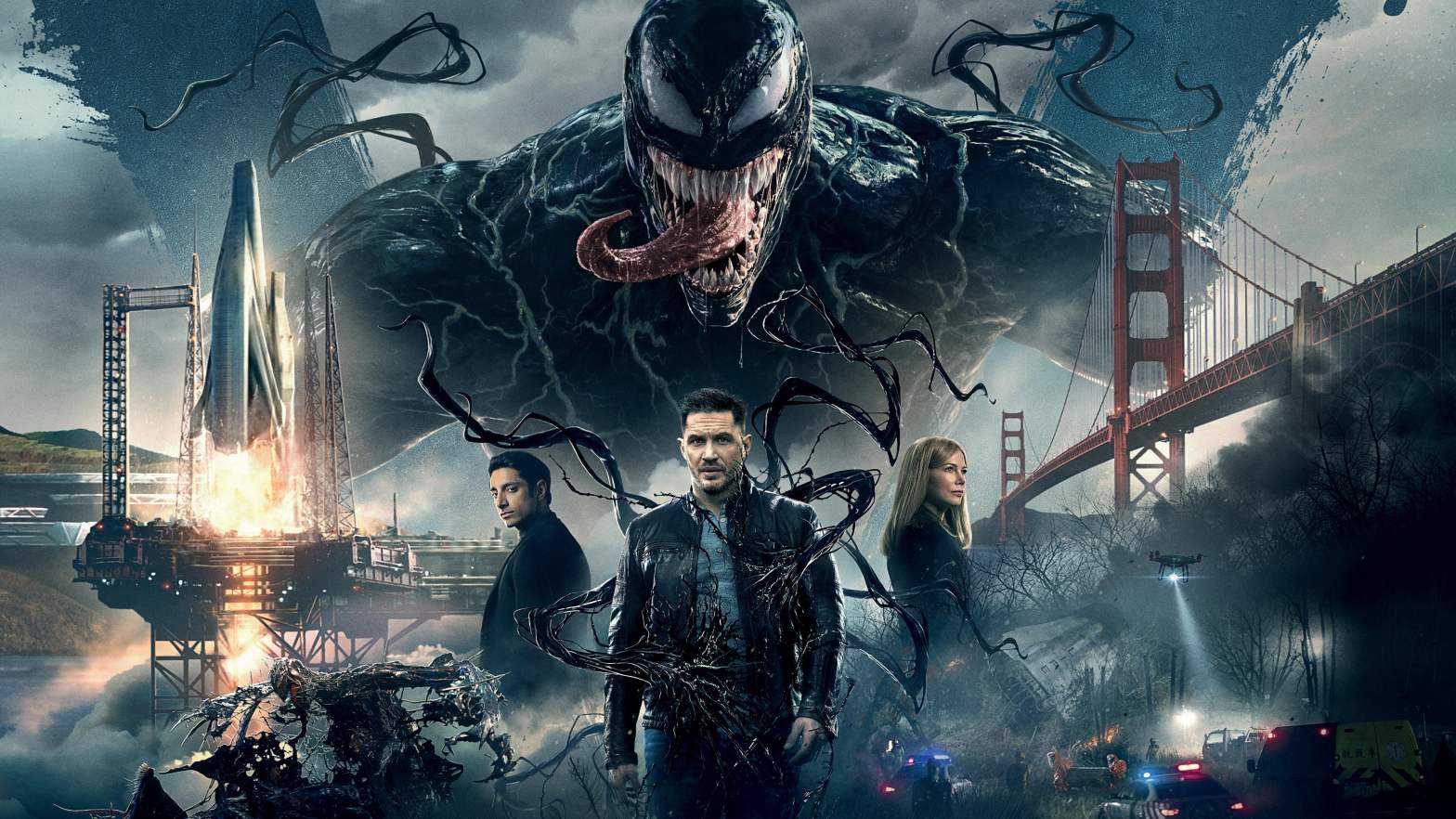
Venom

“Co-operate, and you just might survive. That is the deal.

Sony has had some mixed luck in relation to their on-going Spider-Man license. After revolutionising the very idea of superheroes on film with the Tobey Maguire led, Sam Raimi directed Spider-Man trilogy, and the unexpected fall from grace that came with the two Amazing Spider-Man films; the deal struck with Marvel Studios to bring Peter Parker into the Marvel Cinematic Universe left Sony Pictures with the license to a character they no longer 100% controlled; but a cast of supporting characters that they had free reign with.

Enter Venom.

Venom (Tom Hardy) threatens a criminal in Venom

Eddie Brock (Tom Hardy) is an investigative journalist in San Francisco, whose life and career are brought to a halt after asking difficult questions of Carlton Drake (Riz Ahmed), owner of the Life Foundation, whose exploratory rocket crashed back to Earth after the crew collected samples of alien symbiotes they discovered as they passed an asteroid. When one of the Life Foundation’s scientists reaches out to Eddie for help regarding the symbiote experiments, Brock is bonded to one of the symbiotes…

Making Venom at all was a reasonable risk for Sony. As one of Spider-Man’s most iconic antagonists, introducing the character outside of the MCU in a separate universe that stands to have no contact with Tom Holland’s Peter Parker raised a few question marks from Spidey fans, but Sony did something unexpected – they made a Venom movie so outrageous that, for many, there was no real choice but to enjoy it. Despite being pretty much panned by critics, audiences mostly enjoyed it; with a 30% critic’s score on Rotten Tomatoes being heavily outweighed by the 80% audience score. So… how did that happen?

Eddie Brock (Tom Hardy) meets Carlton Drake (Riz Ahmed) in Venom

A lot of the joy of Venom comes from Tom Hardy’s performance. Those who criticised his performance of Bane in The Dark Knight Rises as being too silly had no idea what Hardy was capable of doing in terms of silly comic book movie performances. Playing both Brock and Venom, Hardy juggles two distinct characters expertly within one body, despite a lot of them essentially being that he has to talk to himself. His characterisation of Brock is a fascinating departure from the type of central role we’re used to from superhero films; Eddie is a real loser (a fact which the film hammers home at various points); and his often depicted as being in a state of distress, often dripping with sweat and covered as a consequence of his increasingly dangerous actions – escalating wildly once he bonds with the symbiote. It’s a refreshing take to see a man who is truly on the edge, bringing a manic-depressive energy to a man who is totally unprepared to face the challenges and events that lie ahead of him.

While Eddie Brock is our hero, but Venom very much is not; and Hardy does a great job of delivering the dialogue of an alien anti-hero while director Ruben Fleischer (ZombieLand) leans on classic sci-fi horror framing to turn Venom into a recognisable cinema monster. The influence of the likes of Alien and Predator are clear, with direct nods to both of those films at various points (one sequence featuring a SWAT team switching their goggles to infrared to try and track Venom screams of both franchises), while the body horror of the likes of The Thing (albeit toned down for an M rating) helps maintain the horror tone. The combination makes Venom (and the other symbiotes) a compelling monstrosity to watch; the other-worldly movements of the symbiotes activates a primal sense of discomfort. The colour palette also leans into sci-fi horror tropes; once Brock encounters Venom, we don’t see natural daylight again, and the daytime environment takes on a cold blue colouring, as if the action were taking place on an alien planet; though the majority of the action takes place at night, with the lights of San Francisco’s cityscape creating a parallel with dark alleyways and quiet buildings; such as the Life Foundation’s cold, stainless steel labs.

Hardy isn’t doing all the work here, of course; and while the rest of the cast can’t match the chaotic energy which Hardy brings, they help hold up his performance in a more grounded way. Riz Ahmed channels all your favourite modern billionaires through Carlton Drake, one in particular (no spoilers); and the juxtaposition of the Life Foundation’s public mission statement against Drake’s brutal attitude towards experimentation with the symbiotes establishes the character background solidly, allowing Ahmed to pour cold charisma into every aspect of the character, slowly turning up the aggression as the narrative progresses. Michelle Williams also has a great showing as Anne Weying, Eddie’s love interest, and demonstrates a much-needed stability both in terms of Eddie’s life, and in terms of story direction; she becomes a pin for the narrative to move around, with each act swinging its way around and through her involvement, and her appearances on screen work to drive the narrative forward to the next set piece. Williams features in some of the most memeable moments of the film too; which is refreshing to see from an actor with such a serious back catalogue of performances. She seems like she is also having a lot of fun making this film, and has great chemistry with both Hardy and with Reid Scott, who plays a comedic foil and Anne’s secondary love interest in Dan, bringing the kind of comedic timing and vaguely arrogant swagger that he honed during his time on Veep.

Michelle Williams sprints into action as Anne Weying in Venom

It’s a strange movie to analyse, because while it’s a big-budget, big studio action movie based on a property and starring a character that is known across the world; Venom leans into b-movie and sci-fi horror tropes that it pulls from so heavily that it unapologetically allows itself to be goofy, to be ridiculous; and its charm lies within the fact it allows itself to go to the weirder places that the comic-book version of Venom has gone to in the last 30 years. I don’t think there’s any iteration of the MCU that would conceive to have scenes featuring any of their characters eating live lobsters while sitting in a lobster tank; nor do I think they would have brought in a version of Venom that eats people alive; but Sony took the risk of putting that version of Venom on screen, and trusted Hardy to bring that goofy side of Brock and Venom to the fore. The result is incredibly silly and also just a lot of fun, even when it is at its most serious or most frightening.

If you’re bored of the MCU way of doing things in their films, and if you’re struggling to keep up with whatever DC is doing with their properties but you still want to watch a modern superhero film that looks like it was a lot of fun to make; then Venom could well be the movie for you to watch.

Dave McGuckin is a theatre graduate, bar manager, former comedian and eternal film lover from Northern Ireland, now living in Canada. He began writing film reviews in 2016 for The Grade and then Great Central, both based in Leicester, England.

This site will collate these reviews, but also provides a platform for new reviews and essays on cinema, television, videogaming and (possibly) more

If you enjoy what you read, please consider sharing on social media, or leaving a small donation towards webhosting and content creation costs on Ko-Fi at http://www.ko-fi.com/davewritesreviews.

Check out the official social media links for Dave Writes Reviews below:
Power Rangers

“This is your destiny… this is your time.”

This review was originally written for and published by Great Central in 2017. It is presented now in its original form.

24 years ago, Saban Entertainment acquired the rights to footage from a Japanese kids TV show called Super Sentai and created the Mighty Morphin’ Power Rangers – a series in which 5 teenagers acquire incredible powers and abilities in order to defend the Earth from the forces of evil, making use of martial arts skills, fantastic weapons and giant fighting machines called Zords. Each new series of the Power Rangers adventures blends action from Japanese shows with originally-created content for Western audiences. The show was an instant success, and continued to run through various iterations to this day; including the release of a pair of accompanying feature films; the first and most famous being Power Rangers: The Movie in 1995; and Turbo: A Power Rangers Movie in 1997. While they featured the casts of each show at the time; they featured completely original storylines and used no footage from Japanese sources.

The third feature film takes a step away from the series and from the familiar format of the shows; as well as taking us back to the start of the Power Rangers story. At fear of tarnishing the film with a negative brush before we get into it, this is very much a reboot – re-establishing the story of the original Ranger team with a heavy update of story, style and tone for 21st century audiences. However, this is not something to be baulked at straight away; though it does present as many positives as it does negatives.

A lot has happened in the landscape of entertainment in the last 25 years, and that is reflected both by the direction of Dean Israelite (Project Alamnac), and from the screenplay by John Gatins (Real Steel). The recreation of a movie franchise in the modern world has to take into account series like Michael Bay’s Transformers and Teenage Mutant Ninja Turtles reboots, the flourishing Marvel Cinematic Universe, the success of sequels like Jurassic World and Star Wars Episode VII: The Force Awakens; and the successful Star Trek reboot series from J.J. Abrams. The effect of these films and the shift they have had over big-budget, teen-friendly action franchises is a darker take on the Power Rangers’ story.

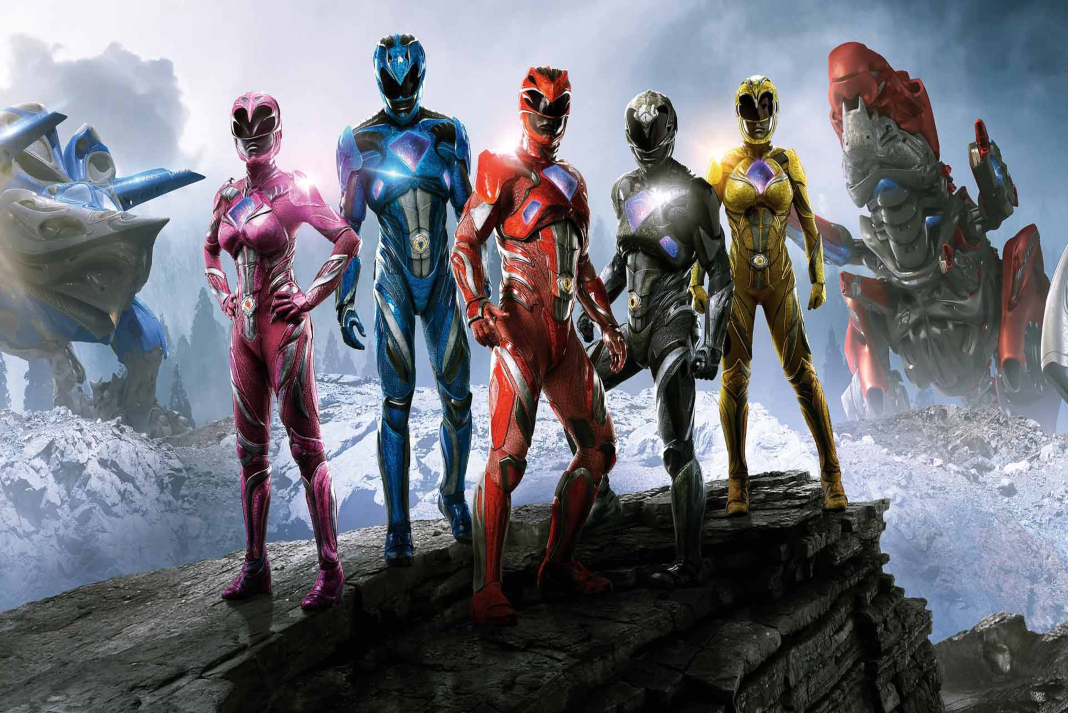
RJ Cyler, Naomi Scott, Ludi Lin, Becky G and Dacre Montgomery come together as the new original Power Rangers

The story still takes place in Angel Grove, and follows the stories of five teenagers who find 5 mysterious coins and develop superhuman abilities, coming together to form the superhero team known as the Power Rangers. Jason Scott (Dacre Montgomery, Stranger Things), Kimberly Hart (Naomi Scott, Terra Nova), Billy Cranston (RJ Cyler, Me, Early & The Dying Girl), Zach Taylor (Ludi Lin, Marco Polo) and Trini Kwan (Becky G, Empire) are our heroes; who first find the Power Coins before finding the secret alien spaceship that is home to the mysterious Zordon (Brian Cranston, Breaking Bad) and his robot assistant Alpha 5 (Bill Hader, Trainwreck) and beginning the training needed to defeat Rita Repulsa (Elizabeth Banks, The Lego Movie) and her forces of evil.

Before we get any further into it, I feel it’s important that I tell you all that I’ve been watching the original Power Rangers series on Netflix. I also haven’t just watched a few episodes; right now, I’m about halfway through season 3, and each season has around 50 episodes. I am in deep here, people. The reason why I’m telling you this is because I have a very recent memory of what it’s like to watch that show; and the comparison between the original series and the movie is fresh.

Trust me when I say this – they’ve changed the right things.

The differences in tone are clear to see from the outset. The original Power Rangers were 5 honest, loyal and friendly teenagers who were already friends; hand-picked by Zordon to take on the responsibility of defending the planet. The new Power Rangers are all troubled teens with their own personal, distinct issues; all of whom barely know each other. In fact, some of them meet properly for the first time in detention; a setting which allows their distinct characters a believable arena for them to cross paths for the first time. These personal problems and struggles set each character up as a unique individual and establish a variety of connections with their intended audience; picking up on common issues which the youth of today regularly come across and revealing each one in time as the film progresses, serving both to flesh out each character in a manageable time-frame and to provide more reasons for the group to come together. This reinvention of their personal traits also casts them more plainly as underdogs, stumbling upon a power and a responsibility that they aren’t prepared for; quietly mirroring similar situations from the likes of Sam Raimi’s Spiderman trilogy, and other modern superhero outings.

The parallels with Raimi’s web-head don’t end there. The original Spiderman film is often praised for its balance of drama and action with comedy; and comedy is something Power Rangers does very well, often centred on Billy. This is an important reinvention for Billy for two reasons; firstly, the original Blue Ranger was an irritating know-it-all, who spoke in unnecessarily over-the-top “intellectual language”; a trait which has been dropped entirely. Instead, Billy is now openly and identifiably autistic (the moment he explains it to Jason is a key moment in their developing friendship). Importantly, the humour he provides to the story isn’t mocking that condition, but celebrating it; as he highlights the flaws in the actions and discourse of his companions around him. His acceptance of and by his peers is a key thread of the film, and a message which every young person living on the spectrum could potentially benefit from seeing. Acceptance is a key theme of the entire film; as the 5 rangers work to accept each other and themselves.

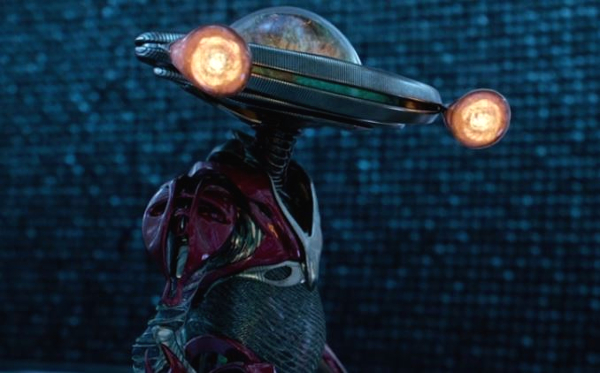
Alpha 5 (Bill Hader) gets a drastic CGI overhaul, which allows him to be more active within the narrative.

While the main bulk of the story of the new Power Rangers works to set the team up, the action side is well paced, even from the start. The Rangers get themselves into various scrapes before they even find the Power Coins; but once they have them, things move to another level. Israelite takes care to establish that these teens now have verifiable superpowers; taking advantage of modern special effects technology in a way that the original series could not. The Rangers are now naturally stronger and faster – demonstrated in another Raimi-esque sequence, which again is not unwelcome – and long before they morph for the first time, they pull off great athletic feats. This is further highlighted by a step away from the original abilities of each teen. Where the original Rangers were all shown to be skilled martial artists before acquiring their powers; these five are not demonstrated to have the same skills; instead, they are taught how to fight from the ground up as the story progresses; another narrative device which is well used as the team comes together. There are other subtle changes to stories, backgrounds and scenarios – as well as some aspects taken from later Power Rangers seasons – that keep the overall story fresh and unique; without disregarding the basic constructs of the Rangers universe entirely.

In terms of design, Israelite has taken steps to modernize every aspect of character design across the board. The Ranger suits are now much more identifiable as armour, and Alpha 5 and the Zords are much more futuristic in tone. It is here, for me, that the main issues come. The Ranger suits look like they could’ve been taken straight out of Tony Stark’s Iron Man armour workshop, and the Zords look a little too much like Michael Bay’s Transformers; indeed, the Red Ranger’s Tyrannosaurus Zord could just as easily have been Grimlock with a shiny new coat of paint. While the decision to update the look and feel of these futuristic warriors and their vehicles was absolutely the right one – after all, the original Zords were literally the toys – the designs don’t stand out from the slew of monsters and machines which we see bombarding our screens in every summer blockbuster. The characterization of her army has also had an overhaul; no more men in grey suits flailing at random; but hulking masses of dirt and stone that present a much more viable threat to the new Rangers. While this is certainly much better than the original Putties; they again lack a sense of character in the grander scope of modern cinema.\

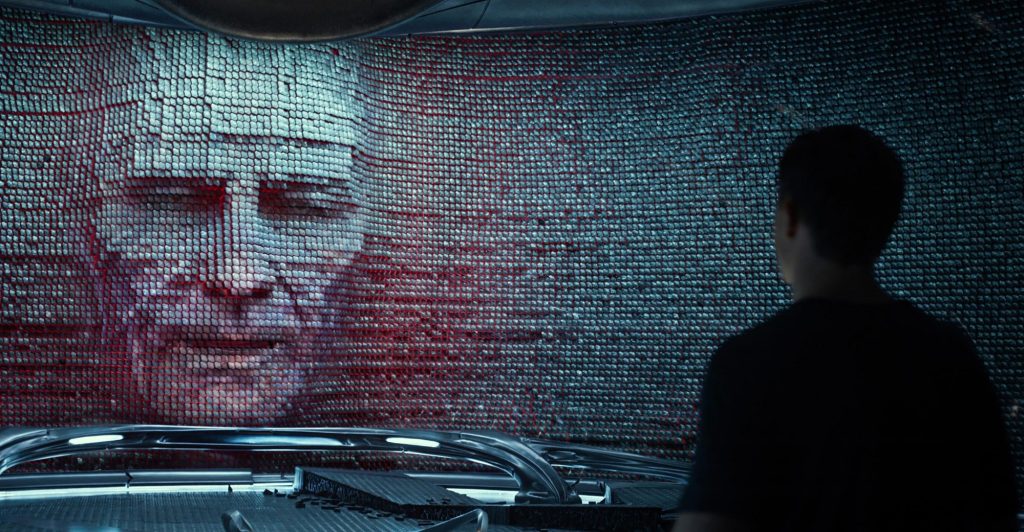
Zordon (Bryan Cranston) has had a considerable redesign, but is still A Giant Face

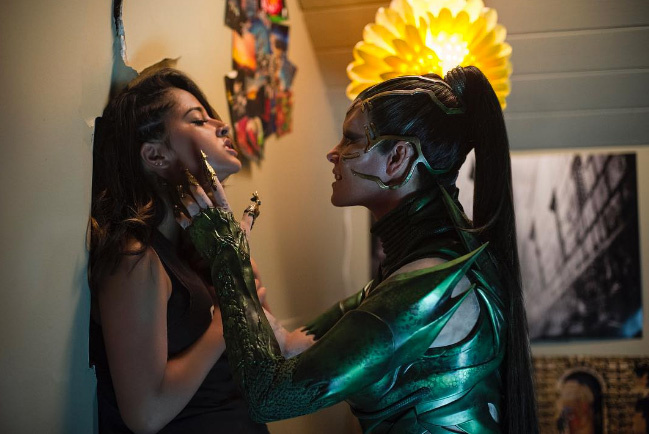
Two redesigns which are very effective are Rita and Zordon. Rita’s entire character has had a huge overhaul; no longer is she the campy, over-the-top and highly over-dressed villain in the moon base. Instead, she’s right in the centre of the action; and Banks’ characterization gives her a dark and incredibly threatening demeanour, which is enhanced by the sharp, angular costume. The advances in CGI have allowed for Zordon to become much more dynamic; no longer just a strange, blue head trapped in a weird jar but a functioning consciousness trapped in a futuristic wall. Cranston takes the role and runs with it; taking what was very-much a one-dimensional character and adding a considerable amount of depth. He’s well supported by Hader’s Alpha 5; who adds another dimension of levity to the film; particularly while helping the team in their training. Alpha’s physical, CGI re-design also allows the character to be more dynamic physically, allowing for much better use of him during his scenes.

Elizabeth Banks shines in the new imagining of Rita Repulsa

These three performances are strong; and they support some excellent turns from the Rangers. Saban’s decision to use five relatively fresh faces as their stars was a solid decision; all five put in strong turns in their first starring roles. Montgomery and Cyler, in particular, had incredible on-screen chemistry together and provide a number of the films’ most entertaining moments and Montgomery shines as the leader of the group; but there were plenty of great moments provided by Scott, Lin and Becky G as well. All five get ample time on screen to demonstrate their skills, both in ensemble moments and solo scenes, and have established the basis of what could be a reasonable franchise.

If you come into this film expecting to relive the original series, you’ll be disappointed. However, if you’re looking for an intelligent and well-thought action film with strong characters and a heap of positive messages, you could do much worse than checking out Power Rangers. After all… it’s morphin’ time.

Dave McGuckin is a theatre graduate, bar manager, former comedian and eternal film lover from Northern Ireland, now living in Canada. He began writing film reviews in 2016 for The Grade and then Great Central, both based in Leicester, England.

This site will collate these reviews, but also provides a platform for new reviews and essays on cinema, television, videogaming and (possibly) more

If you enjoy what you read, please consider sharing on social media, or leaving a small donation towards webhosting and content creation costs on Ko-Fi at http://www.ko-fi.com/davewritesreviews.

Check out the official social media links for Dave Writes Reviews below:
Army Of The Dead

‘It is by going down into the abyss where we recover the treasures of life.

Where you stumble, there lies your treasure.’

It’s been an interesting journey for Zack Snyder as a filmmaker. After leaving and then returning to Warner Bros. and DC to complete his controversial cut of Justice League, it would appear that the working relationship between the director and the studio has collapsed entirely, and Snyder appears ready to move on from that stage of his career. Netflix gave him his first opportunity to do that with Army Of The Dead, bringing Snyder back to zombie movies for the first time since his 2004 remake of George Romero’s Dawn Of The Dead.

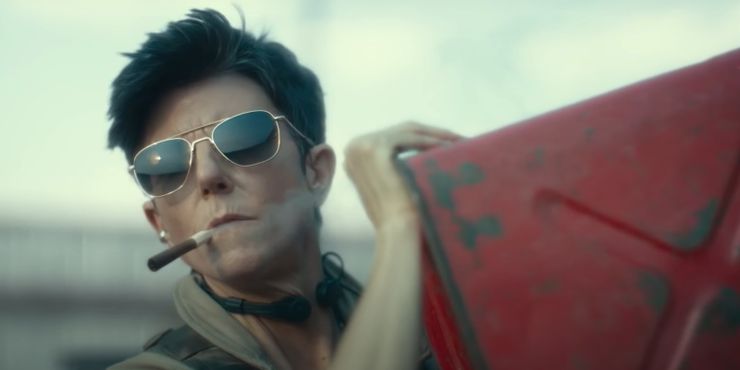
A military convoy from Area 51 is overturned in the Nevada desert, causing its cargo, a zombie, to be set free. After infecting the soldiers from the convoy, the group descends on Las Vegas, causing so much havoc that the city is eventually quarantined and walled off following a failed military intervention. A few months later, casino owner Bly Tanaka (Hiroyuki Sanada) puts together a team, led by former mercenary Scott Ward (Dave Bautista), to breach the quarantine and retrieve the $200 million that was abandoned in his vault following the evacuation before the military elements the zombie threat with a tactical nuclear strike on the city – but all is not as it seems inside Las Vegas…

NORA ARNEZEDER as LILLY, SAMANTHA WIN as CHAMBERS, ANA DE LA REGUERA as CRUZ, DAVE BAUTISTA as SCOTT WARD and OMARI HARDWICK as VANDEROHE.

Despite this script first appearing way back in 2009 (ironically originally planned for release by Warner Bros.), Snyder has presented a film which brings a fresh new element to the zombie movie experience, blending the usual action horror stakes with the added drama of a heist film. This is the core strength of the story; taking the traditional action of a horror film and adding a set of stakes that are rarely seen within the genre, keeping the character motivations fresh and the plot interesting; and the result is a narrative that allows the ensemble cast to demonstrate a range of emotions and motivations as the plot advances, balancing their survival instincts against their greed as the threat escalates. Snyder also brings some interesting character elements to the zombies themselves; stepping away from the traditional mass of shambling drones (though they are still present), and presenting a new kind of zombie with a higher capacity of thought and an actual social hierarchy. The move is bold, but it pays off; as allows for Snyder to instill what amounts to a main villain into the piece, which works to increase the threat level presented to the heist team over time.

The heist team itself is well thought out, and packed full of interesting characters. Bautista’s Ward is joined by his former teammates Maria Cruz (Ana de la Reguera) and Vanderhoe (Omari Hardwick), military chopper pilot Marianne Peters (Tig Notaro), German safecracker Ludwig Dieter (Matthias Schweighöfer), Youtube sensation and sharpshooter Mikey Guzman (Raul Castillo), who brings his comprade Chambers (Samantha Win), Tanaka’s head of security Martin (Garret Dillahunt) and Lilly The Coyote (Nora Arnezeder), who leads them into the city through the refugee camp established outside the quarantine zone. It’s a large cast, but Snyder does a good job of establishing some clearly-defined character traits for each of them, and whole some of them are a little stereotypical, it’s not inappropriate to create those clear differences in such a bombastic movie as this one. Everyone puts in strong work performance wise;  Batista and de la Reguera have great chemistry and stand out as the team leaders, with Schweighöfer taking a lot of responsibility for the comic relief, supported by Hardwick, Castillo and Notaro. Tig Notaro deserves considerable recognition for her performance, as she was added to the film during the reshoot stage to replace Chris D’Elia following the numerous sexual misconduct accusations levied against him. There’s no way of knowing that Notaro was not on set with the rest of the cast, and despite being filmed almost entirely solo against green screen, her performance is so electric that it’s perfectly covered, helped by some very clever editing in the post-production stage.

Tig Notaro impresses in her role as helicopter pilot Marianne Peters in Army Of The Dead

As mentioned before, the story of this film is a lot of fun, if perhaps a little convoluted. The constant layering of stakes starts to get a little silly towards the end, and while that isn’t inappropriate for a zombie action film of this style, it did feel somewhat unnecessary. Army Of The Dead also runs pretty long at 2 hours and 30 minutes; I was glad that it was released on Netflix as it did give me the chance to pause when necessary. Famously, Snyder isn’t shy about a long runtime for his projects; and while he uses that time to pack in as much character development and establishing backstory as possible; it wouldn’t have hurt a film of this style to lose even half an hour from that total runtime without it feeling like it was missing anything.

Where this film really stands out is the action. It’s not a secret that one of Snyder’s greatest strengths is in his action sequences, and he does not disappoint here – from the opening sequence, the threat of the zombies is made perfectly clear, and the scenes of devastation around the city are impressively staged. Snyder makes good use of high-octane sequences and tension at various points, and an effective use of his trademark slow-motion makes some scenes pop in a very satisfying fashion. There’s also a good mix of sci-fi tropes thrown in with Snyder’s new interpretation of zombie hierarchy, which blend well to create familiar scenes with an exciting twist. One early sequence sees the team sneaking throw a long passageway full of dormant zombies; a scene which has been done before plenty of times in other properties; but Snyder’s style of direction and storytelling, combined with a talented ensemble cast and interesting core narrative, allow it to feel fresh and interesting despite the familiarity.

The Las Vegas setting of Army Of The Dead allows for some easily identifiable pop culture references.

Army Of The Dead is a high-octane, suspenseful zombie thriller with a great central cast and some solid ideas, executed well by a director who is in his element. This one is a lot of fun, especially if you can put aside the minor frustrations and lose yourself in the action.

Oh, and there’s a zombie tiger in it. Maybe I should have led with that?

Dave McGuckin is a theatre graduate, bar manager, former comedian and eternal film lover from Northern Ireland, now living in Canada. He began writing film reviews in 2016 for The Grade and then Great Central, both based in Leicester, England.

This site will collate these reviews, but also provides a platform for new reviews and essays on cinema, television, videogaming and (possibly) more

If you enjoy what you read, please consider sharing on social media, or leaving a small donation towards webhosting and content creation costs on Ko-Fi at http://www.ko-fi.com/davewritesreviews.

Check out the official social media links for Dave Writes Reviews below:

The Mitchells vs. The Machines

“Families can be hard, but they’re so worth fighting for. They might be one of the only things that are.”

Family animated films are always reaching out in bold new directions, with the ever-evolving technology falling at the hands and brains of talented artists who want to create worlds that are beyond our wildest imaginations. For years, Disney Pixar and Studio Ghibli have been the powerhouses leading the charge in both production and storytelling, with other studios like Dreamworks nipping at their heels to prove they have what it takes. In 2019, Sony Pictures Imageworks brought us Spider-Man: Into The Spiderverse, an animated film so bold both in terms of style and of story that it looked to shake up the landscape of animated cinema forever. That same studio now brings us The Mitchells vs. The Machines, marking a move to cement that position as the newest animation powerhouse… but did they do it?
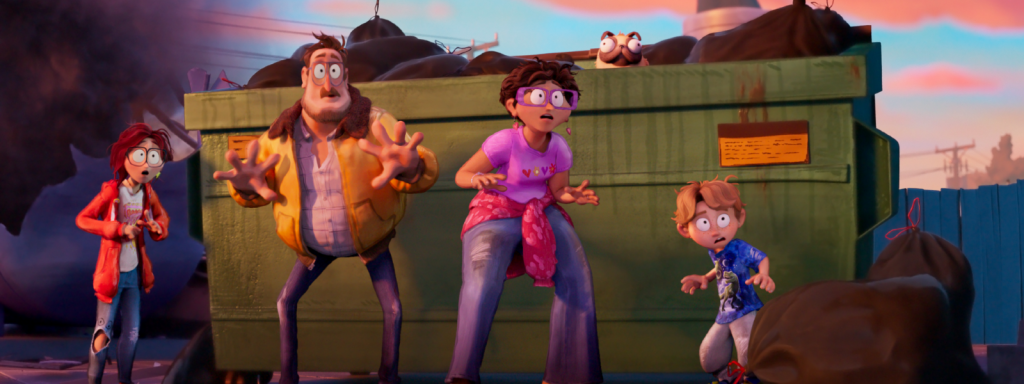
The short answer is yes. The long answer is yeeeeeeees. The animation in this film is undeniably beautiful; blending different styles of animation in a way not really seen before in cinema, and building on the visual effects first created for Into The Spiderverse, while establishing a notably different artistic tone and style from the comic book inspired artistic direction of that film. For an even longer answer, read on:

Katie (Abby Jacobson), Rick (Danny McBride), Linda (Maya Rudolph) and Aaron (Mike Rianda) try to avert the machine apocalypse in
The Mitchells vs. The Machines

The night before aspiring filmmaker Katie Mitchell (Abby Jacobson) is due to fly out to start film school, her technophobe father Rick (Danny McBride) accidentally breaks her laptop, which threatens to fracture their tense relationship forever. Hoping to fix the damage, he cancels her flights and embarks on a family cross-country roadtrip to deliver Katie to college, bringing along Kate’s mother Linda (Maya Rudoplh), brother Aaron (Michael Rianda) and family dog Monchi (Doug The Pug) for the ride. Meanwhile, tech billionaire Mark Bowman (Eric Andre) makes a fatal mistake when launching his new AI digital assistant that results in an army of advanced robots making moves to take over the world – a world which The Mitchells must try and save.

It bears repeating that the animation of this film is beautiful. As noted above, the animation team blended multiple animation styles together in order to create a unique and identifiable look for this film. The Mitchell family and the more natural elements of the piece are animated using a digital equivalent of traditional 2D animation, in a style that mimics the watercolour animation by the likes of Disney in their golden age films. The result is a smooth and consistent tone, presenting a naturalistic style that is immediately familiar to the eye, despite being obviously created through digital animation as opposed to hand-drawn. This style is juxtaposed in two ways; the film makes surprising use of real-world footage and stock 2D imagery for brief gags and flashback sequences that reflect Katie’s more personal emotional moments, a technique which is somewhat jarring against the smooth animation, but effective in punching home the point they’ve been inserted to make. The second difference is in the animation of the AI elements, which discards the relaxed watercolour style in favour of a sleeker, colder and more polished animation style that helps the robots stand out against the more traditional backgrounds, and allows for environmental differences as the narrative progresses that demonstrates the difference between the natural and unnatural events of the story.

Eric Andre impresses as billionaire tech CEO Mark Bowman in The Mitchells vs The Machines

The stellar animation is supported by equally stellar performances and an excellent story, all driven by the Mitchell family unit. While Katie essentially acts as our point of view character for the narrative, every member of the Mitchell family is as important to the story as the others, and the performances of the central cast reflect that. Abby Jacobson shines as Katie, bringing an energetic and youthful exuberance in equal measure to abject embarrassment and disgust as the story requires. Her interactions with Michael Rianda’s Aaron in particular are exceptional, effortlessly portraying the complicated love-hate relationship that naturally occurs between many teenage siblings; as infuriated with Aaron’s naivete as she is protective of him, the sequences of them together are a delight. Aaron himself is a joy, and while the whole cast has their fair share comedy moments, his are the most memorable; with Rianda bringing humour out of every live with Aaron’s ridiculous puberty-stricken voice, building on top of an adorably socially-awkward nerd that leans into a number of stereotypes in exactly the right way. Danny McBride and Maya Rudolph bring a lot to the table as Rick and Linda as well, and while the kids are more at the forefront of the narrative, their contribution to the action and to the family is invaluable. Rick’s stubbornness and old-fashioned attitudes create a perfect grounding for the family drama, while also being a key component of what helps the family survive on their own at various points of the story; and Linda’s more kind and considerate concern for her family as a whole keeps everyone working together in a sensible fashion (though she does also get an incredibly badass sequence in the third act which is an absolute joy to see). McBride and Rudolph bring a lot of heart to these characters, and I was particularly impressed to see McBride take a step outside of his usual adult comedy schtick and apply his years of skill and comedic timing to a family comedy – the same can be said for Eric Andre, who brings a lot of that same kind of chaotic experience to Mark Bowman, and manages to syphon personality traits from all of our favourite billionaire tech CEOs into his performance.

The rest of the cast shines in their supporting roles. Fred Aremisen and Beck Bennett provide the voices for the robots of the film, both villainous and otherwise; and both draw a lot of comedy from the portrayal of these rogue AI machines, building on the great jokes in the script from screenwriter and directors Mike Rianda and Jeff Rowe. Academy award winner Olivia Coleman is on deck as the main villain of the piece, the AI digital assistant who causes the machine uprising, and her years of work in comedy are put to excellent use here; but in a way that also allows her to continue increasing the threat in the narrative as well. 

The Mitchells vs. The Machines has another boon to its story, and that being representation. This piece features numerous characters of differing ethnic backgrounds, and Katie is written to be openly LGBT; but neither of those facts are used to directly influence the plot, especially not the conflict between Katie and Rick. This is great to see and so important for young LGBT people, who so often have their identity played out on screen as being a contentious matter in relation to the narrative; but here it is simply demonstrated as being a normal fact about a central character to shape her as a person, and not derail this riotous comedy by adding elements which frankly do not need to be there, and I am personally very excited to see it become a more prevalent feature in many movies to come.

Cool families don’t look at explosions.

The Mitchells vs. The Machines is a visually striking, deeply funny and highly entertaining comedy that is perfect family movie night; no matter what shape your family might take. With an energetic, action-packed and clever narrative, and unnecessarily high calibre voice cast and some of the most interesting and well-executed animation of recent times, it would be a mistake to ignore this film – I recommend that you watch it as soon as you possibly can.

Dave McGuckin is a theatre graduate, bar manager, former comedian and eternal film lover from Northern Ireland, now living in Canada. He began writing film reviews in 2016 for The Grade and then Great Central, both based in Leicester, England.

This site will collate these reviews, but also provides a platform for new reviews and essays on cinema, television, videogaming and (possibly) more

If you enjoy what you read, please consider sharing on social media, or leaving a small donation towards webhosting and content creation costs on Ko-Fi at http://www.ko-fi.com/davewritesreviews.

Check out the official social media links for Dave Writes Reviews below: