Kong: Skull Island

Sometimes an enemy doesn’t exist until you go lookin’ for one.”

In 1962, Japanese film giant Toho released a film built around a clash between 2 monster movie icons; their poster boy, the radioactive titan lizard Godzilla, went toe to toe with the King of Skull Island, the great ape Kong. Godzilla vs. King Kong was a monster movie of epic proportions in the traditional Japanese style, with two actors in rubber suits duking it out for your entertainment. To date, it remains the most highly attended Godzilla cinema release in Japanese box office history, which says as much about it as you need to know for now. Fast forward to the 21st century, and the coalition of Warner Bros, Legendary Pictures and (of course) Toho are building to that battle once again… but we have a couple more stops along the way.

Kong: Skull Island manages to simultaneously serve as a sequel and as a prequel to 2014’s Godzilla, directed by Gareth Edwards. We had back to 1973, at the climax of the Vietnam War, and meet Bill Randa (John Goodman, 10 Cloverfield Lane) and Houston Brooks (Corey Hawkins, Straight Outta Compton), two employees of the mysterious organisation Monarch, who are putting together a survey for undiscovered life (disguised as a geological survey) on the newly-discovered Skull Island, deep in the Pacific Ocean. They team up with former SAS captain, and current mercenary and tracker, James Conrad (Tom Hiddleston, Avengers: Endgame); photographer Mason Weaver (Brie Larson, Avengers: Endgame) and a crack team of US military soldiers led by Lieutenant Colonel Preston Packard (Samuel L Jackson, Aven… erm… Glass) and head to the island, where they discover that the island has a king… and that king is Kong.

I’m going to skip straight to the point before I get into the detail that this film is far, far better than I had any idea it was going to be. Much like how its predecessor took the monster movie and elevated the human element, Kong: Skull Island essentially takes the original concept and drops in an old-school US war movie, akin to the likes of Full Metal Jacket, but replaces the Vietcong with giant prehistoric beasts, which I personally am very into as an idea.
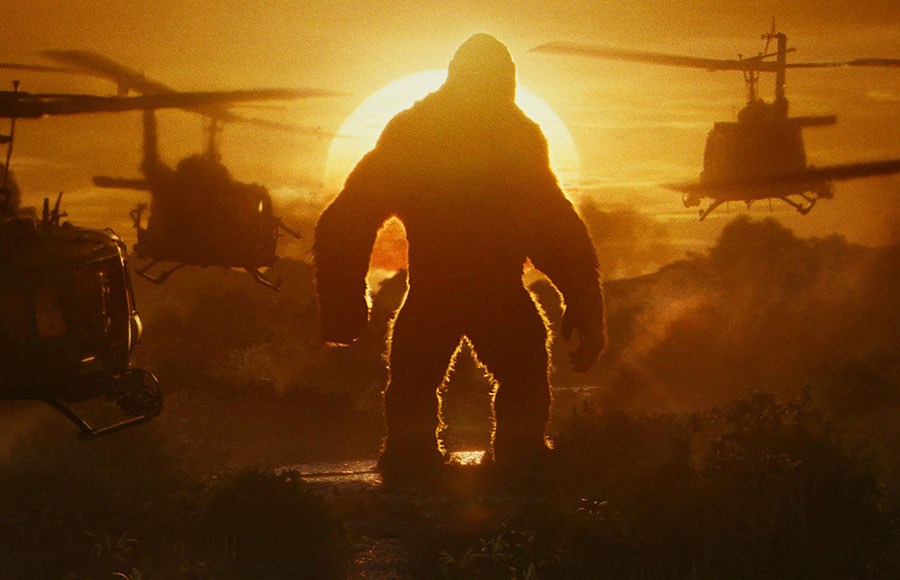
The silhouette of the great ape Kong in Kong: Skull Island

This film is beautifully shot; the cinematography and the location choices are mind-blowing. I’m not sure how much of this film was shot on green screen and how much was on location; but the locations really do present a lost world, practically untouched by man, while also invoking the cramped and claustrophobic spaces associated with the Vietnam War. The landscape rolls together convincingly while also appearing to be strikingly different for each set piece; be it a bamboo forest, a murky, algae-filled lake or an open plain filled with titanic skeletons; the human cast are constantly moving through unknown terrain with unknown dangers. I could single out a litany of single shots to praise, like the image of a lone soldier sitting in a forest of mysterious trees, or the image of a Gatling gun mounted to the skull of a long-dead monster; but one shot, of Lt. Col. Packard standing alone on a hilltop, his frame silhouetted by a sea of raging fire in front of him, was so unexpectedly powerful and beautiful that if it was the only image you’d seen from this film, you would be forgiven for mistaking it for an Academy-award worthy war drama, and not a movie about a 100 foot ape fighting giant nightmare lizards.

Speaking of which, following on from Godzilla, the production teams at Legendary have knocked the creature design out of the park once again for Kong: Skull Island. The eponymous ape himself looks magnificent, but is also probably the least interesting creature design in the film. Most of the creatures are much more reminiscent of real, living animals, presumably in order to maintain a tone with the presence of Kong; but that doesn’t mean they don’t lend themselves to some interesting or intriguing design. A giant spider with legs that camouflage against the bamboo was particularly effective as a point of tension (and was, I hasten to add as someone with mild arachnophobia, an utter nightmare); thought my stand-out favourite was of a giant stick insect that looked more like an entire tree (rather than merely just a branch), who despite being mostly inconsequential in terms of the plot; added a nice moment to further demonstrate that the team really were very much out of their depth. The stand-out design does go to the main source of (non-primate) conflict in the shape of the Skullcrawlers; the aforementioned giant, lizard-like abominations that live under the Earth’s surface and hunt those that dwell above. The creature design team, in keeping more in-line with the scale and design of the monsters in Godzilla, departed from the more traditional dinosaur designs for Kong’s gargantuan opponents and settled on a design that is best described as considerably more troubling. Combining elements from various genus types adds an element of the uncanny valley to their design, and the way they move and attack is primal and unsettling – which is exactly what you want from a monster movie like this, frankly.
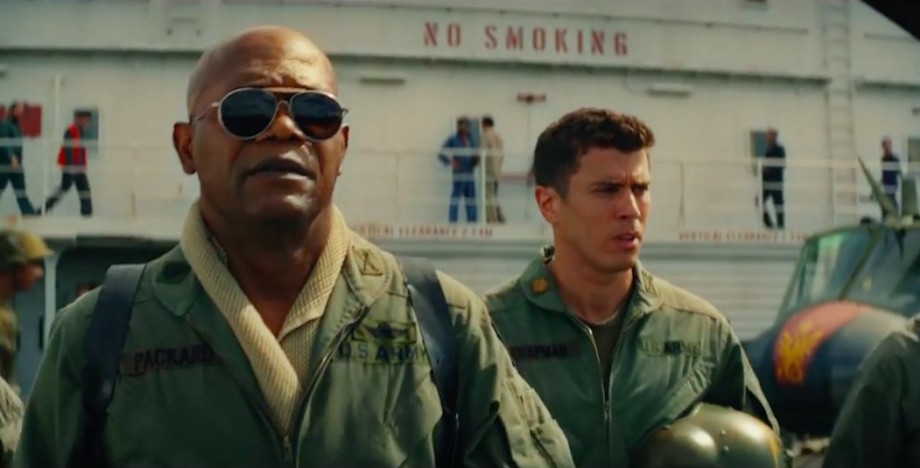
Samuel L. Jackson and Tony Kebbel get ready to head out in Kong: Skull Island

Kong: Skull Island is very much an ensemble piece; and though there is a certain amount of star power attributed to the actors who are hired separate to Lt. Col. Packard’s unit, enough time is given to establish the archetypes of each character to allow them to feel real, though we’re not provided with enough backstory for each of them to forge a more personal connection to them all. This is particularly important as the group does get split up, which gives everyone the chance to shine (at least for a few moments) and establishes enough character for us to keep track of the basis for their emotional response, though Shea Whigham (Boardwalk Empire) in particular stood out for me in his performance. Every member of the military team represents a different aspect that the after-effects of a conflict like the Vietnam War can have on a solider, but Whigham’s performance combines simmering aggression with quiet reflection in a particularly effective manner. Samuel Jackson’s embodiment of Packard carries a different weight to its aggression, bringing us a dedicated military officer who relishes the opportunity of conflict; a man who is distraught at losing a military conflict and refuses to do it again. Comic relief also comes from multiple avenues, but it will surprise nobody when I say that John C. Reilly (Wreck-It Ralph) takes the lead on that front, well-supported by Thomas Mann (The Highwaymen) in particular; but John Goodman, Corey Hawkins and Brie Larson and Tom Hiddleston also take the chance for some of the more obvious gags. Larson and Hiddleston are in full lead-actor mode for this piece, and their chemistry with each other plays well in the narrative without adding an unnecessary romantic angle that this film certainly didn’t require, and I’m glad it wasn’t there.

However, the downside of the ensemble structure is that some characters are reduced to stereotypes, or lost in the mix altogether. While the military unit’s characters are not hurt too badly by that, others are. At one point I had though that John Goodman’s character had been killed at some point when I had blinked, but about 20 minutes later he appeared on screen after a considerable absence. Corey Hawkins also gets a raw deal, being relegated to the background for large parts of the action; often alongside Jing Tian (Pacific Rim: Uprising), who had so little of note to do in relation to the plot that I genuinely cannot remember any stand-out moments she had at all, other than the surprise of seeing a biologist demonstrating a proficiency with a rifle. This is looking like a worrying trend when held up against the under-use of Sally Hawkins in Godzilla, and one that is hopefully addressed in future instalments in a consistent way.

Jing Tian, Brie Larson, Tom Hiddleston and Thomas Mann on the hunt in Kong: Skull Island

A special mention must go to Tony Kebbell (RocknRolla), who not only spends time going solo as Jack Chapman; but also provided the motion-capture for Kong. Chapman’s narrative as the soldier separated from his unit casts parallels to innumerable war movies that have come before this one and Kebbell plays it well, doing well to portray both his fear and determination to return to his unit, despite shorter visits to him during his ordeal. His work as Kong should also be lauded, and it’s clear his experience doing motion-capture for the Planet Of The Apes series has paid off; Kong’s movements look so natural for a gorilla, despite his gargantuan size; and combined with the incredible quality of the CGI for Kong’s appearance, it’s very easy to suspend one’s disbelief and look upon the so-called 8th Wonder Of The World as a real, living creature.

The action of the piece tries to split itself reasonably equally between human/monster conflict and monster/monster conflict, and it works very well. The human characters are given the opportunity to learn how the ecosystem of the island works over the course of the film, and not always all at the same time; so the stakes of each conflict change based on their actions both in the previous conflict and based on what they’ve learned in the interim. It’s an excellent way of maneuvering the human characters through the more complicated aspects of the island’s ecosystem, while also setting up new goals and scenarios for the conflicts which they find themselves in. The monster /monster conflicts are then also shaped by the human action as well, with Kong in particular having the stakes shifted in every battle, depending on which groups of humans are there and how much they know. It’s a great way to keep the various interactions fresh, and is better handled than it was in Godzilla.

Kong: Skull Island is not a perfect film, and it was not going to win any Academy awards (unless for technical aspects, as it was nominated for Best Visual Effects, and with good reason); but what it does present is an interesting new angle on a Hollywood stalwart, carefully adapted to fit a larger universe. It’s a very enjoyable popcorn movie, with a good heart, incredible visuals and some great performances… and a really, really huge ape, which is what we all came here to see anyway, right?

Dave McGuckin is a theatre graduate, bar manager, former comedian and eternal film lover from Northern Ireland, now living in Canada. He began writing film reviews in 2016 for The Grade and then Great Central, both based in Leicester, England.

This site will collate these reviews, but also provides a platform for new reviews and essays on cinema, television, videogaming and (possibly) more

If you enjoy what you read, please consider sharing on social media, or leaving a small donation towards webhosting and content creation costs on Ko-Fi at http://www.ko-fi.com/davewritesreviews.

Check out the official social media links for Dave Writes Reviews below:

Godzilla (2014)

The arrogance of man is in thinking nature is in our control.”

At the time of writing, there are 36 movies about Godzilla; which is more than any other film character in history. That is a considerable legacy, especially as fans of Japanese cinema hold many of the original Godzilla movies in an incredibly high regard. The original attempt by a western studio to produce a Godzilla movie in 1998 did not go so well… but in 2014, Warner Bros. And Legendary Pictures teamed up to take a second attempt, intending to launch a new cinematic universe built around their primary monster properties – Godzilla, and King Kong.

The opening credits of Godzilla establish a trend for the series to come; tying in the existence of monsters with key historical events, unveiling a shroud of secrecy created by Monarch, an international organisation tasked with finding the monsters of the world. A mix of news footage from the 1950’s shows Monarch’s archival footage of Godzilla being lured to Bikini Atoll in an attempt to destroy him with a nuclear bomb; re-contextualizing the nuclear testing which the United States carried out along that reef in the 1950’s. This sets a tone for the film; historical events are not what you think they are, an organisation is working to cover things up… monsters exist.

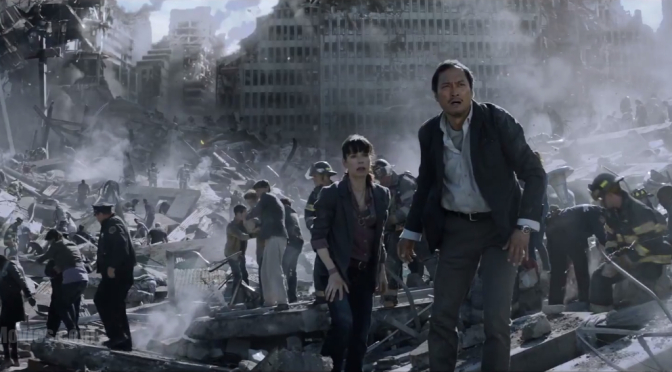
The prologue proper shows Monarch scientists Ishirō Serizawa (Ken Watanabe, Letters From Iwo Jima) and Vivienne Graham (Sally Hawkins, The Shape Of Water) investigating a giant skeleton found in a collapsed uranium mine in the Phillipines. The skeleton was housing 2 organic pods; one of which was still in place, but the other had opened and something has escaped. Meanwhile, in the Janjira Nuclear Power plant in Japan, the husband-and-wife duo of supervisor Joe Brody (Bryan Cranston, Trumbo) and lead technician Sandra Brody (Juliette Binoche, The English Patient) unsuccessfully attempt to stop the reactor from going into meltdown as a result of unexpected seismic activity. This sequence sets up the main bones of the film; monsters are not only real, but they are alive; there’s more than one of them, and they’re going to cause problems.

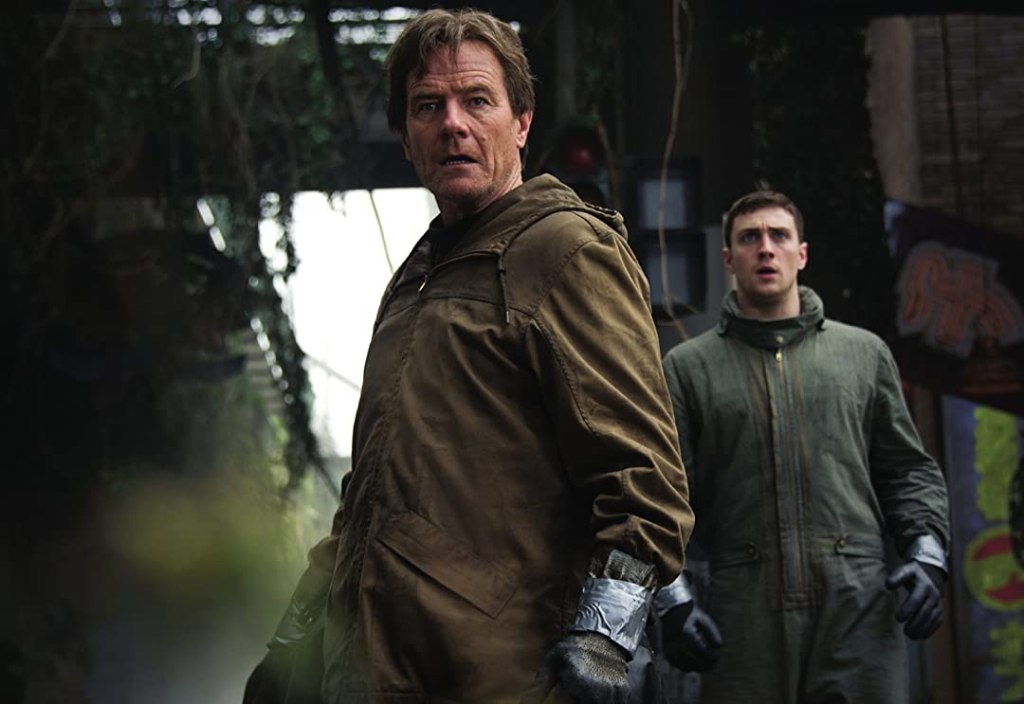
Bryan Cranston and Aaron Taylor-Johnson as Joe and Ford Brody in Godzilla

A 15 year time jump introduces us to our central viewpoint character; Ford Brody (Aaron Taylor-Johnson, Kick-Ass), son of Joe and Sandra, an Explosive Ordnance Disposal Officer with the U.S. Army, who is called to Japan to deal with his estranged father. Joe has spent 15 years insisting that all is not as it seemed with the Janjira disaster and is caught trespassing in the quarantine zone looking for evidence. Ford leaves his wife Elle (Elizabeth Olsen, Avengers: Endgame) and son Sam (Carson Bolde, The Never List) to head to Japan to retrieve his father, and ends up becoming embroiled in his quest for answers – especially when it turns out that Joe was right, and that Monarch has been protecting the site of the reacto; which is now home to a giant chrysalis housing the creature from the Phillipines, codename MUTO (Massive Unidentified Terrestrial Object); which hatches while they are on site, and everything starts to unravel as the creature travels to the USA to find a mate, hunted by the military… and by Godzilla.

In terms of Big Monsters Fighting, this set-up is reminiscent of many movies from many franchises that we’ve seen before. What Godzilla does differently here is place the ethical and moral conversation regarding Godzilla and the MUTO at the forefront of the multiple motivations behind each character’s actions. While Ford Brody serves as a primary viewpoint for the actions relating to the military effort against the monsters; Serizawa and Graham serve as moral foils to the decision-making of the military, led by Admiral William Stenz (David Strathairn, The Bourne Ultimatum). While the military pursue their policy of complete eradication, the Monarch team are insistent that Godzilla’s presence is good for the planet, and that they should be working to help him battle the MUTOs, not trying to kill all three creatures together. Further to this, Elle and Sam Brody allow the narrative to switch focus on the civilian aspect of the conflict, especially when it reaches San Francisco. While Ford’s interactions before finding the US military in Hawaii add some insight to the personal cost of the monster battles (such as his protection of a young child separated from his parents amongst the carnage); Elle’s nursing profession allows us to see the impact the catastrophic battle is having on the people in a focused view, as she struggles not only to find safety for her son away from the fighting, but also as she continues to try and help the wounded right in the thick of the action. The only downside to her character is that she isn’t given more to do; until the action lands in San Francisco, most of Olsen’s time on screen is simply as a narrative frame to help us track the movement of the action across the Pacific. An actress of her skill could have done a lot more with this role if given the opportunity.

These multiple viewpoints add a depth of context and emotional response that one would not usually expect from a big-budget monster movie, but work incredibly well to frame the story in a grounded and realistic way. Director Gareth Edwards, who was fresh off his indie hit Monsters in 2010, approached this film in much the same way as he did in that previous vehicle; using the threat of destruction, and the widening realisation that there is much that we do not know about the world we live on, to showcase how broad a response the human race can have to a single world-changing event that was not caused by humanity. Edwards’ approach also allows the story to develop at a reasonable pace, letting the audience to keep up with the revelations that are happening on screen as they come. Between Ford and the Monarch/military team, there are a lot of characters who develop a deeper understanding of the nature of the relationship Godzilla and the MUTOs have with each other, and with the world around them. The constant attempts by the military to use nuclear warheads on creatures that feed off radiation keep failing and they refuse to learn from that; but it allows Ford (who is deeply involved in the final military plan to save San Francisco from the carnage) to adapt on the fly when he comes to the conclusion that Godzilla is trying to help them. Edwards handles all these small revelations incredibly well, often choosing to show and not tell, and to allow his lead actors to respond physically to the events around them rather than explicitly stating out loud what their new intentions are, and it plays well through the narrative.

As the only human character who is physically present for the events in Japan, Hawaii and San Francisco (and a lot of what happens in-between), Taylor-Johnson not only provides the aforementioned audience viewpoint but also holds a lot of the action on his shoulders from a human perspective. Despite the larger ensemble cast all being important to the overall story developments, we spend a lot of time with Ford Brody on the ground, and Taylor-Johnson does a great job of not only keeping us engaged with the action, but also demonstrating the toll it is taking on him. His motivations are divided between his duty to help protect the people around him, but also his desire to get back to his family (the narrative conveniently allowing the events to converge where his family is helps with that a lot, though that does seem to be the only reason why we end up in SF). By the climax of the film, Brody looks utterly exhausted; and while I initially read Taylor-Johnson’s performance as strangely lacking emotion when I first watched this film back in 2014; in revisiting the film for this piece I realise that I misread the intention behind his stony demeanour. As time goes on it is more and more evident that Brody is just trying to hold himself together so he can accomplish his tasks; and Taylor-Johnson slowly stripping back his initial exuberance as he narrowly avoids meeting his end, over and over again, is a much more nuanced performance than I originally gave him credit for. His silence is more than just a display of the stereotypical military hard-man persona, but a window into the pain and exhaustion the character feels, all while knowing he has no choice but to keep fighting.

Watanabe also gives us our money’s worth of exhaustion in this piece, but in a different way. Having spent 15 years monitoring and protecting the MUTO chrysalis in Japan, to find himself suddenly contending with the military and their attempts to destroy these titans is his primary source of conflict, and he delivers both in his exasperation at those around him, and also in his calm, quiet confidence in his scientific theory and his personal interpretation of the evidence he is collecting. While Taylor-Johnson is the primary viewpoint for the audience, Watanabe represents our emotional response; as someone who can only view the action and does not actively get involved, his championing of co-operation with Godzilla in combat aligns with our own, and his timely iteration of the now-infamous “let them fight” line is the perfect transition into the final act. The only shame in this use of Watanabe, is that Sally Hawkins often is left on the sidelines in his stead; mostly being used to either provide context to Watanabe’s lines, or as a sympathetic presence when the Stenz is at loggerheads with him. Given the incredible performance she gave us in The Shape Of Water, it’s a shame this script didn’t have more for her to do here. Combined with the underuse of Olsen, this film doesn’t have a whole lot of time for the women in its cast.

Sally Hawkins and Ken Watanabe as Vivienne Graham and Ishirō Serizawa in Godzilla (2014)

Edwards is reserved with the action in the earlier acts so as not to burn the audience out; the first confrontation between Godzilla and the MUTO in Hawaii is but an appetizer for what is yet to come, and the other violent conflicts are used mainly to establish that a human-led assault is likely to fail; so that when Godzilla finally does step ashore in San Francisco to collide with his adversaries, the audience is practically salivating at the thought of these beasts throwing down; and the climactic final confrontation does not disappoint.

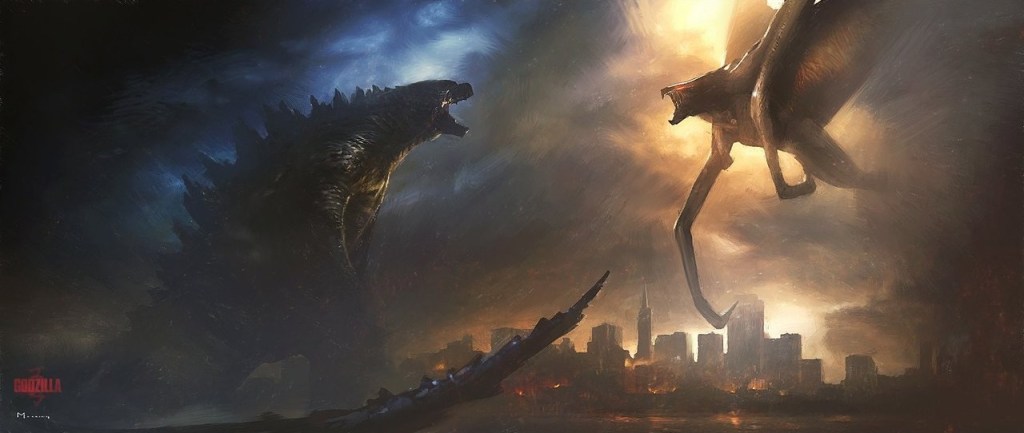
Part of the efficacy of Godzilla comes from the creature design, which is incredible. The MUTOs capture a lot of different influences in their design, allowing them to simultaneously look other-worldly while also reminiscent of other forms of earth-based life, and harken to the types of primordial creature from the time before the dinosaurs. The detail given to differences in design between the two sexes is a nice touch, and allows the viewer to keep track of the intent of the creatures amongst the chaos and carnage. Likewise, full credit must go to the Godzilla design, which takes a great leap to appeasing the sins of the disastrous attempt at a Hollywood Godzilla property from 1998. Our favourite giant lizard is a fantastic transcription from the original Japanese costumes into a fully CGI rendition, with motion capture provided by T.J. Storm (Deadpool); Godzilla’s movement feels animalistic, while also retaining a whisper of the human element that harkens back to the Guys In A Suit days. Combined with the overall high quality of the graphics and some excellent cinematography work, including an effective use of the immediate impact of the various battles to adjust the overall look and feel of the surrounding environment and raise the stakes of the conflict. Also, it just looks really cool when Godzilla is gearing up to attack with his fire blast. I would phrase that in a more constructively critical fashion, but sometimes the pretense needs to be dropped around these things. It looks incredibly cool.

Concept art of Godzilla and the MUTO from Godzilla (2014)

Godzilla is juggling a lot, and doing it very well. A big-budget popcorn monster flick which has time for an emotional drama, filled both with questions of morality and an exploration of our response to unknown dangers; a film which treats the idea of a titanic struggle between prehistoric life forms as more than just a blood-sport. For those looking for nothing more than big monsters fighting; clear your mind of expectations and allow the story to take you on a more interesting journey than a mere fist fight, as this movie is better than you might expect, and may also be better than you remember. I highly recommend going back to watch this one again.

This review is a davewritesreviews.com original.

Dave McGuckin is a theatre graduate, bar manager, former comedian and eternal film lover from Northern Ireland, now living in Canada. He began writing film reviews in 2016 for The Grade and then Great Central, both based in Leicester, England.

This site will collate these reviews, but also provides a platform for new reviews and essays on cinema, television, videogaming and (possibly) more

If you enjoy what you read, please consider sharing on social media, or leaving a small donation towards webhosting and content creation costs on Ko-Fi at http://www.ko-fi.com/davewritesreviews.

Check out the official social media links for Dave Writes Reviews below:
Wonder Woman 1984

No true hero is born from lies.”

In 2017, Warner Bros. and DC released Wonder Woman; the first superhero movie of the modern era to be centred around a female lead character, and the first attempt at a female-lead comic book movie since 2004’s Catwoman, starring Halle Berry, crashed and burned both critically and financially. DC were onto a winner; not only did they beat Marvel to the punch on a female-lead superhero film, but they also brought in the well-renowned Patty Jenkins to write and direct. The movie hit the landscape to critical and audience acclaim, and presented a shining light for the potential future of the DC Extended Universe (or DCEU for short); a venture that had, until that point, been met with mixed success. Was Wonder Woman the turning point for DC’s big screen challenge to the Marvel Cinematic Universe?

Legacy, however, can be a difficult thing, and the legacy of the DCEU is certainly shaping up like no other experiment in the history of cinema. While this is not the time for an analysis of the full DCEU output so far; Wonder Woman 1984 (or WW84) is a fascinating example of the best and worst that the project has had to offer so far. No longer is DC simply competing with Marvel for superhero supremacy at the box office; but also with an out-of-control pandemic that has seen the majority of the world’s cinemas closed for the best part of 12 months. Opting to release the film on-demand through their HBO Max streaming service in the US, and other similar services in markets without access to cinema, DC took the ultimate risk – taking the first viewing of the first superhero film since 2019 out of the cinema, and straight into our homes. Does WW84 have what it takes to make that jump work?

WW84 sees us rejoining Gal Gadot (Justice League) as Diana, Princess of Themyscira (known as Diana Prince in everyday life); who is working in the Smithsonian Institution in Washington D.C, 66 years after the events of the first Wonder Woman film; while secretly engaging in feats of heroism on the side to keep the people of the world safe. That endeavour becomes more difficult when, following a jewellery store robbery that Diana herself thwarted; her Smithsonian colleague Barbara Minerva (Kristen Wiig, Ghostbusters: Answer The Call) is brought a number of artifacts by the FBI, including a particular item that is sought after by TV personality and deceitful businessman Maxwell Lord (Pedro Pascal, The Mandalorian); one which will eventually give Lord the ability to change the landscape of the world forever – if Diana can not stop him.

Kristen Wiig as Barbara Minerva in Wonder Woman 1984

The plot of this film is pretty standard superhero fare; power-hungry villain who desires to attain more power and wealth engages in an action that threatens the human race, and must be stopped. There are elements that make this take on it different, though they’re hard to discuss without stepping into spoiler territory, which I prefer to avoid; but Wonder Woman’s grounding in mythology allows the nature of this film’s central MacGuffin* to take on an interesting slant in terms of origin. While the first film saw Diana, daughter of the Greek King of the Gods Zeus, going head-to-head with Ares, the Greek God of War; WW84 adopts a more secular approach to the origin of central plot device. She describes the inscription on the side as being “the language of the Gods”, and while a specific character from the Wonder Woman lore is attributed to its creation; the item is referenced as having been present at the downfall of a number of prominent civilisations across the world, such as the fall of Roman Empire and the end of the Mayans; meaning that this particular plot device is not rooted firmly in the mythology of the ancient Greeks, but could be theoretically linked to any nation and religion in history. This approach should be celebrated; allowing those less familiar with the history of the ancient Greeks to understand the significance of the object in a more direct way, without needing the background knowledge of the lineage of the Greek gods to understand Diana’s personal connection to it.

Speaking of Diana, Gadot delivers another solid performance akin to her solo debut, but the difference in construction of this film does more to highlight her weaknesses on screen. When we join Diana in 1984, we see that she has mostly been living a life of isolation; 66 years after the end of the First World War, all the people who fought alongside her are most likely dead, and Diana has to be careful who she keeps company with to ensure nobody realises that she has barely aged a day since 1918. Gadot is not as experienced an actor as you would expect from the lead of franchise of this magnitude, and she is at her best when she has somebody with her to play off, or when she is deeply engaged in the action set-pieces; and the more lengthy monologues she has been given in this sequel only serve to highlight her inexperience on screen.

Fortunately, the nature of the story results in the return of Chris Pine (Star Trek), unexpectedly reprising his role as Steve Trevor. The chemistry between these two is as palpable in WW84 as it was in the original, and Pine and Gadot definitely seem to be having a lot of fun together. This is particularly noticeable in the first few scenes following Trevor’s reappearance, where the story leans into a role reversal from the first movie and Diana works to bring Trevor up to speed on the advancements of the 21st century that he has missed. While Pine’s presence is beneficial to the performances; there are unanswered questions regarding Trevor’s return that leave some pretty gaping issues of morality in the plot. The way in which he is returned seems simple enough in the moment, but as the film went on I couldn’t help but wonder why Diana, who is supposed to be representative of a higher sense of justice and morality, didn’t take even a moment to consider the potential ramifications of how Trevor had been brought back, and how that could affect others that were not directly connected to her and her desires (this is another aspect which is difficult to discuss without getting into spoiler territory, so I’ll leave that thought there for the moment).

Gal Gadot and Chris Pine in Wonder Woman 1984

On the other side, Kristen Wiig and Pedro Pascal seem to be relishing their roles in this film and also having a lot of fun with them. This is Wiig’s first opportunity to play a villain in a larger movie (to my knowledge), and her gradual personality change as she loses the kindness and empathy we see from Barbara in her introductory scenes and evolves into an out-and-out apex predator is a highlight of the film, and probably one of the finest pieces of character work in the DCEU overall so far, for me. We haven’t really seen a villain like her before in DC’s modern output; somebody who starts off in a role where they you would expect their path leading to them becoming a sidekick to the main hero; but Barbara becomes the villainous Cheetah instead. It’s a fascinating take on both the character and the very nature of what can lead to someone becoming a villain, and Wiig works through that development perfectly. The closest comparison to me would be with Aaron Eckhart’s performance as Harvey Dent and Two Face in The Dark Knight; but even then, the scenarios are not the same and the way the Barbara/Cheetah character is handled is fascinating.

Similarly, and perhaps to a greater extent; Pascal seems to be having the time of his life with Maxwell Lord; a sleazy con-artist who manipulates his way to ever-increasing levels of wealth, power and influence, brought about by the previously-mentioned MacGuffin*. Our first glimpse of Lord is on cheesy, exaggerated TV adverts for the pyramid scheme that he manages; one that has been built on a lie and is on the edge of collapse. His reversal of fortune, generated through supernatural means; are the trigger for the main threat of the plot, and watching Pascal move Lord from oily scam artist to a power-mad despot who has been blinded to the inconceivably damaging effects of his greed is a joy. One can’t help but wonder as to whether Lord was written and played to purposefully reflect certain other figures of international prominence in the modern day, whose obsession with having a world-reaching sphere of influence could be argued to have lead the world down a dangerous and difficult path; but I am not one to presume the more subtle intentions of a filmmaker of cast member without evidence to back it up… though Lord does have a very particular hair colour…

Performances aside, Patty Jenkins visual realisation of the 1980’s on the screen is a joy to behold; with the sequence introducing us to Diana’s place in the Washington D.C of 1984 being a bright, noisy landscape of colour and action, which works well to establish the time-setting in an almost pulpy, hyper-realistic memory of what modern nostalgia for the 80’s presents it as; with the kind of bold primary colours and flashes of caricatured extras that one could perhaps expect to see on the pages of a Wonder Woman comic printed in that decade.

Jenkins’ 80’s continues to live in that world for the majority of the film, with various locations, such as Maxwell Lord’s unnecessarily gargantuan office building, gaudily decorated with black and gold, helping to solidify that tone and keep the nostalgic thoughts humming away quietly in the background. Jenkins use of colour, rightfully lauded in the first film, are seen in other areas here too; with Diana standing out from the crowd at a gala event in a beautiful white dress contrasting against the dark coloured attire of the other guests; and the shine and colours of her Amazonian armour standing out in the dust and sand of a mid-film action sequence in the Middle East. Jenkins appreciation for colour contrast, in fact, is part of what contributes to one of the most disappointing sequences in the film, and that unfortunately is essentially the entire third act.

Pedro Pascal as Maxwell Lord in Wonder Woman 1984

While there are inconsistencies and unanswered questions running through the plot of WW84, most of those can be forgiven; but the final sequence is something entirely different. Here we see Barbara’s transformation completed into the villainous Cheetah; an apex predator with the strength and speed to hold her own against Diana. Wiig’s performance and characterisation up until this point deserved a much better pay-off than she is given, and absolutely none of it is her fault. The CGI used to realise the transformation is underwhelming; making Barbara look more like a lost , ghostly cast member from Tom Hooper’s 2019 adaptation of Cats than a viable opponent for the demi-god princess of Themyscira. Cheetah’s design in the comics is vibrant; usually with striking orange fur and a sleek, muscular design, but the film presents us with something more akin to a knock-off jaguar onesie that your cousin is calling a Cheetah costume because she forgot to put something together for Hallowe’en. Wiig disappears into the background and a number of points during the fight, and while that could have been used purposefully to represent an interpretation of a real cheetah’s camouflaging ability while hunting; this is no doubt that was simply a misjudgment by the special effects team. The cinematography of this fight also doesn’t match up to the bright, colourful aesthetic of the rest of the film; instead using the cover of night to present a dark, grey landscape on which the two will fight, which certainly doesn’t help with Wiig’s visibility. This may have been an intentional move in order to highlight the colour and shine of Diana’s armour in the scene, akin to the No-Man’s-Land scene in the previous film; but the intent is not obvious and the contrast not as stark. Given the critiques levelled at DC for their drab, colourless landscapes in previous DCEU instalments, and the praise Jenkins has received for her use of colour in the previous Wonder Woman film (and the efficacy she brings earlier in this one); it feels like a misjudged choice to close off a film that has otherwise used its palate so triumphantly up to this point. Add in some of the aforementioned lengthy monologues for Diana, a plot resolution that feels somewhat lacking given the build to it, and the final act of Wonder Woman 1984 really lets down what otherwise is a fun, easy-going popcorn action flick – exactly the kind of thing we’ve been missing out on during the cinema shutdown over the last year.

One benefit to those who can only access WW84 on streaming services rather a trip to the cinema is the ability to pause for a bathroom break. Clocking in at 2 hours and 31 minutes, Wonder Woman 1984 is one of the longest solo-hero movies ever released; and despite the fact that, as mentioned above, there are key story beats that deserved more time to be given to them so the characters could truly come to terms with the weight of what they have done, and what has happened around them; this film feels long by the time it hits the credits. The final confrontation between Diana and Lord in particular seems to just… keep going, and despite the effort both Gadot and Lord are putting into it, it just didn’t need to be that long.

Wonder Woman 1984 is, for the most part, an enjoyable return to the world of superheroes; with a fun, silly premise; a great setting and some excellent performances. If you can forgive or ignore some of the inconsistencies, and if you’ve got the stamina for the runtime; this is a fine popcorn movie for a cold, rainy night – but it’s not as god as Wonder Woman.

*A MacGuffin is defined as an object that is central to the plot of a movie, but is otherwise unimportant in the overall story.

Dave McGuckin is a theatre graduate, bar manager, former comedian and eternal film lover from Northern Ireland, now living in Canada. He began writing film reviews in 2016 for The Grade and then Great Central, both based in Leicester, England.

This site will collate these reviews, but also provides a platform for new reviews and essays on cinema, television, videogaming and (possibly) more

If you enjoy what you read, please consider sharing on social media, or leaving a small donation towards webhosting and content creation costs on Ko-Fi at http://www.ko-fi.com/davewritesreviews.

Check out the official social media links for Dave Writes Reviews below:
Wonder Woman

“Be careful in the world of men, Diana; they do not deserve you.”

It’s fair to say that the DC comics’ film franchise (or DCEU) has gotten off to a rough start. Conceived to challenge the success and dominance of the Marvel Cinematic Universe, the DEUC builds on the story presented in Zack Snyder’s Man Of Steel. We have already seen Batman vs. Superman: Dawn of Justice and the Suicide Squad movies, with the series building up to the first movie chronicling the adventures of the Justice League of America; a team which, in this iteration, will consist primarily of Batman, The Flash, Cyborg and Diana, Princess of Thymescira… also known as Wonder Woman.

Wonder Woman stands out from this list as, following on from her appearance in Dawn of Justice; she’s the only character aside from Superman who is receiving a solo film within the DCEU before Justice League is released. Whether that will prove to be a mistake is yet to be seen; but what definitely was not a mistake is bringing us a solo Wonder Woman film, and the steps that led to its creation.

Wonder Woman is the origin story of the aforementioned Diana (Gal Gadot, Keeping Up With The Joneses), Princess of the island of Thymescira; the mystical, hidden home of a race of Amazon women, a paradise upon which no man has ever set foot. Diana becomes accidentally embroiled in the conflict of World War I because that changes, as American pilot and British secret service agent Captain Steve Trevor (Chris Pine; Star Trek) is washed up on the beach of Thymescira after being shot down by the German forces. Diana makes the choice to leave her paradise home and help Trevor to end the War To End All Wars and bring true peace to mankind; convinced that Aries, the God of War is behind the conflict.

Said Taighmaoui, Chris Pine, Gal Gadot, Eugene Brave Rock and Ewen Bremner in Wonder Woman

For more context to that mind-boggling paragraph, I’m afraid you’ll have to go and see the film, for to discuss the plot in any greater detail would be to spoil it, and by now you should have all figured out that I don’t like doing that. But don’t worry, there’s still plenty to talk about without giving things away…

Director Patty Jenkins (Monster) makes a number of interesting choices that add a real authenticity to this story. Building on Gal Gadot’s Israeli background and natural accent, the Amazons are depicted without American accents; which adds weight both to the origin of their race and to their geographical location (which, given their proximity to the events of World War I, is likely to be somewhere in the Mediterranean). This choice doesn’t limit the depiction of diversity within Amazonian culture; as Jenkins loads the warrior race with women from all ethnic backgrounds, representing a broad range of athletic body types to create real depth to the Amazons. The same comes when we meet Trevor’s covert team later in the film; consisting of a Scot, a French-Morrocan and a Native American in the shapes of Ewen Bremner, Said Taghmaoui and Eugene Brave Rock respectively; Jenkins peppers her piece with fantastic actors a variety of backgrounds, and takes care to include people from all walks of life who fought in the First World War.

The locations used in Wonder Woman are beautifully realised. The island of Themyscira truly does look like an absolute paradise; but it is the depiction of war-torn Europe which is so remarkable. Jenkins manages to capture both the horror of war and the beauty of early 20th century Europe at the same time; the grey, industrialised cityscape of London offset with the striking colours from the Thames and the interiors of department stores; the greens and blacks of military equipment contrasted with the golden sands and ancient architecture of Turkey; or the golden sunlight splashing colour into a half-destroyed French town at dawn. This is but the half of it, as costume comes into play in the same way; the first reveal of Diana in her full Wonder Woman costume is tremendously timed and beautifully realised to laud her as a symbol of hope in the midst of an unceasing nightmare.

Wonder Woman herself is fantastically portrayed by Gal Gadot, wonderfully becoming the pillar of strength, intelligence and beauty that Diana represents. Refreshingly, she is also the primary source of comedy throughout the whole film, much of it relying on Diana’s unfamiliarity with the world outside of Themyscira; in particular, her lack of contact with men. Her chemistry with Chris Pine is palpable, with her natural charm and playful personality bouncing off Pine’s trademark dry wit and sarcasm in a fresh and engaging way, especially when the jokes are on the more cheeky side. Her physical and emotional range and strength shine through as well; as the young Princess deals with her sudden involvement in an international conflict resulting in some understandable emotional turmoil… and more than one physical conflict, of course (where it’s key to remember that Gadot prefers to do her own stunts). The variety which Gadot displays as Diana deals with each new situation is impressive for a relatively green actress, and her chemistry with Pine shines during the more serious moments as well.

Chris Pine once again proves that he deserves the title of Captain in Wonder Woman, and he’s a perfect fit for the role of Steve Trevor; wonderfully portraying the dichotomy between his sense of duty and his determination to do what’s right. His recent experiences in ensemble action/adventure films have set him up nicely to take a backseat to Gadot’s Diana, and while Trevor is essential for the direction of the story, Pine does well not to overpower Gadot with his performance – though that, as a concept, would be much more easily said that done.

Lucy Davis and Gal Gadot in Wonder Woman

The rest of the supporting cast works hard as well, and every actor helps build the story’s depth and complexity in a new direction. Connie Nielson (The Good Wife) is appropriately regal and powerful as Diana’s mother, Hippolyta; and Robin Wright (House of Cards) impresses as Antiope, the commander of the Themysciran army, and both play a key role in establishing a lot of Diana’s character and backstory in the opening sequences of Wonder Woman. The aforementioned Taghmaoui, Bremner and Brave Rock work well together to provide individual insights into how the conflict, and the modern world at large, have affected people from different backgrounds; again paying tribute to those who fought in the war and commenting on the impact. A special mention must go to Lucy Davis (Maron), whose brief appearance as Steve Trevor’s secretary Etta Candy is the most endearing character in the whole film, who left the theatre in stitches within moments of her first appearance on screen. Her chemistry with both Gadot and Pine was incredible, and she will hopefully make a return in the role in the future – though given the time difference between Wonder Woman and Justice League, that may be a difficult hope to see realised.

Superhero fans and movie fans alike have been concerned in the build-up to this release. In case you’ve missed it; the previous DCEU properties have been generally considered to be rather disappointing, a conclusion reached by critics and audience alike. Synder’s vision of the DCEU has been un-apologetically dark, with very little in the way of levity or hope – two very important features in the world of superheroes. The backlash to Dawn of Justice resulted in hasty and widely reported reshoots of Suicide Squad to “add more jokes”; an effort which still didn’t save it from a similar response.

Wonder Woman, however, finally manages to break away from this trend and is, at its heart, a story about heart, hope and love. Patty Jenkins has done a wonderful job of splashing colour into the greyscape of the DCEU with a warm, engaging and genuinely funny film that still manages to bring a gritty and serious tone to the nature of conflict and war itself. As with all superhero movies, this is worth watching on the big screen; but it represents more than just another fun summer blockbuster. As the first feature film with a solo female superhero, it’s an important step for the genre; and for the struggling DCEU, it could represent the new direction that the series needs.

This review was originally written for Great Central.

Dave McGuckin is a theatre graduate, bar manager, former comedian and eternal film lover from Northern Ireland, now living in Canada. He began writing film reviews in 2016 for The Grade and then Great Central, both based in Leicester, England.

This site will collate these reviews, but also provides a platform for new reviews and essays on cinema, television, videogaming and (possibly) more

If you enjoy what you read, please consider sharing on social media, or leaving a small donation towards webhosting and content creation costs on Ko-Fi at http://www.ko-fi.com/davewritesreviews.

Check out the official social media links for Dave Writes Reviews below:
Death To 2020

“That was a huge win for us. A huge, but sad win.”

It won’t be a spoiler to say that the year 2020 exceeded many people’s expectations in terms of how catastrophically things can go. The COVID-19 pandemic hit a lot of people very hard, and left the door open for a lot of other issues to bubble over. The result was that a lot of the usual year-end reviews that adorn the festive television schedules had a different look and feel; with shows like the UK’s Big Fat Quiz Of The Year on Channel 4 filmed in front of a Zoom audience, with contestants separated by plexiglass barriers. Never before had so many light-hearted comedy shows had quite so many harbingers of the apocalypse to deal with in one show; and it’s fair to say some handled it better than others.

One of those is Death To 2020.

Charlie Brooker, the creator of Black Mirror and of Death to 2020, partially came to prominence in the UK for his weekly show Screenwipe, a review show for BBC4 that evolved into an annual end-of-year show which satirised the events of that year. Going on hiatus in 2016, fans of the Wipe series have eagerly waited its return; but Brooker took his review skills in a different direction this year. Death To 2020 casts a selection of your favourite actors (including Samuel L. Jackson, Tracey Ullman, Kumail Nanjiani and long-time Brooker collaborator Diane Morgan) as a variety of characters from across the spectrum of society, both real and fictional, and captures their thoughts on the biggest news and events of the previous 12 months.

Kumail Nanjiani as tech CEO Bark Multiverse in Death To 2020 [Netflix]

As with the Wipe series, Death to 2020 moves chronologically, starting with the Austrailian wildfires that dominated the news at the beginning of the year; and centres itself in the coronoavirus pandemic, taking time to cover the death of George Floyd, the Black Lives Matter movement, the US Presidential election and more. The format is where Brooker and (co-creator) Annabel Jones come to the fore; using their fictional characters to not only summarise the events being discussed, but also to satirise the viewpoints of the types of people they are representing. For example, Kumail Nanjiani’s (Stuber) Bark Multiverse is an Elon Musk-style billionaire tech CEO; whose talking head pieces are used to reflect both the focus of Musk’s professional goals throughout the turmoil of 2020, but also his personal output on Twitter and other… notable public appearances; hammering home the contrasts between the businessman and the person, which we saw from innumerable people in the public eye in 2020.

Death To 2020 mostly operates on a political no-man’s-land in terms of who is satirised and why; with shots being taken both at public figures who fall on both sides of the political spectrum, and at those who publicly wear their political colours on their sleeve. However, as with Brooker’s earlier works; it’s fair to say that those on the right take a few more heavy punches than those on the left. One could speculate as to why that is, the obvious answer is that Brooker isn’t afraid to let his own political biases shine through in his work; or perhaps it’s simply that the landscape that 2020 provided allowed more people from the fringe of right wing mentalities to steal the spotlight amongst the chaos. Death To 2020 doesn’t hold back when it comes to those fringe elements, with an incredible turn from Cristin Milloti (The Wolf Of Wall Street) as Kathy Flowers; a suburban American housewife who has fallen victim to the conspiracy theories from the likes of QAnon. Her breezy, relaxed delivery of lines that are packed with the kind of open, unfiltered racism that has become more and more prominent over the last few years, and her physical expressions are absolutely incredible, evoking thoughts of The Stepford Wives in her presentation of herself as the perfect example of suburban Americana soccer mom. Likewise, Lisa Kudrow’s (Friends) turn as “unofficial conservative spokesperson” Jeanetta Grace Susan is sublime; with the veteran actor utilising her expert comedic timing and sharp delivery to authentically embody the kind of talking head you would expect to see on the Fox News network’s various magazine shows (or being hired as a White House press secretary).

Cristin Milloti as Kathy Flowers in Death To 2020 [Netflix]

These characters are mainly effective due to their relatively short screen time; allowing the impact of their characters to hit harder through reduced exposure. Other characters do not fare so well. Despite featuring excellent narration delivered by Laurence Fishburne (Predators), some of the other characters are leant upon to help provide context to the stories as well as to satirise the viewpoints they adopt, and the impact of their characterisation can be deflated by their increased screen time. It highlights the stark change from the Wipe series, which became so beloved partially due to its tighter array of characters as talking heads, but also due to Brooker himself acting as narrator for the topics being covered, letting his own personality set and maintain the tone and the lens that the show was being seen through.

Death To 2020 is an enjoyable and amusing examination of the year 2020, something which is an achievement in itself considering everything that happened. However, as Brooker’s first foray into an annual review show since 2016 Wipe, it is almost hurt by the comparisons to its predecessors. Death To 2020 lacks the intimacy of Brooker’s Wipe series, and without his voice as the anchor for the show, it allows itself to lack the consistency which made that series work so well; instead delivering the same style of humour without sparing any of the expense that Netflix was clearly welcome to provide for this production. However, the cast is excellent and performing on top of their game; and the jokes which land do so with such a heavy impact that it’s not difficult to ignore those less positive elements. At a time where it’s good to take stock of the year that’s passed and allow those experiences to help drive us into tomorrow, Death To 2020 is, in my mind, one of the best options if you want to laugh while doing it.

Dave McGuckin is a theatre graduate, bar manager, former comedian and eternal film lover from Northern Ireland, now living in Canada. He began writing film reviews in 2016 for The Grade and then Great Central, both based in Leicester, England.

This site will collate these reviews, but also provides a platform for new reviews and essays on cinema, television, videogaming and (possibly) more

If you enjoy what you read, please consider sharing on social media, or leaving a small donation towards webhosting and content creation costs on Ko-Fi at http://www.ko-fi.com/davewritesreviews.

Check out the official social media links for Dave Writes Reviews below:

The Finest Hours (2016)

“They say you gotta go out. They don’t say you gotta come back in.”

2016 seems to very quickly be becoming the year of the ensemble piece. With Spotlight picking up the Academy award for Best Picture and a whole host of other great pieces coming forward, such as Hail, Caesar! and, of course, all the superhero movies coming our way (Batman vs. Superman, Captain America: Civil War and X-Men: Apocalypse being just a few), the biggest releases this year seem to be weighed heavily away from straight leading actors in favour of complexly woven stories with multiple stars working it through.

When I sat down to watch Disney’s The Finest Hours, I was expecting something very similar. The screenplay is adapted from The Finest Hours: The True Story of the U.S. Coast Guard’s Most Daring Sea Rescue by Michael J. Tougias and Casey Sherman; the story of how, in 1952, the US Coast Guard launched a rescue out of Chatham, Massachusetts on the SS Pendleton; a T2 oil tanker which was split in half by one of the most vicious storms on record. The rest of the coastguard crews nearby had already been sent to an almost identical rescue on the SS Fort Mercer, including the majority of the crew from Chatham station – leaving only three men with one small boat to try and rescue the Pendelton’s crew.

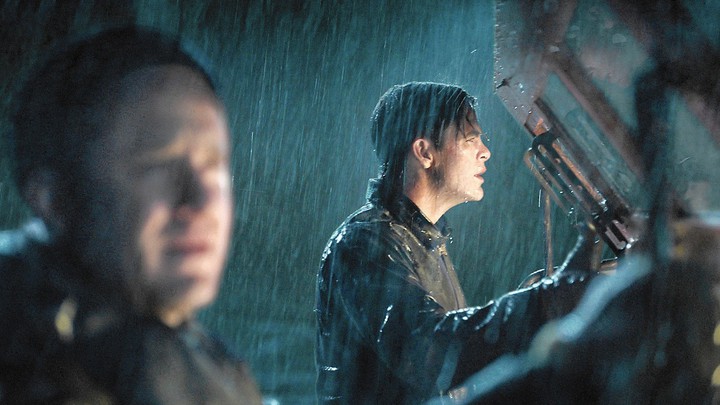
Chris Pine as Bernie Webber in The Finest Hours

On the surface, The Finest Hours looked to be another ensemble piece, with a host of talented young actors taking important roles both on the stricken Pendelton and in the Chatham Coast Guard, working together under the leadership of Ray Sybert (Casey Affleck, Interstellar, Triple 9) and Bernie Webber (Chris Pine, Into The Woods, Star Trek) respectively. However, as the film progresses it becomes very clear that these two are the leads of this piece, and everyone else is there to support – which is not necessarily to the films’ benefit. Splitting the story between the two viewpoints is detrimental to the character development of both Sybert and Webber, resulting in a pair of heroes who don’t feel fully fleshed out by the time the film’s climax arrives; though this is certainly not the fault of Affleck and Pine.

Between the two, Webber is arguably the main focus of the piece, and Pine shines in the part, delivering one of the most rounded performances which I have ever seen from him. Webber is a shy, gentle man with an obvious lack of personal confidence; but he is also a stickler for the rules and is determined to do the best he can. Pine portrays this tremendously, lending real weight to the conflict within as he battles with his sense of duty over his basic instinct to survive. As he comes to terms with what the very real chance he won’t return from the rescue, the strength of Pine’s performance grows. Webber takes more and more of a strong leadership position with his crew as they continue to doubt the sanity of the attempt, and Pine’s transformation of Webber from quiet, reflective man of duty into a determined leader is at the heart of the film.

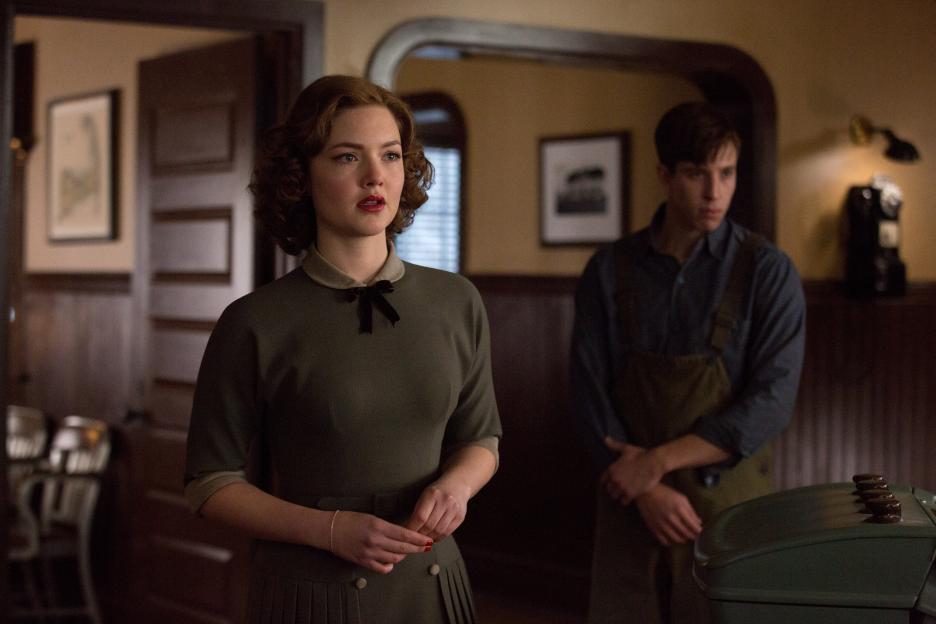
Holliday Grainger as Miriam Pentinen

The primary, and almost sole, female influence comes from Miriam Pentinen (Holliday Grainger, The Borgias, Cinderella), Webber’s fiancée, who counter-balances Webber with an incredible sense of self, displaying a level of confidence and spirit that would still have been seen by many as unusual during the 1950’s. Her concern for her fiancée as he is sent out on the rescue mission works beautifully alongside Webber’s own self-doubt as to his ability; fueled by a failed rescue attempt under similar conditions the previous year, as both characters attempt to come to terms with the very real chance that Webber may not return from his mission.

Sadly, despite a strong showing from Grainger, Pentinen’s own story goes the same way as that of Webber and Sybert; with too little time being given to allow for a full realisation of the emotional distress she has been placed under. Her journey after Webber’s departure conveniently leads her to chance interactions with those directly affected from Webber’s failed rescue the year before, in a way which feels too contrived as a plot-device for it to have an effective impact on the portrayal of her own worries and fears. She is left on the shore of the story, while the drama continues to build out in the Atlantic, and the importance of her role diminishes exponentially as the film continues.

On the Pendelton, Affleck’s Sybert has a different set of challenges to overcome, but his story reflects that of Webber. When the Pendelton is severed, the bridge is separated from the engine room; and as chief engineer aboard, Sybert reluctantly assumes command of his half of the vessel. Sybert is not well liked by the rest of the crew, bar a few of the other workers in the engine room, and struggles to assert himself in this position. The rest of the crew take heed of his advice primarily due to his expert knowledge of the workings of the ship, and a number of inventive ideas and quick reactions keep their half of the Pendelton afloat while they await possible rescue. Like with Webber and Pentinen, not enough time is given to the events on the Pendelton to allow Affleck to fully get his teeth into the role, and the rise of Sybert amongst the rest of the crew feels circumstantial and incomplete by the films’ end.

It’s important to note that this film does not seem to intend to be a realistic telling of the true story behind this rescue. Disney throws everything it has at its post-production graphics team to create landscapes and scenery designed to stun the audience, especially with the shots of the two boats at sea; huge, crashing waves and punishing storms are realised through extensive use of CGI. This does not help in terms of realism, especially with the coast guard; with their rescue boat being fully submerged beneath the towering waves, without anything detrimental happening to its crew, or to the engine (bar one exception when the engine room is flooded; but never again). While this creates a visually striking piece of cinema, something which certainly entertains and leaves in awe in the moment, upon leaving the cinema I found myself reflecting on the unrealistic feel of it all. At one point, the coast guard crew smash their boat head-first through a 40 foot wave… and the worst thing that happens is that one of the crew loses his hat. It was a ridiculous moment that, in the moment, was amusing – but after felt ironically shallow as a moment in film.

The supporting cast is strong, but as with the leads, does not receive a chance to truly portray themselves as anything more than caricatures alongside their leads – in the coast guards, there is The Grumpy One, The Enthusiastic One, and The Inexperienced One; and we find very little more out than that. Eric Bana (Star Trek, Munich) puts in a wonderful turn as Daniel Cluff, the commander of the coast guard station, who appears clueless as to the dangers the team will face; and provides the moment of the highest drama in the film (that doesn’t involve a CGI wave) during an angry exchange with Pentinen after the crew have been dispatched.

All in all, The Finest Hours is an entertaining film, but is woven with issues and complexities. Taking away from some of the supporting stories around the wreck and focusing more on Webber and/or Sybert could have benefited the film from a story-telling point of view; but if you’re looking for something that will let you disengage from the world for a couple of hours, then you could do worse than watch The Finest Hours.

This review was originally published by The Grade in 2016.

Trumbo (2015)

“Who the hell has the luxury of friends? I’ve got allies and enemies.

There’s no room for anything else.”

Around this time of year, people start using the word “snub” a lot. The Oxford Dictionary defines a snub as to “rebuff, ignore, or spurn disdainfully”. For real-world context, it’s the thing you do when that one drunk guy who keeps walking past you and nearly bumping into you in the bar finally decides to come over to you and say something crude or horrible in an attempt to a) get your number or b) start a fight with you.

In terms of movies, a snub is when commentators, reviewers and film buffs feel like a truly great movie has been over-looked in the awards nominations in favour of films which, perhaps, didn’t deserve those nominations in the same way. It then gets rolled around after the awards for when those same people feel like one of the films which was nominated was then over-looked in the awards. The finest example of that this year was Carol; a brilliantly-acted film with a complex and challenging story, which received numerous nominations from the Academy, but ended the night with no Oscars to its name. The morning after the Oscars I went on to the BBC Leicester Breakfast show to discuss the results and brought this up, to be met with the comment “that’s a difficult subject matter for Hollywood”; which was arguably the reason why it should have won an Oscar somewhere.

But before we even get to the Oscars ceremony, we have Trumbo. Based on the biographical book of the same name by Bruce Alexander Cook, Trumbo follows the life of Dalton Trumbo, who was one of Hollywood’s most talented and prolific screenwriters in the 1940’s, until Washington’s crusade against anyone who openly observed socialist politics post-World War II resulted in both his incarceration as part of “The Hollywood Ten”, and his placement on the infamous Hollywood Blacklist. Starring Bryan Cranston as Dalton Trumbo, the film has a huge array of talent (Helen Mirren, Louis C.K*, John Goodman, Diane Lane, Alan Tudyk and so many more), and begins just as Washington is setting up the House Un-American Activities Committee to investigate those with “communist sympathies”.

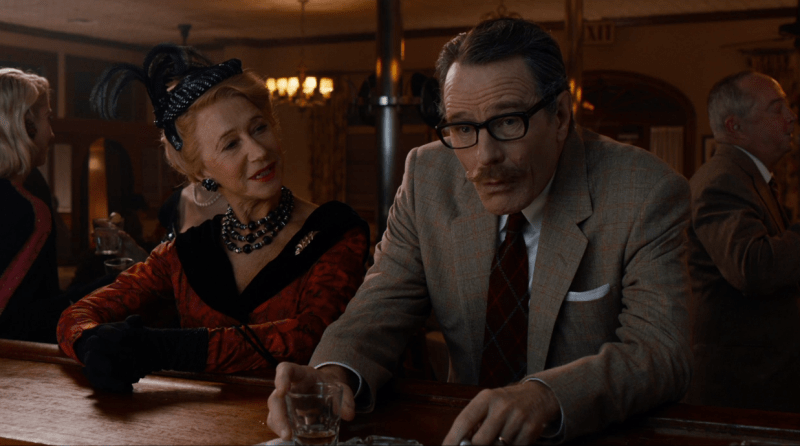
Helen Mirren and Bryan Cranston in Trumbo

I bring up snubs in relation to this film because it was, simply, incredible. It received one nomination at this years’ Oscars, that being Bryan Cranston’s first ever nomination in the Best Actor category (one which was, unfortunately for him, always going to DiCaprio). This nomination was truly deserved; Cranston’s emergence as an incredible character actor following Breaking Bad was destined to lead to a role like Dalton Trumbo, and the transformation he goes through before and during the film is incredible. If you aren’t familiar with the real Trumbo then you, like I, won’t realise just how on-point Cranston’s performance was until the end credits, when a few photos of the real Trumbo are displayed. Cranston manages to fully realise every aspect of Trumbo’s physicality throughout the entire film, identified clearly by the various bathroom scenes (I won’t give away the details of those here because it will reduce the impact of the first one for you, though they’re perfectly tasteful). Cranston’s range is incredible, and as Trumbo’s situation becomes more and more desperate, the insight into the psychology of such a driven and, at times, desperate man is wonderfully realised and perfectly suited to an actor of such skill.

The supporting cast is, as mentioned, outstanding. Louis C.K. puts in a star performance as screenwriter Arlen Hird, another of the Hollywood Ten who, having not achieved the same level of success as Trumbo prior to the investigation, struggles with the changing situation a lot more. Hird’s passion and drive manifests very differently to that of Trumbo and is played incredibly by the comic, whose superb comic timing is fully utilised; but still out-shadowed in this piece by the heart and emotion he brings to the role.

John Goodman and Stephen Root as the King brothers in Trumbo

Helen Mirren and Diane Lane both shine as well, but for different reasons. Mirren plays Hedda Hopper, a former actress who now writes an opinion and gossip piece on the workings of Hollywood for the Los Angeles Times, and demonstrates perfectly the depth of her character’s intentions and motivations in the first 10 seconds she is on-screen, backing the position up for the rest of the film. Finding herself directly at odds with Trumbo’s political stance, she works to ensure the Hollywood Ten and other communist Hollywood workers are named in the press to assist Washington’s investigations.

Diane Lane puts in a stunning performance as Cleo Trumbo, the devoted wife who supported Dalton Trumbo throughout his entire fight with Washington and Hollywood. The role is played quiet and considered by Lane, who communicates more through expression than words for the majority of her time on screen; but when the moment comes and the chains come off, her performance is as powerful and important as any other in the film.

The challenge with a film like this is when it becomes time to portray those with a greater sense of notoriety; and Trumbo’s story results in him crossing paths with some of Hollywood’s biggest names at the time. The result is seeing two stunning supporting performances, one from David James Elliot as John Wayne, the other from Dean O’Gorman as Kirk Douglas. The accuracy with which two of the eras’ most famous actors are brought to life in this film is incredible and both deserve props for their portrayals.

In my reading around the film, I’ve noted a few instances of people claiming historical inaccuracies regarding the portrayal of important people and events involved in the story of Dalton Trumbo. Having known very little of the story of the Hollywood Blacklist before seeing the film, I couldn’t comment further, other than to speculate as to whether that was partially why this film may have missed out on other awards nominations which it arguably deserved. Or was it simply that the Academy didn’t feel it wished to reward a film which highlights such a dark period in the history of Hollywood; including the history of the Academy itself? There’s no way of knowing. But what I do know is that Trumbo is a brilliant film, marked out for the performance of its lead actor, but is also a fantastic ensemble piece that showcases some of the great character actors working in the film industry today; and shines a light on a dark time in American film history.

This review was originally produced for The Grade in 2016.

*Comments about Louis C.K. were written before the revelations about his character and actions became public, and have been left unedited to reflect the author’s original response to his performance, but are not an endorsement of him as a person.

The Revenant (2015)

“He’s afraid. He knows how far I came to find him.”

Ursus Arctos Horribilis, better known as the grizzly bear, is a sub-species of brown bear, native to North America. An adult female grizzly weighs between 290-400lbs, and are fiercely protective of their cubs during their childhood. They have a constant spot in my Top 3 Things I Wouldn’t Pick A Fight With, along with Great White Sharks, and the former (at time of writing) UFC and WWE World Heayweight Champion, Brock Lesnar.

The choice not to pick a fight with an adult grizzly bear is not a luxury afforded to frontiersman and fur trapper Hugh Glass (Leonardo DiCaprio, The Wolf On Wall Street), in Alejandro G. Iñárritu’s frontier revenge epic The Revenant, based partially on Michael Punke’s novel The Revenant: A Novel Of Revenge, which itself is a fictionalisation of the true story of the real Hugh Glass.

Glass has been hired as a scout by Rocky Mountain Fur Company to help track a course through the mountains for the company’s fur trappers. The mission goes awry when the company is attacked by a hunting party from the Native American Pawnee tribe; an occurrence that was not unusual at those times. With their ranks decimated, the company have to find a new path home to their outpost. Glass moves ahead to identify safe passage, stumbling upon a grizzly with her two cubs, who quickly savages Glass and leaves him half-dead. The company attempt to try and take him back to the outpost, eventually realising that it’s a wasted effort. Glass’ son Hawk (a debuting Forrest Goodluck), an embittered John Fitzgerald (Tom Hardy, Mad Max: Fury Road) and young recruit Bridge (Will Poulter, Son of Rambow) are tasked to stay with him until he passes away, and bury him properly. However, Fitzgerald’s disgust with Hawk’s existence, combined with his blaming of Glass for the mission going awry, results in him killing Hawk and burying Glass alive, before making his escape.

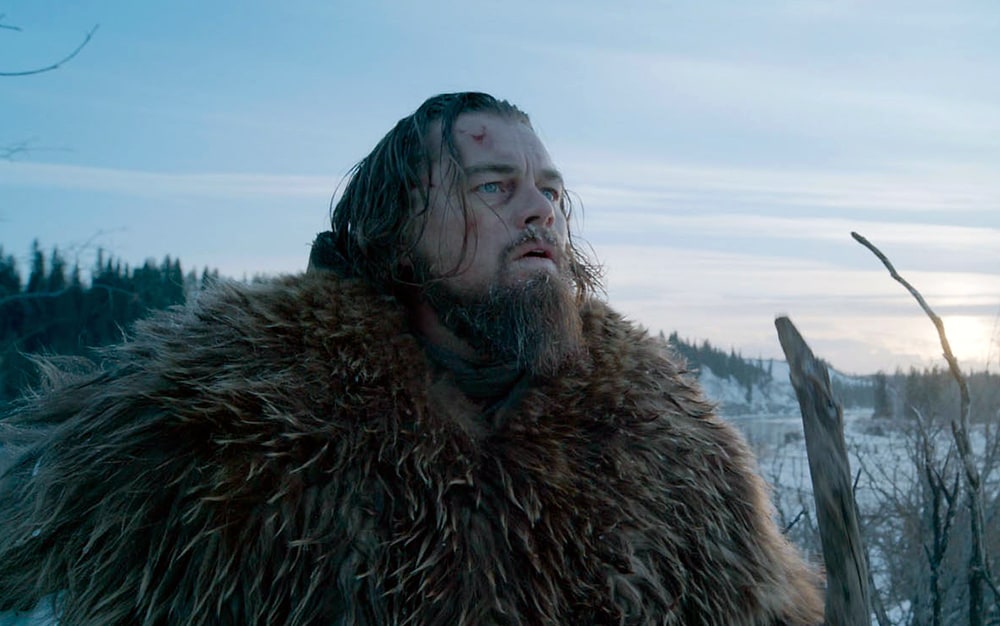
Leonardo DiCaprio as Hugh Glass in The Revenant

The Revenant is Iñárritu’s first film since his Oscar-winning Birdman in 2014, and while they could not be more different in style, his unique direction is still easily identifiable. His use of beautiful, sweeping shots bring the reality of the stark landscapes to the forefront of the viewers’ attention and emphasize the scale of the terrain which his characters are dealing with. From the picturesque mountains to huge, snow-covered plains, the tremendous locations fully impart the aura of the Rocky Mountains and Yukon River, emphasized further by the tremendous costume design, to create an impressive feeling of authenticity. Personally, the most visually-striking aspect of the film for me was Iñárritu’s decision to film only using completely natural light. While it’s been documented that this choice resulted in a lot of complications for the timeline of the film’s production, the risk paid off. The Revenant has a beautiful look and feel to it, creating a rare cinematic expression where it really feels like you’re sitting next to the characters, seeing everything through your own eyes. This can create levels of discomfort during some of the more graphic scenes – make no doubt about it; this is a brutal film which accurately and intensely demonstrates the struggles of frontier life, and some scenes are not for the squeamish. The bear attack scene is long and terrifyingly realistic, but that is merely the tip of the iceberg in showing the depths to which one must go to survive in this harsh environment, and Iñárritu holds nothing back to put that across.

As for the characters, there are star turns across all fronts. DiCaprio’s solidification as one of the great actors of this generation is continued with his portrayal of Hugh Glass. The sheer level of adversity which Glass faces in his journey is overwhelming, starting even before the bear attack, and the emotional and physical portrayal of that is definitely worthy of DiCaprio’s Oscar nomination – and, dare I say it, worthy of a win. Glass goes through some of the most horrific ordeals I have ever seen portrayed in a film, which didn’t come with a “fantasy violence” warning at the beginning. A number of unusual dream sequences, brought about by the horrors which Glass has faced, are also tremendously well acted and put together, and work to enhance the viewer’s insight to Glass’ mental and emotional state of mind.

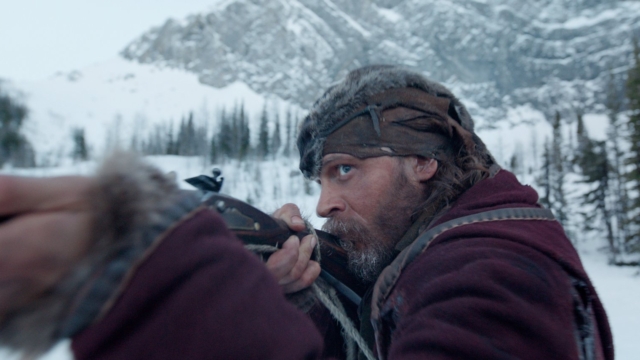
Tom Hardy as John Fitzgerald in The Revenant

Hardy is also superlative, bringing a quiet danger to the role of Fitzgerald, and is at his best when interacting with Poulter’s Bridges. The chemistry between the two is fantastic, with Fitzgerald manipulating Bridges’ youth, inexperience and good nature to ensure that he gets his way. Goodluck also puts in a solid effort for his debut, and it will be interesting to see where his career goes from here. I was initially disappointed that Domhnall Gleeson appeared to be relegated to a minor supporting role as Captain Andrew Henry, but (without giving too much away), I was overjoyed to see that the character comes into his own with a stunning sequence towards the final act.

There is an important undercurrent to the tale of The Revenant, beyond the story of a man seeking vengeance, and it’s the story of the indigenous people of America. As previously mentioned, Glass’ son Hawk is mixed race; Glass had a relationship with a woman from the Native American Pawnee tribe, which made his relationship with the Native American hunting parties of the American frontier – both Native American and Anglo-European – much more complex than meets the eye. Glass relies on the work from the frontier companies to make his living and support his son, and the work they do often leads to them clashing with Native American tribes. Glass’ colleagues also hold some aggressively racist views towards the Native American peoples, which causes the initial tension between Glass and Fitzgerald. As Glass’ journey continues, his encounters with people of the Pawnee tribes further reflect the complex relationships that the settling Europeans had with the Native Americans. As far as a subplot goes, it is beautifully played out; subtly weaving into the fabric of the main story and helping to change the direction of Glass’ ordeal on more than one occasion.

The Revenant is a bold and ambitious frontier epic, stunningly and brutally played out to perfection. A combination of some of this generation’s best acting talent, driven on by the incredible Iñárritu and his team, has created an essential piece of modern cinema that all film fans should endeavour to see.

And the bear is great.

This review was originally published by The Grade in 2016.