WandaVision

We’ve all been there right? Letting our fear and anger get the best of us…”

This review will primarily discuss overall concepts and themes from WandaVision, while attempting to avoid specific plot elements. However, if necessary, plot elements may be brought up; be aware that spoilers may lie ahead. There are also spoilers for Avengers: Endgame, but if you haven’t seen that then you probably shouldn’t even be thinking about this review yet.

On July 2nd of 2019, Disney and Marvel released Spider-Man: Far From Home; the first instalment in the Marvel Cinematic Universe following the huge, climactic event that was Avengers: Endgame. Peter Parker helped us process our emotions following the loss of some of the MCU’s central players, and prepared us for the next wave of MCU properties to come; due to start with Black Widow in May of 2020.

And then the world shut down.

With Covid-19 lockdowns coming into effect across the world; cinemas closed and studios shutdown. For the first time since 2008, the world did not have a Marvel movie slated for release, and Disney’s insistence to hold out for cinematic releases for the MCU properties kept pushing that potential date back. What that did was allow them to shift their focus onto their newest project; limited series based around some of the newer Marvel heroes, due to come straight onto the Disney+ platform, to help flesh out the backstories of the characters and drive the overall narrative of the MCU, without having to rely entirely on the films to do so. It’s a bold strategy, spearheaded by Disney reshuffling the power structure at Marvel to give Kevin Feige greater control over all the video media properties; and the first gambit they took was WandaVision, starring Elizabeth Olson as Wanda Maximoff, and Paul Bettany as The Vision; which aired weekly on Disney+ from mid-January to early-March. At a first glance, the risk appears to have paid off; the internet has been electric every Friday after the new episodes dropped; with fans discussing plot developments and twists, and trying to guess where the story is going next. But… is it really that good?
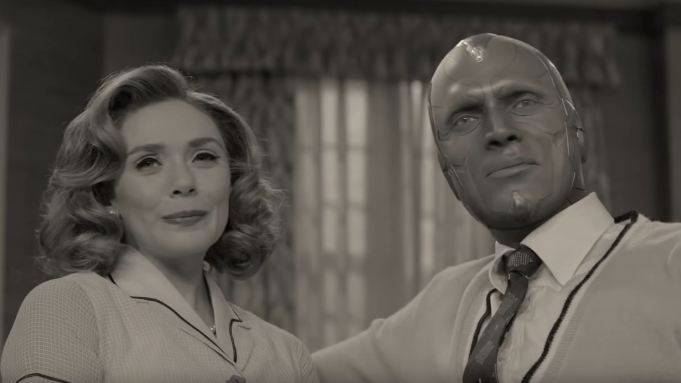
Elizabeth Olson and Paul Bettany as Wanda “Scarlet Witch” Maximoff and The Vision in WandaVision

A new sitcom has begun to air on analog television signals, set in the sleepy town of Westview, New Jersey; WandaVision, starring Wanda Maximoff and The Vision, and their idyllic new life as a married couple – but all is not as it seems. The pair begin to adjust to a quiet life following the events of Avengers: Endgame; but the other residents of Westview don’t behave as they should, Vision can’t seem to remember anything from before they arrived in their new home; and Wanda is acting awfully suspiciously… and shenanigans ensue.

There’s not much more that can be said about the plot without giving things away, but a lot that can be said about the performances. Around the time episode 5 aired, a satirical news article started doing the rounds titled “Elizabeth Olsen hospitalised with severe back pain from carrying the entire MCU.” While this is a joke, it can’t be understated that this is an incredible showing by Olson. As may be obvious, Wanda is very much at the centre of this show and Olson takes us on a complex emotional journey, building in intensity as the narrative advances. She pounced on the opportunity to expand the story and mythos around Wanda, bringing us a level of character that could never have been achieved in the ensemble cast Marvel films. Paul Bettany also shows us what brought him to the dance, pulling a lot of emotion out of Vision in a more tender way, harking back to the pair’s more emotional scenes during Avengers: Infinity War. His role in the show starts off in a more supportive capacity; but as time goes on and mystery around his own presence starts to become more prominent; he transcends that role and begins an emotional journey of his own; one which comes with it’s own complex peaks at various points.

One thing the pair should be particularly lauded for is their ability to seamlessly move between the acting styles and tropes of the history of American sitcoms. Starting with the likes of I Love Lucy and moving through the decades to the ilk of Modern Family, Olson and Bettany invoke the spirit of some of American television’s most loved sitcoms masterfully, offsetting them perfectly with the weirdness inherent in having them be centred around a witch and an android. The magical antics of the likes of Bewitched are perfectly translated through Wanda’s magical chicanery in the earlier episodes; and Vision’s attempts to interact with the other residents of Westview without giving himself away are reminiscent of the likes of Mork & Mindy (though stylistically, the performance is much different to that of the late Robin Williams, as you might expect).
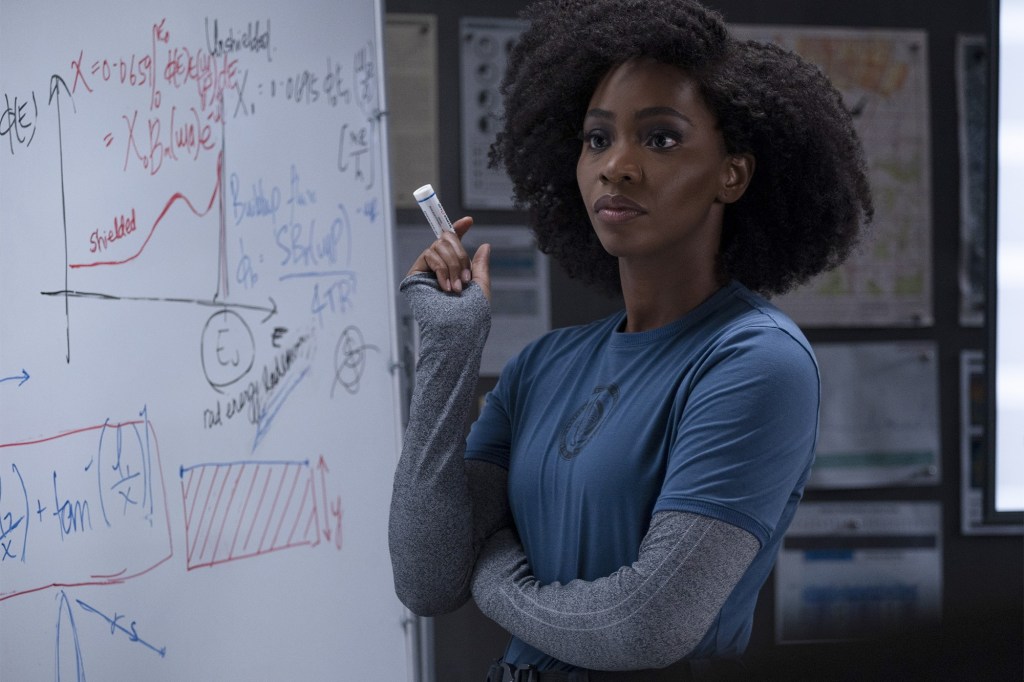
Teyonah Parris as Monica Rambeau in WandaVision

The supporting cast is key here as well, both within the world of the sitcoms and outside of it, back in the real world. The Westview citizens do a great job of conforming to the stylistic tone of the show each week, while also giving just enough to hint that something isn’t quite right – which is arguably where the shows gets the majority of its strength at the start. Those little moments; the strange dialogue, the sideways glances, the confused reactions to Wanda and Vision; drive that narrative forwards amongst the more fantastical or nonsensical aspects of the sitcom existence, allowing us to take glances back at who Wanda and Vision actually are. The charge here is led by the stereotypical nosey neighbour Agnes (Katherine Hahn), who consistently appears for a well-timed laughter break, or to provide some classic sitcom-esque insight into whatever suburban issue is troubling the couple at that moment. Some more great turns in this regard come from sitcom legends like Debra Jo Rupp, but also from the likes of Emma Caulfield Ford, David Peyton and David Lengel; who flesh out the town of Westview and help provide deeper context at key moments.

Outside of Westview, a dedicated team is working on figuring out what is actually going on, and it’s a great team. Randall Park reprises his role of FBI Agent Jimmy Woo (last seen in Ant-Man And The Wasp) and is joined by both the debuting Teyonnah Parris as Monica Rambeau, the now grown-up daughter of Maria Rambeau from Captain Marvel, and the returning Kat Dennings as Darcy Lewis from the Thor series; neatly bringing together some disparate elements of the wider MCU to further develop the togetherness that the overall series relies on. All three get the chance to shine to varying degrees, and while Teyonnah Parris in particular has some stand-out moments that indicate a bright future in the wider MCU lies ahead (which is especially impressive, as the production team has gone on record that she should have featured more than she did, but the pandemic restrictions made that too difficult to put into place); I was particularly impressed with how Dennings threw herself back into her role, adapting to a lot of off-screen character development that has transpired in the in-universe 13 years since the events of Thor: The Dark World with gusto and enthusiasm; and shows a lot of that character development efficiently and entertainingly in the space of one episode in particular. The arrival of these characters also signals a change in the pace and tone of the overall narrative; where we are no longer tracking the irregularities through the actions of those within Westview, but are also following along with the team who are trying to do that same thing; and it generates an interesting feeling of togetherness with these characters, as we all try to figure exactly what the hell is going on.
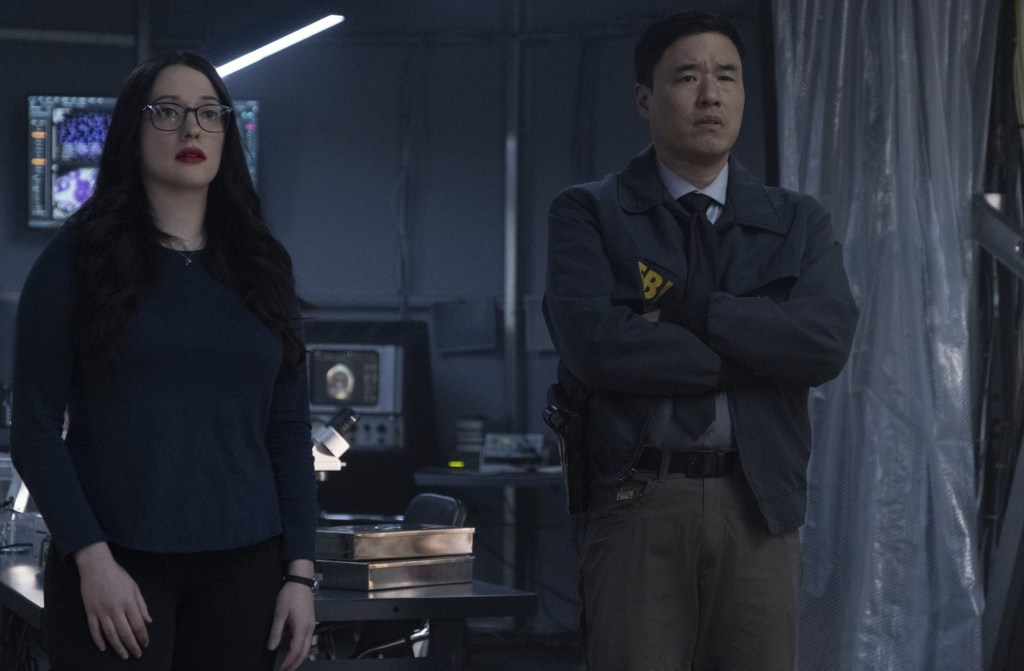
Kat Dennings and Randall Park as Darcy Lewis and FBI agent Jimmy Woo in WandaVision

We’re about to wander into some themed discussion, so skip this paragraph if you’re planning to go in as dry as possible. Usually in a review of an MCU property, we’d set some time aside to dissect the portrayal of the piece’s villain; but that’s a strange thing to do for WandaVision, as the antagonist of this piece is largely conceptual. While there is (at least one) physical character who certainly fulfills a number of the archetypes needed to be called a villain; the main source of contention for our protagonists is actually Wanda’s grief. At the end of Avengers: Endgame, Wanda is snapped back into existence 5 years after watching her partner die at the hands of Thanos. She walks straight into battle, with no time to process what has happened to her, or to Vision, and fights to the death again to save the world. She goes to the funeral of Tony Stark… but Vision’s body isn’t where it was when she disappeared. 5 years have passed, and that body has been moved unceremoniously. All she wants is to mourn; for her parents, for her brother, for her partner; but she’s an Avenger, and her partner was a one-of-a-kind vibranium android created by a combination of a psychotic robot, two scientific geniuses and a Norse God – finding the time to grieve properly was never going to be easy for her. The steps that she takes to try and process those emotions result in her taking the unexpected path that leads to the events of WandaVision, and they shape a lot of Wanda’s response to what is happening around her both directly and indirectly, and even after we discover who else has been pulling on some of the strings in the background, it’s still clear that Wanda’s fragile emotional state is a major driving factor in the narrative. As stated before, Elizabeth Olson deserves to have credit and praise shovelled onto her in droves for the strength and care she gives to her performance throughout this series. Her ability to portray the sitcom acting styles so perfectly, and seamlessly move in and out of a more familiar MCU-esque performance is second to none; with an emotional weight behind her actions that cannot be denied. WandaVision has proven that there is a lot that we are yet to see from Olson, both in the MCU and beyond. Wanda is not alone in her grief; and it serves as a unifying theme among much of the cast for profoundly different reasons; and everyone else who is trying to process that grief must do so while processing Wanda’s as well, albeit in a much more practical fashion.
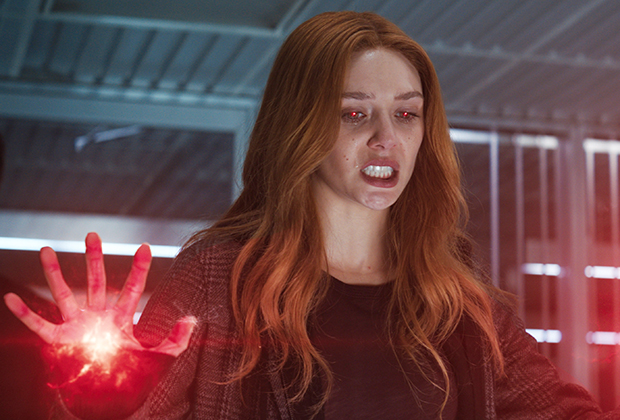
Elizabeth Olsen as Wanda Maximoff in WandaVision

WandaVision is an interesting experiment, for Disney and for Marvel. It exists as the next stage of Disney’s experiment into weekly event television which started with The Mandalorian; and for Marvel, it’s both an experiment as to whether a limited series can be used to expand upon the stories of some of our favourite second-string characters from the MCU so far, to build them up in preparation for taking centre-stage in the movies of phase 4 and phase 5; and an experiment to see whether Marvel live-action television can be successfully deployed under the Marvel Films arm after spending so many years being tended to separately. It’s also a test to see whether the weirder side of the MCU will sit well with fans; an important experiment following the luke-warm reception to the original Dr. Strange movie, and ahead of some of the more fantastical elements to come through the likes of Dr. Strange And The Multiverse Of Madness and The Eternals. What WandaVision does particularly well is walk the line between standard MCU nonsense and bizarre, post-modernist nostalgia trip; taking us in and out of the sitcom elements in greater measure as the series continues to take us by the hand and gently lead us back into the familiar structure of the main film continuity. The finale episode of the series could just as well be the last act of any of the films; it’s narrative structure essentially runs the same way, and it ends the series off on a huge high point as a result. Whether these experiments have paid off or not won’t be properly known until the next raft of Marvel weirdness hits our screens. Dr. Strange And The Multiverse Of Madness and Loki have big ol’ shoes to fill, as does Falcon And The Winter Soldier – as the second Disney+ limited series, but one with a much more traditional MCU format, they’re going to have to make some serious moves to follow up WandaVision without it feeling like it’s lacking something – but we’ll be back to talk about that in a few weeks…

For now, WandaVision absolutely lives up to the hype. I couldn’t wait for the following Friday to find out what was going to happen next, and spent the days between trying to piece together the mysteries with my friends. It’s held up by a raft of fantastic performances, wonderful scripts and amazing world-building; and has left us with a deeper understanding of some familiar characters, a great introduction to some new characters – and a leading lady who is ready to take her place at the front of the Marvel Cinematic Universe. If you’re even a casual fan of Marvel’s cinematic output, you should find the time for this one.

Dave McGuckin is a theatre graduate, bar manager, former comedian and eternal film lover from Northern Ireland, now living in Canada. He began writing film reviews in 2016 for The Grade and then Great Central, both based in Leicester, England.

This site will collate these reviews, but also provides a platform for new reviews and essays on cinema, television, videogaming and (possibly) more

If you enjoy what you read, please consider sharing on social media, or leaving a small donation towards webhosting and content creation costs on Ko-Fi at http://www.ko-fi.com/davewritesreviews.

Check out the official social media links for Dave Writes Reviews below:
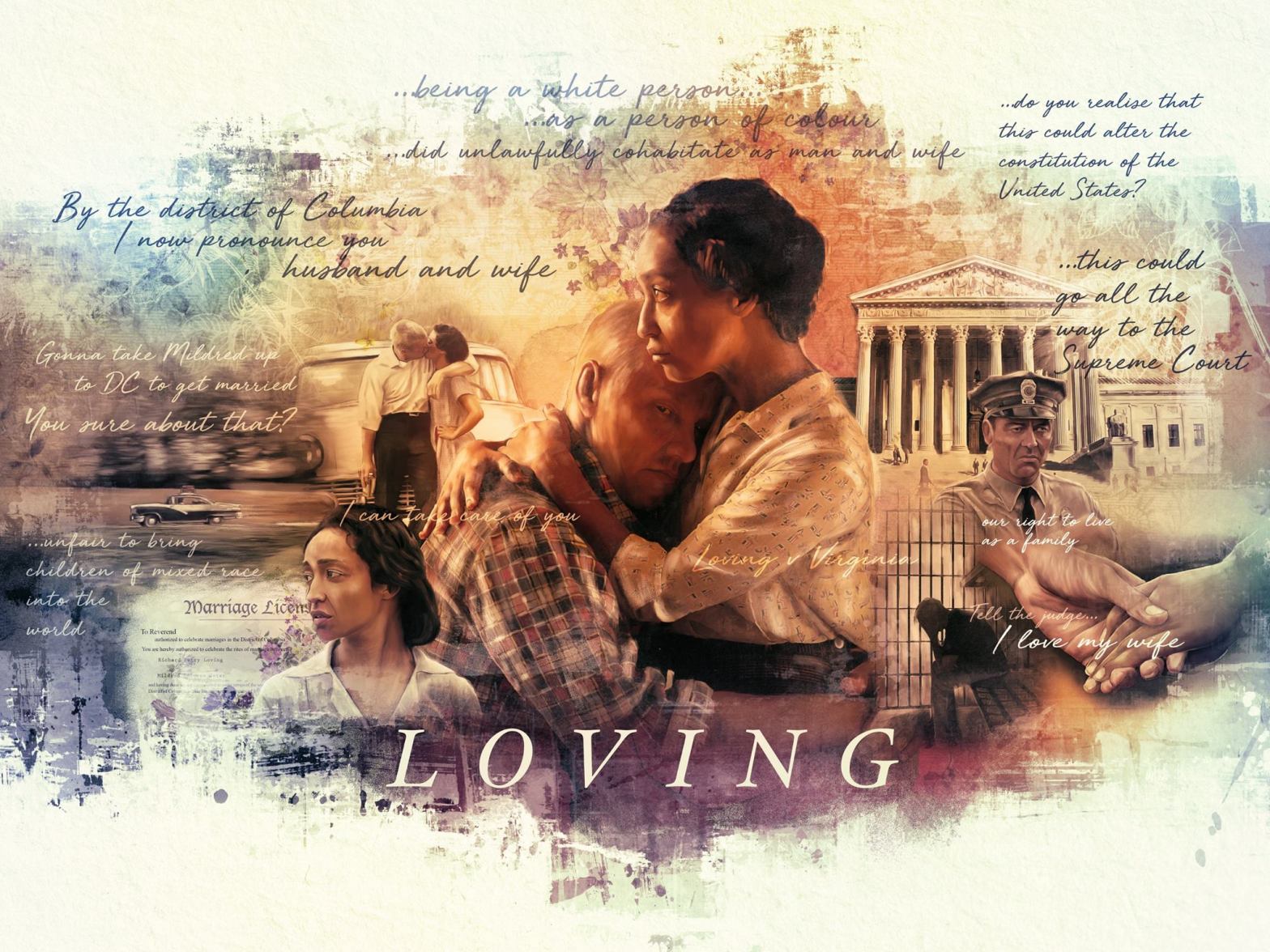
Loving

Tell the judge; I love my wife.”

This review was originally published for The Grade in 2016. It has been left in its original format.

It appears that I am solely destined to watch films based on 1960’s American history this year; but if they continue to be of the quality that Jackie and Loving were, then I am more than fine with that scenario. Of course, given that this film is about an important moment in the history of American constitutional law; it’s quite difficult to go into detail about it without “spoiling” the ending. The thing is, the ending isn’t really the point of this film… so I’m going to go ahead and do it in the next paragraph. You have been warned.

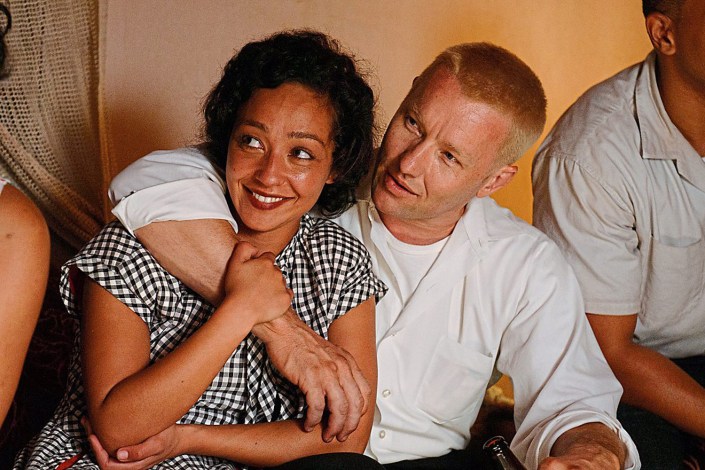
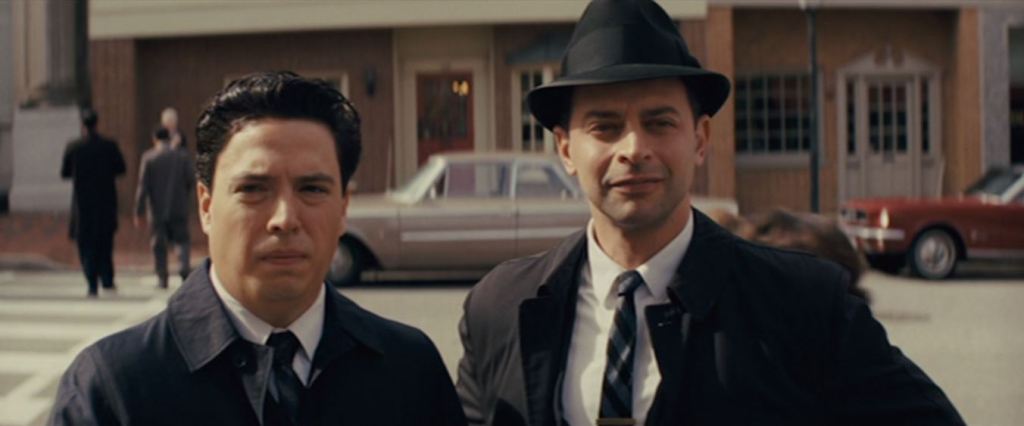
Loving is the story of Richard and Mildred Loving (played by an almost unrecognisible Joel Edgerton and Ruth Negga respectively), an interracial couple living in Caroline County, Virginia, who attempt to get around Virginia’s anti-miscegenation laws by traveling to Washington D.C. to get married when Mildred reveals that she is pregnant with Richard’s child. These Virginian laws essentially dictated that mixed race couples were illegal, that it is illegal for people of mixed race to date, marry, procreate or co-habitate. Needless to say, their plans do not go according to plan; the Lovings are arrested and imprisoned soon after returning from Washington, thus beginning a decade’s worth of legal battles which would conclude with the case of Loving vs. Virginia, decided in the Supreme Court in favour of the Lovings; a moment which would fundamentally change anti-miscegenation laws forever and fundamentally alter the constitution of the United States of America. The case itself is absolutely fascinating; fought on behalf of the Lovings by Bernard S. Cohen and Philip J. Hirschkop (played by Nick Kroll and Jon Bass respectively), funded by the American Civil Liberties Union (or ACLU). This film, however, is not called Lovings vs. Virgina. It is merely called Loving, and it is the Lovings who are the subject of the piece – not the court case.

Ruth Negga and Joel Edgerton as Mildred and Richard Loving in 2016’s Loving

Written and directed by Jeff Nichols (Midnight Special, Take Shelter), Loving is very much a character piece; a film which shows takes us inside the hearts and minds of two incredibly important figures in American history; two figures who didn’t want any of the fame or attention that this court case brought upon them, but who just wanted the right to live with each other and love each other in the county and state which they loved. Both Negga and Edgerton put in wonderful performances with this goal in mind; both embodying the bodies and souls of the two Virginia natives in their drive to bring their story to the screen.

Richard Loving was a bricklayer by trade; and in his spare time would modify and fix cars and build things for his family and friends; he was a quiet man of simple pleasures, and Edgerton does a tremendous job of showing us the tender soul of this gentle giant. He has his moments of doubt and irritation; Mildred’s courting of the press gets under his skin as he works to protect his family from the wolves at the door, and we see a number of moments of panic caused by suspicious vehicles and overzealous friends. His deep care and love for his family always shines through in the end, the mortar holding their family together; both financially and, at times, morally.

Mildred is more fiery, demonstrating a quiet intelligence that pushes the pair further in their fight for justice. She is the one who suffers most from the aftermath of their original conviction; ripped from their idealistic country home and forced to move to the cityscape of Washington D.C. Her dissatisfaction with the city as a locale to raise their children is a driving force behind her choice to contact General Attorney Robert Kennedy in the first place, and it is that action which sets the second part of their story in action. Negga takes this role by the horns and makes the most of it, demonstrating both Loving’s intelligence and longing for justice, alongside her caring and understanding for her publicity-shy husband and their family. She acts a one would expect from a modern black woman during the years of Martin Luther King’s prominence, making intelligent, informed decisions as for the route to take with their on-going struggles, but remains aware of her husbands’ discomfort and takes measured steps to avoid going over the line with him, and keeping him on side.

Jon Bass and Nick Kroll as Phil Hirschkop and Bernie Cohen in Loving

The supporting casts’ roles are all much smaller in comparison to the leads, but they are used well. The aforementioned Nick Kroll and Jon Bass bring an element of levity to the piece as the ALCU-nominated lawyers for the case, with Cohen’s alternate motive of fame as a constitution-affecting lawyer being subtly hinted at beneath the good intentions of taking the case. Alano Miller and Christopher Mann both have great turns as Mildred’s brother Raymond and father Theoliver; and Terri Abney puts in a standout performance as her sister Garnet. Michael Shannon, who has starred in a number of Nichols’ other films, makes a brief and wonderful appearance as Life reporter and photographer Grey Villet, who visits the Lovings ahead of their legal battles commencing. The recreation of an iconic photograph used in their Life article, the original of which is shown at the conclusion of the film, goes further to highlight the incredible casting decisions taken with Edgerton and Negga, and the scene in which they show it being taken is possibly the warmest moment of the film.

As with Nichols’ previous works, the pace of Loving is best described as steady, perhaps could be described as slow, which may be off-putting for some. It also lacks a certain amount of tension; even for those who don’t know what the outcome of their legal struggles are going to be. But it is their own disassociation from the courtroom which I feel informed Nichols’ choice to remove the tension of courtroom drama from the film – the Lovings weren’t even present in the Supreme Court during the trail. The result is a carefully constructed insight into the lives of two human beings who just want to be in love, and love is the key theme of the piece, but not in an overly-sugary way. Nicholas Sparks is no-where to be seen; there are no set-pieces with crying in the rain next to a lake, but just a down-to-earth portrayal of real people who share real love. It feels particularly important in the current climate as well, given its message of acceptance of love between all people and the important affect it had on the constitution of a still-divided nation during a time of unrest.

Overall, this is a wonderful, gentle film and is well-worth checking out while it’s still in cinemas, particularly for the performances of Ruth Negga and Joel Edgerton. Having seen it; I’m surprised that Negga received and Oscar nomination and Edgerton didn’t.

Dave McGuckin is a theatre graduate, bar manager, former comedian and eternal film lover from Northern Ireland, now living in Canada. He began writing film reviews in 2016 for The Grade and then Great Central, both based in Leicester, England.

This site will collate these reviews, but also provides a platform for new reviews and essays on cinema, television, videogaming and (possibly) more

If you enjoy what you read, please consider sharing on social media, or leaving a small donation towards webhosting and content creation costs on Ko-Fi at http://www.ko-fi.com/davewritesreviews.

Check out the official social media links for Dave Writes Reviews below:
Space Sweepers

With Earth no longer habitable, the only place left to go was up.

In 2020, Bong Joon-Ho changed cinema forever when he collected the Academy awards for 2019’s Parasite, but it was his speech at the Golden Globes which would leave a lasting effect on some audiences, when he said; “Once you overcome the 1-inch-tall barrier of subtitles, you will be introduced to so many more amazing films.” How timely a comment this was; for as the world went into pandemic lockdowns, many of us found ourselves looking for new media to enjoy. Streaming services like Netflix were ready; supplying some of the best films from around the world to those of us stuck at home. The on-going renaissance of Korean cinema, elevated in the west by the likes of Joon-Ho and Yeon Sang-ho (Train To Busan), has led to more appetite for what that island is offering; and Netflix has responded by serving up Jo Sung-hee’s Seungriho, translated into English as Space Sweepers; a film which is being regarded as Korea’s first big budget outer-space scifi film. Does it live up to its predecessors?

Tiger Park (Seon Kyu-jin), Tae-ho (Song Joong-ki), Bubs (Hae-Jin Yoo) and Captain Jang (Kim Tae-ri), the crew of the Victory in Space Sweepers

Set in 2092; a year in which Earth has become practically uninhabitable, we follow the crew of the Victory; a junker spaceship that collects space debris. They sell this junk to the UTS corporation, who have built an orbital utopia for those humans deemed worthy of salvation from the ruined planet. The Victory is led by Captain Jang (Kim Tae-ri), along with engineer and former gang leader Tiger Park (Seon Kyu-jin), ex-military android Bubs (voiced by Hae-Jin Yoo) and pilot Tae-ho (Song Joong-ki), who serves as our focal character. While searching for sellable debris, the Victory’s crew comes across an abandoned transport with a young girl hidden in a storage compartment, who has been identified by the news networks as a stolen android called Dorothy (Ye-Rin Park); who was kidnapped by a terrorist group called Black Fox and fitted with a weapon of mass destruction. The crew go about returning Dorothy to Black Fox in return for a ransom, and start to uncover the truth behind the bombing plot.

As is the trend with dystopian sci-fi, a major theme of Space Sweepers is survival. The crew of the Victory all became space sweepers for different reasons, all of them steeped heavily in tragedy. Their interactions with each other and with Dorothy point to complicated relationships on board the ship, and the three central actors do well to carry this intricate scenario off. Before we find out any of the backstories, we learn a lot about who these characters are from these interpersonal interactions, and surprisingly, all of them are actually quite unlikable. Tae-ho in particular, despite being our focal character, is demonstrated quite early on to be an incredibly skilled pilot and quite a horrible person, focused solely on the acquisition of money. It’s only as the narrative continues and we learn more about how the crew came together and who they were before that we find out who Tae-ho truly is and what motivates him, and the life he has led to that point. Song Joong-ki is excellent in this role, managing Tae-ho’s arrogance as a pilot and balancing it perfectly against his relentless pursuit of money, which is linked to a tender and tragic event from his past. Song displays a bevy of emotions in his performance, and is at his best when he is trying to hide his paternal instincts when dealing with Dorothy. She is the linchpin for the majority of the character development of the crew; everyone’s interactions with her allow us to see more of who they are inside, beyond the bravado they display to their crewmates. It’s a credit to the script and to the direction of Jo Sung-hee that we see so much between the words, with the physicality of the crew (and of the cast as a whole) revealing another layer of emotional development, be it complimentary or contradictory to the script in the moment; and grounding this extra depth from the Victory’s crew around their interactions with Dorothy is incredibly effective as a narrative device.

Richard Armitage as the ambitious CEO Sullivan in Space Sweepers

While the Victory’s crew are very much at the centre of this story, they aren’t the only characters we forge a link to. Richard Armitage is on deck as Sullivan, the CEO of the UTS Corporation and a man who is very much the villain of the piece. Armitage seems to be having a lot of fun in his first Korean film, and does not shy away from a more over-the-top, cartoonish performance when the script calls for it, which adds a lot to the more bombastic action set-pieces that his character is involved in; and provides a nice palette cleanser after some of the more emotionally-driven scenes featuring the crew of the Victory. A very effective narrative direction is employed with Sullivan; we’re told in our introduction to him that he’s over 100 years old, but other than that, we don’t learn a lot about him; and that mystery adds a sense of danger to some of his more unusual physical and emotional attributes. The cartoonish elements are in play for some of the other supporting cast members as well, though with less screen time denoted to them, they feel a little more like stereotypes or caricatures; though not always to the detriment of the character or the actor. Kevin Dockry makes a few brief appearances as French space sweeper Pierre; a handsome, rugged young man who spends most of his screen time declaring his undying love for Captain Jang; and while it represents a well-established stereotype in a very typical way, his deployment within the narrative is used effectively in multiple ways, including introductory character traits for Captain Jang, and as comic relief later in the narrative.

The joy of Space Sweepers doesn’t just come from its acting however; the effects in this film are wonderful; and the blending of CGI elements with physical sets is impressive. UTI’s security forces come in the form of robotic soldiers, who have a fresh but familiar design and fit into the narrative world very effectively. One action-packed scene featuring an assault on a nightclub demonstrates this particularly well, with the soldiers causing havoc amongst the human population in a slickly-realised and cleverly shot sequence that does well to blend those CGI and physical elements together. The wider world design is also great; borrowing elements from a multitude of sci-fi predecessors and blending them with design elements from real-world space exploration equipment to create inventive space stations and space ships, that are interesting and fun new takes on the design elements, grounded in a welcome sense of familiarity. The action sequences, be they on foot or in ships, are slick and exciting every time; with each sequence existing to help move the narrative forward and provide more opportunities for character development (something which some of the larger Western action films would be well served to take a look at ahead of future upcoming releases).

Space Sweepers is a welcome addition to the world of sci-fi action movies. An incredibly fun action romp with a heart of gold and a moral backbone, supported by strong performances from an excellent cast, and well-executed action scenes that blend exciting physical drama with expertly crafted CGI. If you’re in the mood for a fun space movie, you could do so much worse than to spend a couple of hours with the crew of the Victory. Make some popcorn, grab your glasses and enjoy.

Dave McGuckin is a theatre graduate, bar manager, former comedian and eternal film lover from Northern Ireland, now living in Canada. He began writing film reviews in 2016 for The Grade and then Great Central, both based in Leicester, England.

This site will collate these reviews, but also provides a platform for new reviews and essays on cinema, television, videogaming and (possibly) more

If you enjoy what you read, please consider sharing on social media, or leaving a small donation towards webhosting and content creation costs on Ko-Fi at http://www.ko-fi.com/davewritesreviews.

Check out the official social media links for Dave Writes Reviews below:
To All The Boys: Always And Forever

“Maybe love is actually about the moments when you think no one is watching.”

If there’s one thing that Hollywood has taught us over the years, it’s that pulling off a great trilogy is hard. So many great film series seem to be let down by their third instalment (and a few others by their second); and for many, the number of trilogies which can be considered to be truly great through all three films can probably be listed on one hand. When pressed, many people wold relent that a certain instalment of their favourite series just doesn’t match the others; whether it be the Godfather III struggling to live up to the hype of its masterful predecessor, or the unnecessarily convoluted story of The Dark Knight Returns casting a shadow over the great, interesting performances of the piece. So it may come as a surprise to most that Netflix have pulled off the unthinkable with the To All The Boys adaptations, and have given us a cool, effective and fun trilogy of a consistent high quality; finishing off with the newly released To All The Boys: Always And Forever.

Adapted from Jenny Han’s third novel in the To All The Boys book series (titled Always And Forever, Laura-Jean in print); To All The Boys: Always And Forever (A&F for the duration of this piece) follows Laura-Jean Song Covey (Lana Condor, X-Men: Days Of Future Past) as she navigates her final year of high school, starting with a family trip to Seoul, Korea during Spring Break. Her journey includes navigating her on-going relationship with Peter Kavinsky (Noah Centineo, The Perfect Date), and the difficulties of balancing where her life is at the moment, with where she wants it to go during her college years and beyond.

Noah Centineo and Lana Condor as Peter Kavinsky and Laura-Jean Song Covey in To All The Boys: Always And Forever

First and foremost; if you haven’t watched the first two instalments in this series, go back and watch them before you even think about watching this film. Han’s world-building, adapted for the screen in this instalment by Katie Lovejoy, is at the centre of the success of this movies, and provides a fully-realised playground for Condor and Centineo to do their work in, under the attentive eye of director Michael Fimognari, who has worked on every film in the series; directing P.S. I Love You and working as cinematographer for To All The Boys I’ve Loved Before. The consistency provided by Fimognari’s presence throughout the series is obvious, especially if watching A&F soon after its two predecessors; Michael has favoured angles to shoot his central actors from, which allow not only for a clear focus on them when it is needed, but also capture the background details of the environments for the wider; less character-focused scenes, and allows for excellent use of location when the action is pulled away from Portland to Seoul and NYC. The series has a self-awareness to its influences, with Laura-Jean’s love of John Hughes-style teenage coming-of-age movies featuring not only as a character-building plot device, but also as a narrative frame; and clear homages to the likes of John Hughes can be seen in Fimognari’s staging of some of the more bombastic ensemble sequences, such as a group bowling trip, or the all-important senior prom.

Laura-Jean once again serves not only as our central character, but also as our narrator; and Lana Condor returns to the role with the same energy and passion as the previous instalments. LJ is slowly becoming more savvy to the wider world around her as the series goes on, and has grown from the shy, inexperienced and love-struck teen of To All The Boys I’ve Loved Before into a confident young woman; relishing in her relationship and her bright future. Condor comes at this last hurrah as Laura-Jean with all guns blazing, and the passion and energy remains consistent with her previous performances, retaining the quiet innocence while bringing a new level of emotional maturity to the role and navigating her way through the emotional roller-coaster of senior year of high school with a masterful ease. One solo shot in particular, following a very emotional scene with Centineo, was filled with incredible emotion despite not saying a single word; now that Condor is done with this series, it will be very interesting to see which projects she embarks upon next; as she certainly has a bright future ahead of her.

Speaking of Noah Centineo, he delivers his trademark relaxed charm with the level of skill you would expect. It’s a testament to Jenny Han’s writing that Kavinsky is such a well-rounded character, and Centineo relishes the opportunity to break Kavinsky out of the stereotypical popular high-school sports star role in this series; bringing us a Kavinsky who is charming, kind, and undoubtedly in love with Condor’s Laura-Jean. I was taken aback by the fact he responded to the instances of adversity in their relationship with a level head and a kind heart; something which we don’t see nearly enough in modern cinema. The other advantage this gives is that when Peter does respond to something irrationally in an angry moment, the impact of that is so much stronger for an audience who are behind him as a character; and even when this does happen, the response could still be argued to be justified to an extent (though I can’t reveal the scenario here without dropping some fairly key spoilers, so you’ll have to figure out what I’m talking about when you get to it). Like with Condor, Centineo really shows us what he has to offer in this last outing; and he’s another one to watch as this series wraps up (though hopefully somebody will cast him in a role where he isn’t playing a high-schooler, ideally).

Noah Centineo, Lana Condor, Madeleine Arthur and Ross Butler are ready for senior prom in To All The Boys: Always And Forever

The supporting cast has a little less to do in this one, but are still important in fleshing out the world around Laura-Jean and Peter, especially for those larger plot moments. Notable once again is Anna Cathcart (Odd Squad) as Laura-Jean’s younger sister Kitty, who once again levels heaps of comic relief every time she appears on screen, and features in an adorable romantic subplot of her own which has absolutely zero stakes and is a nice palate cleanser amongst the higher-drama of the Laura-Jean/Peter central narrative. Sarayu Rao (Happiest Season) also returns as Trina Rothschild, the love-interest of the Covey clan patriarch, played by John Corbett (My Big Fat Greek Wedding), and her performance at one point caused me to shout “STEP-MOTHER GOALS” to nobody in particular. She brings a warmth and understanding to a difficult character with an ease and charm that should be noted by all the casting directors in Hollywood; navigating the awkwardness of filling a motherly role in a family who lost their matriarch to illness, and delicately providing guidance to the Song Covey girls without moving to replace their mother. The character is a perfect framework for a complex emotional scenario, and Rao brings so much joy, life and love to the character that her performance has really stuck with me.

The high-school supporting cast are also back to provide sounding-off points and emotional context for Laura-Jean, and Madeleine Arthur (Big Eyes) returns as LJ’s best friend Chrissy to provide madcap nonsense and emotional support in equal measure; Trezzo Mahoro also returns as Lucas for the same role; and Emilija Baranac returns as Genevieve, though their relationship has quietly moved past love rivals to a more positive place, and helps define a grounding point for the demonstration of Laura-Jean’s overall emotional maturation in a positive way. While all three have a little less to do in this outing than in previous instalments, they still use their time on screen well, and their presence is certainly beneficial to the film overall.

To All The Boys: Always And Forever is a wonderful, warm and enjoyable send-off to an excellent trio of modern, well-thought out romantic comedies. Elevating both literary adaptation and the art of the trilogy for the new decade, these films work both as a gentle homage to the classic coming-of-age films of the late 80’s and early 90’s, while also setting the bar for the films that must follow it in the genre. Lana Condor and Noah Centineo are stars in the making, with a series of emotional, intelligent and effective film performances under their belts in these films which could make actors with twice their experience proud. The series may not contain the level of high-drama required to do well on the awards circuit, but that doesn’t mean these outings are not worthy of your time; and I would recommend checking out all three if you haven’t already. After all; everybody needs a little love right now; and you never know where love will lead you…

Dave McGuckin is a theatre graduate, bar manager, former comedian and eternal film lover from Northern Ireland, now living in Canada. He began writing film reviews in 2016 for The Grade and then Great Central, both based in Leicester, England.

This site will collate these reviews, but also provides a platform for new reviews and essays on cinema, television, videogaming and (possibly) more

If you enjoy what you read, please consider sharing on social media, or leaving a small donation towards webhosting and content creation costs on Ko-Fi at http://www.ko-fi.com/davewritesreviews.

Check out the official social media links for Dave Writes Reviews below:

Jackie

A First Lady must always be ready to pack her bags.”

This review was originally written in 2016 for The Grade. It has been left unedited to reflect the author’s views at the original time of publishing.

It is almost taken as a fact in the realm of modern cinema that Natalie Portman is one of Hollywood’s most talented actors. An Oscar, BAFTA and Golden Globe award-winner for various projects, Black Swan in particular, Portman has been a part of the American cinematic landscape since the age of 13, when she starred in Luc Besson’s multiple award-winning action-thriller Léon/The Professional, alongside Jean Reno and Gary Oldman. Her list of critically-acclaimed and culturally relevant films is extensive, including Mars Attacks!, the Star Wars prequels, V For Vendetta, Closer, Marverl’s Thor and, of course, Black Swan.

It is important to bring up this body of work as for many other modern actors, the performance Portman gives us in Jackie would be a career-making moment. For Natalie Portman, however; it looks to solidify her status as one of the all-time great actors of American cinema.

Directed by Pablo Larraín (No, El Club), who is widely regarded as one of Chilé’s greatest directors; Jackie tells the story of Jacqueline “Jackie” Kennedy – not yet Onassis – in the days leading up to and following the assassination of her husband, John F. Kennedy, the 35th President of the United States of America. The film is framed by her interview for Life magazine, which was recorded a few days following JFK’s funeral, at the Kennedy compound at Hyannis Port with the Pulitzer Prize winning journalist Theodore H. White, played by a compassionate yet skeptical Billy Crudup. These scenes were, for me, the most interesting; with Crudup’s White attempting to extract the full and complete truth of the events from the former First Lady, while Portman’s Kennedy remains guarded and cautious, her intention to ensure her late husband’s Presidency is framed in a glowingly positive light driving her throughout the conversation. Kennedy had made it clear she would be editing the interview and, at various points when she does allow her guard to drop and presents the true, bare facts of the events as they happened, tells White quite plainly that he won’t be allowed to publish the words. It is a game of cat and mouse that demonstrates Kennedy’s strength, even in her moments of weakness, and Portman handles the delicate balance of her outer strength and inner turmoil tremendously.

Casper Phillipson and Natalie Portman are all smiles as President John F. Kennedy and Jackie Kenndey in Jackie

When we aren’t at Hyannis Port, we are taken to various locales and moments in history through Kennedy’s time as First Lady; starting with the historic White House tour, broadcast on CBS in 1961. Larraín uses this tour to set an interesting approach to scene setting; mixing footage of the actual tour with recreations using Portman. The voice of CBS’ Charles Collingwood, who presented the program along with the First Lady, is retained for the film; and Portman responds directly with Kennedy’s answers. Comparing these scenes with the actual tour footage (which is available on Youtube) demonstrates just how perfectly Portman was able to portray not only Kennedy’s distinctive voice; her interesting, regionless accent and deep, breathy delivery being key to the portrayal; but also her mannerisms while being seen in public. For those not familiar with Kennedy’s voice this could be initially distracting and potentially irritating to listen to, as it is a huge departure from Portman’s natural voice; but it adds an incredible dimension to her portrayal that is further elevated by the film’s hair and make-up team, led by Catherine Leblanc and Debi Young. The design team as a whole has done an incredible job in recreating the style and look of the early sixties; in particular the recreation of Jackie Kennedy’s beautiful array of suits and dresses, and the outfits of the two Kennedy children.

When we get into the grit of the assassination and the events leading up to the funeral, Larraín’s skill with building anticipation through emotional and physical reveals directly compliments Portman’s performance. In particular; the scenes following Kennedy when she returns to the White House residence in the hours following the assassination and the pronouncement of JFK’s death, are stunning; with Portman’s display of the complex emotional response resonating perfectly through Larraín’s framing; the reality of the First Lady’s blood-stained Chanel suit being fully revealed for the first time as she finally begins to remove it.

Of course, Portman is not the only actor in this film, and the supporting cast is tremendous. Peter Sarsgaard’s portrayal of Robert F. Kennedy is sublime; his depiction of the then-Attorney General’s own distinctive voice and physical mannerisms being just as powerful and memorable as Portman’s First Lady. Bobby’s turmoil between trying to ensure that Jackie’s wishes following the assassination are met, and between ensuring that their memorial for JFK doesn’t result in further incidents with foreign dignitaries, results in a number of powerful scenes with Portman as each of their characters’ complex mix of grief, vanity and public duty collide, both for better and for worse.

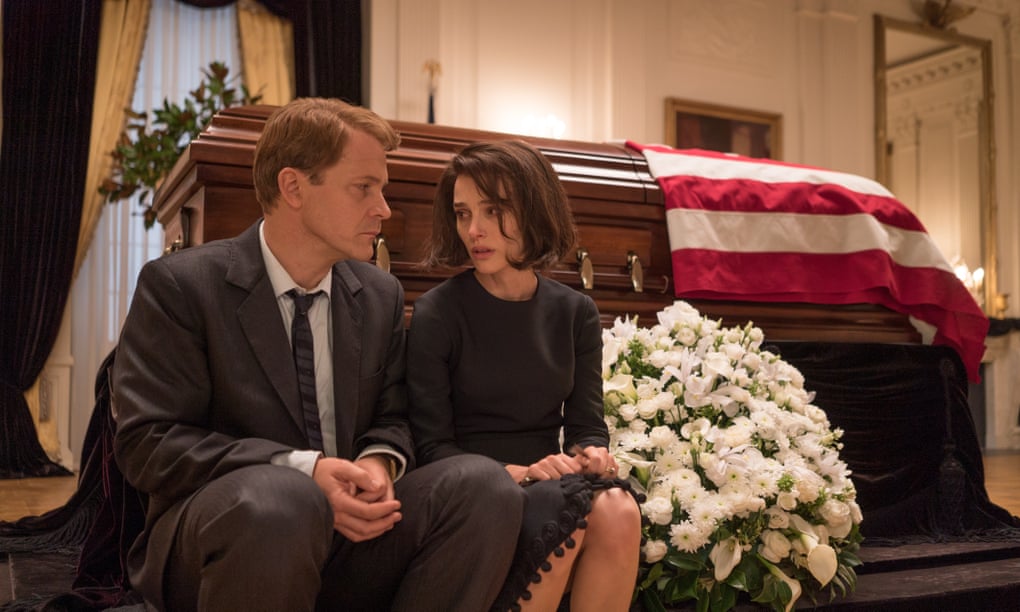
Bobby Kennedy (Peter Sarsgaard) and Jackie Kennedy (Natalie Portman) console each other next to President Kennedy’s casket in Jackie

Greta Gerwig, who is practically unrecognisable as Nancy Tuckerman; the White House Social Secretary during the Kennedy administration, puts in an incredible performance. Tuckerman was friends with Jackie as children; and was a bridesmaid at her wedding to JFK; and Gerwig’s portrayal captures both Tuckerman’s love for her long-time friend, and her responsibilities as a part of the administration. The fact she has received no nominations for Best Supporting Actress for this role is a huge surprise to me; as her warmth and care for the First Lady both before and after the assassination is demonstrated so naturally and is the centre of a number of important moments for the protagonist as the film progresses.

A few of the smaller roles deserve recognition, both for how they are acted and for their inclusion in the film. The late John Hurt’s portrayal of a priest who gives private council to Jackie Kennedy is tender and caring; but surprising in a number of respects. These moments are used to give us an insight into Kennedy’s true emotions surrounding her husband’s death, played in parallel to the considered and stoic interview with White. The moment Jackie meets Special Agent Clint Hill for the first time is a lovely nod to a key moment in the story of the assassination. After the first shot was fired, Hill was the secret service agent who leapt onto the back of the Kennedy’s car; in order to shield the stricken President and First Lady from any attempts at a second shot. The poignant image of him hanging onto the back of the open-top car as it races to the Dallas Hospital is shown a number of times; and contributes to the most stomach churning moment of the piece.

Larraín is well known for his brutally honest depictions and set-pieces in his films; and this is no different with Jackie. The BBFC rating notes “brief strong violence” in its 15 rating, and I don’t think I’d be spoiling the film for anyone if I noted which moment it is referencing. It is this challenging moment in history which truly stands out in the film, and Portman’s recreation of Jackie Kennedy’s movements in the immediate moments after the shots rang out in Dallas are striking. This moment from this film deserves to be remembered; the most unabashed and realistic recreation of that moment that I personally have seen in cinema. That is not to undersell the rest of the film and, as mentioned earlier with Jackie’s return to the White House, Larraín’s construction of scenes of the solo First Lady in her times of grief and struggles with her own emotional complexity lead to numerous profound moments in the overall story.

Having seen the film, I’m surprised that it only garnered 3 Academy Award nominations. With strong direction and powerful performances across the board, Jackie feels like an important moment in the creation of historical cinema; a turning point in the generation of fictional accounts of real people, informed by accurate accounts of the real events. And, perhaps most importantly; it places Natalie Portman into the list of great American actors who will be remembered for a stunning portrayal of important historical figures in a truly realistic way.

Dave McGuckin is a theatre graduate, bar manager, former comedian and eternal film lover from Northern Ireland, now living in Canada. He began writing film reviews in 2016 for The Grade and then Great Central, both based in Leicester, England.

This site will collate these reviews, but also provides a platform for new reviews and essays on cinema, television, videogaming and (possibly) more

If you enjoy what you read, please consider sharing on social media, or leaving a small donation towards webhosting and content creation costs on Ko-Fi at http://www.ko-fi.com/davewritesreviews.

Check out the official social media links for Dave Writes Reviews below:

Ready Or Not

“I know it’s ridiculous. It’s just a weird family ritual. And we only have to do it once.”

It’s safe to say that there are a lot of films. Despite the medium only existing for around 100 years; so many different, interesting and complex stories have been told, that it’s not really a surprise that we’ve entered into a time of reboots and remakes, with studios choosing to try and update old stories with new film making techniques for new audiences. However; some movies are still striving to find new stories to tell with new themes; and Ready Or Not is one of those stories.

There’s a wedding in the Le Domas family; the youngest son, Alex (Mark O’Brien, Halt And Catch Fire) has returned to the family home to marry Grace (Samara Weaving, The Babysitter) in a ceremony with a twist; the night that they are wed, the new bride must engage in a game with the family, who own a successful family and board-game empire. She draws her choice from a mysterious puzzle box that was given to her new husband’s great grandfather by a man named Le Bail; a man he made a deal with in order to secure his fortune. Grace draws Hide & Seek, resulting in a night of terror as she hides from a family who are attempting to capture and kill her, to uphold the deal made with Le Bail. Thus, with Grace sneaking off to find a hiding place in her beautiful wedding dress, fatal shenanigans ensue.

This movie is just so much better than it has any justifiable reason to be. I’m not usually one for the “horror” genre in general, but this one fits into its thriller tag a lot more comfortably, and also has a very comfortable relationship with the comedy tag as well. While the idea of a murderous hunt themed around a game of hide and seek is objectively silly, the actual realisation of it in terms of narrative in Ready Or Not is pretty incredible. Matt Bettinelli-Olpin and Tyler Gillett (Southbound), a directing duo who have been working with the horror genre for over a decade, bring a wealth of experience to this movie and it shows. The film is terrifically shot; the action is always well framed so that even when it takes you by surprise, you don’t miss a moment of it. This movie is not an unstoppable bloodbath, given that there is only one character who is being hunted, and it works better for it. The reversal from the horror norm of “group fleeing single threat” to “single victim fleeing a group” allows for a change of pace; the violent incidents are well-spaced out and wonderfully constructed to not only give the standard audience relief for periods of tension, but they also are keenly placed in order to drive the narrative in a clever, inventive way. Grace only starts to truly understand the gravity of the situation she’s in when Alex’s younger sister Emilie (Melanie Scrofano, Letterkenny) accidentally kills a member of the household staff in front of her hiding spot.

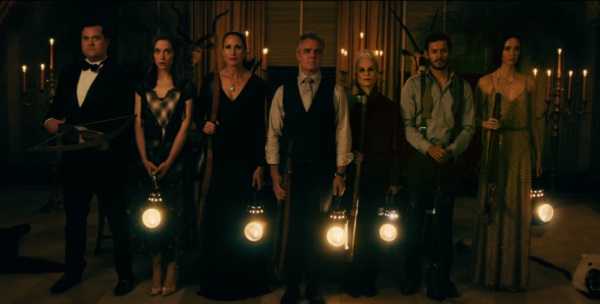
The Le Domas family (Kristian Bruun, Melanie Scorfano, Andie MacDowell, Henry Czerny, Nicky Guadagni, Adam Brody and Elyse Levesque)
get ready for the hunt in Ready Or Not

The use of the supporting cast in this way is tremendous; and the earlier kills are both shocking, funny and just gruesome enough; making use of some very effective practical effects to show not only the brutality at hand, but also the inefficiency of the Le Domas family in their hunt. Not every new member of the family draws Hide & Seek, so the majority of the family haven’t had to take part in this particular game, and it creates a terrific set of emotional responses that allow the cast to present their humanity and flesh out their characters to the audience. Adam Brody (Shazam!) in particular takes full advantage of this opportunity, and his portrayal of Alex’s reluctant, alcoholic older brother Daniel is surprisingly subtle and considered for a thriller of this nature; and he does a lot to open the plot up in terms of its morality and its grounding in a fascinating way, both through his interactions with Grace, Alex and his incredibly glamorous and terrifying wife Charity (Elyse Levesque, Stargate Universe). Scrofano’s Emilie and her husband Fitch (Kristian Bruun, Orphan Black) are on hand for the bulk of the comedic moments, though the whole cast has their fair share of laughs as well. The heads of the family, played by Henry Czerny (The Exorcism Of Emily Rose), Andie MacDowell (Groundhog Day) and Nicky Guadagni (The Handmaid’s Tale) provide various levels of terror, with Czerny and Guadagni being particularly, skin-crawling unsettling within their performances all the way through.

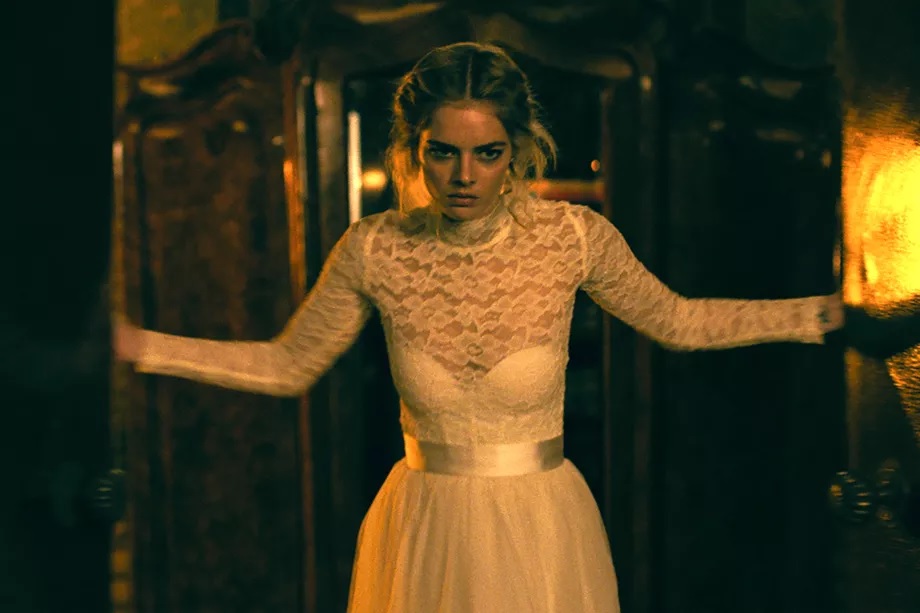
The stand-out performance is from Weaving herself, as she shoulders the vast majority of the tension and a considerable amount of the suffering. While it’s safe to say she lasts at least most of the way through the narrative without being killed (no spoilers as to how it ends, of course); she certainly has a tough time; with various injuries and escape attempts resulting in an increasingly battered and bloody Grace, her white wedding dress becoming more torn and filthy as the film goes on, and she does most of it alone. Alex eventually manages to explain exactly what is happening (though his explanation alludes to a misogynistic attitude towards her and her role in their marriage if they both survive the ordeal), and does give her a necessary advantage by bringing her a pair of trainers to wear so she doesn’t end up pulling a full John McClane; but other than that she spends most of the film alone, usually joined only by people who are trying to murder her. Grace’s fight or flight reflexes never fully settle on one option and she is often ready to do both together if needed, creating an incredible performance of simultaneous strength and terror as she faces mounting challenges from every member of the house she encounters. After her role as the eponymous babysitter in The Babysitter, it’s nice to see that she can flip the script and become the hunted party, especially in a film where she must shoulder that burden solo, and do it as well as she does it here. Given the physical effort put into this piece, I would hope she gets snapped up as a potential action lead before too long.

Grace Le Domas (Samara Weaving) experiences the worst wedding night of all time in Ready Or Not

There’s not a whole lot more to say without giving away details; but I would encourage everyone to seek this one out, as it’s a lot of fun. I wasn’t even planning on writing a review of it, but I enjoyed it so much that I had to! If you’re okay with a little blood and the occasional fatal stab wound realised in spectacularly realistic (but not over-the-top) detail, and would like to see a funny and appropriately tense thriller with a raft of enjoyable performances, then Ready Or Not could be the one for you.

Dave McGuckin is a theatre graduate, bar manager, former comedian and eternal film lover from Northern Ireland, now living in Canada. He began writing film reviews in 2016 for The Grade and then Great Central, both based in Leicester, England.

This site will collate these reviews, but also provides a platform for new reviews and essays on cinema, television, videogaming and (possibly) more

If you enjoy what you read, please consider sharing on social media, or leaving a small donation towards webhosting and content creation costs on Ko-Fi at http://www.ko-fi.com/davewritesreviews.

Check out the official social media links for Dave Writes Reviews below:

Soul

I’m afraid that if I died today, my life would have amounted to nothing.”

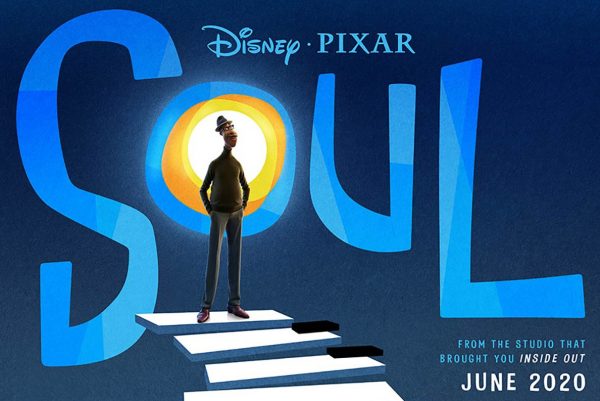
Since releasing Toy Story in 1995, Pixar Animation Studios have been world-leaders in two things – making beautiful, heartfelt movies about life; and advancing the medium of computer animation in film. They hit the ground running that regard with the story of a toy cowboy and his rivalry with the action hero astronaut that fell, with style, into the life of a young boy and his toys; producing the first ever fully computer animated film in the history of cinema; and they’ve barely missed a step since. On Christmas Day 2020, Disney released Pixar’s newest film, Soul, straight onto the Disney+ streaming platform, and gave us another example as to why Pixar are consistently one of the best animation studios in the world.

Soul follows Joe Gardner (Jamie Foxx, Ray), a middle-aged music teacher in New York City who dreams of being a professional jazz musician. After getting the opportunity of a lifetime to play with a jazz legend; Joe has an accident before getting the chance to prove that he has what it takes – and ends up in the Great Before; the place where souls gather before heading to earth to become people. It is here that he meets 22 (Tina Fey, Sisters); a soul who has been resisting heading to Earth to live a life for thousands of years, and in traditional Pixar fashion, shenanigans ensue from there as Joe tries to get back to his body, and 22 tries to avoid living at all.

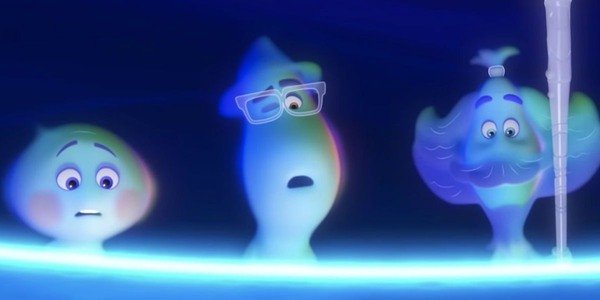
The souls of 22 (Tina Fey), Joe Gardner (Jamie Foxx) and Moonbeam (Graham Norton) in Soul

It’s difficult to talk about this film without straying into spoiler territory, but it’s also impossible to not talk about this film. Pixar have carved a niche in the market for producing beautiful, heartfelt films that deal with the realities of the human condition in succinct and entertaining ways. Soul comes together in a way that takes many of the best elements of Inside Out and combines them with the same from Coco; a smart, gentle and deeply funny film about dealing with the fragility of life, the call of our mortality, and the legacy which we may leave behind. Joe’s determination to get his life back confuses 22; they simply cannot understand what it is about life that would make a soul so desperate to return to it when they had just been given the opportunity to escape. Joe’s journey through his own mortality helps to adjust 22’s thoughts on what life truly is, and his passion is beautifully portrayed by Foxx. Joe’s motivations are not pure, and Foxx does an incredible job of presenting the conflicting position that Joe occupies; a man who is desperate to return to his life, but not the life that he had – the life he thought he deserved. He cannot stand the idea that his biggest opportunity to leave his normal, boring life behind has been suddenly snatched from him, and he’ll do absolutely anything to make that right – including attempts at manipulation along the way, which result in varying degrees of success. As companion, and often times opponent, 22 provides a lot of grounding for Joe on his journey, and Fey does a great job bringing that to the fore. During their time in the Great Beyond, 22 has been paired up with some of the greatest souls in history in continuing attempts to get them to find that last spark needed to head to Earth and engage with life, and the knowledge of everything she has seen, as well as from all the people she has met, has been realised in a character with a combination of sarcasm and naivete that Fey is an expert at bringing on screen. What 22 is lacking is sheer experience; and the complete absence of first-hand contact with what life is is what drives the drama from their perspective; with the narrative being shaped smoothly with 22’s resistance contrasting against Joe’s eagerness. As they both learn more about themselves, they begin to work more smoothly together; though things take a turn when 22 realises that Joe’s motivations as her guide have not been as pure as they first believed.

Foxx and Fey are not going it alone in this film, and the supporting roles are of note as well. Graham Norton (Eurovision Song Contest: The Story Of Fire Saga), who is best known as a TV host to most audiences, demonstrates his acting chops superbly in the role of Moonwind; a hippie with the ability to bring his soul in The Zone and navigate around it on a pirate ship made of sand. Moonwind not only helps drive the plot at key points, but is also a warm and cheerful presence, a conduit for a lot of the sillier humour; and Norton’s pre-hosting acting career prepared him perfectly for the role. Phylicia Rashad (Creed) provides an emotional lightning rod in her portrayal of Joe’s mother, Libba; a strong and independent woman who wants nothing more for her son than his safety and security, even if it means giving up on his dreams to get it. Joe’s interactions with her are key, falling at the centre to a lot of the development of Joe’s own intentions and actions as he navigates his journey back into his real life.

The most interesting supporting roles come from the the “soul counsellors” (who are all called Jerry, bar one); and not just because of the charming, funny and ethereal ensemble cast performances of Alice Braga, Richard Ayoade, Wes Studi, Fortune Feimster and Zenobia Shroff; but because Pixar once again innovated the very concept of animation in order to realise these characters. The soul counsellors are linear, translucent, two-dimensional characters that have been generated in a three-dimensional CGI environment. They do turn; their bodies simply switch positions, moving through themselves while also not really ever moving at all. They are humanoid but not human; we see one change their body from its humanoid shape into that of something more reminiscent of Catbus from the Studio Ghibli classic My Neighbour Totoro; and it carries fully-realised three-dimensional characters while remaining in two dimensions. It has an inside without having an inside; the 3D characters appear to be sitting on air while also clearly being inside this being. It is this which is truly mind-blowing. I don’t know much about how 3D CGI animation works, but I know enough to know that what Pixar have done with these characters shouldn’t even be possible. The studio which revolutionized animation with Toy Story; who came back a decade later and solved the problems of animating realistic humans in time for The Incredibles; who have advanced the medium of CGI animation single-handedly again, and again, and again; have managed to convincingly and realistically animate abstract metaphysical concepts into a physical space in a way that will only melt your brain when you sit down and try to write about it for a review. When we add in that these characters were then portrayed by a group of actors who represent a multitude of racial, social, religious and gender/sexuality backgrounds; I’m not sure any film has ever successfully created, scripted, cast and then realised such an abstract set of characters better than Pixar has with the soul counsellors.

Gerry (Richard Ayoade) and Terry (Rachel House), two of the soul counsellors in Soul

The animation also lends itself to another defining trait of Pixar; consistency. The studio is famous for linking its other properties together, with characters and concepts from different series dropping in as Easter Eggs (such as a mural of The Incredibles in the afterlife in Coco, which I’m sure some of you will now go back and look for); and there are some of these to find in Soul too; but there’s a consistency of animation with Inside Out which is inspired. The animation of the souls themselves is reminiscent of the animation of the emotions in Inside Out; but with some key differences to highlight the development of a soul as it becomes a person. The shading and shape are very similar, with the souls looking akin to Sadness in colour and style; but they have a more ethereal look to them, a more translucent nature to their bodies and a fuzziness around the edges. The souls of those who have lived are also the only ones to have legs; the souls who are waiting in the Great Before to head to Earth and start lives float around like ghosts; and to me that presents the implication that our emotional development comes from without our own soul; fleshing itself out as we learn more about what’s happening around us. 22 certainly presents a full emotional range throughout the journey, and Joe certainly doesn’t lose any of his own during his time in the Great Before (or in The Zone), and this development of a shared universal concept for the development of the human race, from our souls all the way to the inner workings of our emotions, is setting Pixar up to continue working with these concepts in future projects, and preparing us for a continued, secular examination of what makes us people.

However, no movie is perfect, and I did have one issue with Soul, albeit a minor one. The soul counsellor not called Jerry, Terry, is essentially the villain of this piece; and I personally felt like that wasn’t a necessary presence. Terry (played by Rachel House, Eagle vs. Shark) is the accountant of souls heading towards the Great Beyond, and when they notice an anomaly, sets out to correct it. The result is an obsessive drive to return balance to the numbers, and while this faintly stereotypical slight on accountants is quite fun when it’s allowed to be; Terry is given an unnecessarily combative personality. House portrays this brilliantly and the issue for me isn’t at all with the performance, but more with an over-riding feeling that a softer, more relaxed approach to this aspect of the narrative could have worked just as well, without taking any tension away from the story – after all, Joe’s own self-sabotaging actions when he’s working against the clock are more than enough to provide stakes to the narrative on their own.

Soul is a beautiful, charming and important film about life itself; a reminder to us all to live in the moment, seize the day and allow ourselves to experience all that life has to offer, even if it isn’t quite going to the way we had envisioned it when we got started. With great, heartfelt performances stacked from beginning to end, and another groundbreaking step forwards in terms of film animation, I implore everyone to find the time to check this one out. It’s a shame once again that such a beautiful piece of cinema has been denied the opportunity for a proper in-theatre release, but that shouldn’t stop you from seeing it; especially as I personally think that it may just be the most beautiful film that Pixar Animation Studios has ever produced.

See this movie.

Dave McGuckin is a theatre graduate, bar manager, former comedian and eternal film lover from Northern Ireland, now living in Canada. He began writing film reviews in 2016 for The Grade and then Great Central, both based in Leicester, England.

This site will collate these reviews, but also provides a platform for new reviews and essays on cinema, television, videogaming and (possibly) more

If you enjoy what you read, please consider sharing on social media, or leaving a small donation towards webhosting and content creation costs on Ko-Fi at http://www.ko-fi.com/davewritesreviews.

Check out the official social media links for Dave Writes Reviews below:

Locked Down

I’ve never been normal. Being locked down is making it worse.”

As you are already probably aware, a pandemic swept across the world in the year 2020 and resulted in numerous countries being forced to enter a lockdown to contain the spread. If you’re reading this review as soon as it has gone online, chances are you’re still in lockdown today, nearly a full 12 months later. That was certainly not what any of us had in mind back in March 2020 when the countries of the west entered lockdown; and I imagine it was certainly not what the producers of Locked Down, a Warner Bros. film that was released directly onto HBO Max and other streaming services, expected when they started to make this… romantic comedy? Heist movie? What exactly is it?

What it is not is what the trailer suggested it would be. The trailer introduces us to Paxton (Chiwetel Ejiofor, Dr. Strange) and Linda (Anne Hathaway, Ocean’s 8), a couple who were going through serious relationship issues and now find themselves trapped at home together while London shuts down. Paxton is a furloughed delivery driver, and Linda is a disgruntled high-level executive at a PR company, who finds herself in charge of pulling exhibit items from expensive department stores such as Harrods. The result is a plan to steal a diamond from Linda’s own collection, that they might reset their lives and find true happiness. The trailer presents a slick, high-stakes plan, proudly reminding us that this film is from Doug Liman, the man who directed such hit spy thrillers as Mr. & Mrs. Smith and The Bourne Identity.

This is not the movie we were given.

Anne Hathway as Linda and Chiwetel Ejiofor as Paxton in Locked Down

The lead performances in this film are great. Ejiofor and Hathaway bring us an insight into the stresses and uncertainty of early lockdown that is almost too close to home, but they do it incredibly well. The furloughed Paxton is desperately trying to find something that can give purpose to his existence during these difficult times; trapped in his house in a broken relationship, we see him take to the streets to deliver poetry readings to entertain his neighbours, experiment with unusual substances, and intently focus on small, arguably insignificant irregularities around the house – something that was far too relatable to me, as someone who has also spent most of the last year on furlough. He is struggling with who he is and who he is meant to be, and Ejiofor does an incredible job of portraying that, while also keeping Paxton as a likeable character for the audience. This dichotomy is best realised during the frustrating conversations with his boss Malcolm (Sir Ben Kingsley, Schindler’s List), who is the heart of the comedy in this film and expertly demonstrates all aspects of an older, officious boss attempting to communicate solely through video calling, without it ever feeling like a cheap stereotype; all while leaning on all the expected (and some unexpected) aspects that would make up such a stereotype in its laziest form.

Hathway brings a similarly convincing performance in her frustrated executive role, and the dichotomy between Linda’s work relationships and her relationship with Paxton brings us an interesting take on the character; someone who we can sympathise with as she is placed in impossible situations through her work (such as having to make members of her team redundant on a video-conferencing call), while simultaneously maligning herself through her short, aggressive interactions with her Paxton. Scenes of her openly and unashamedly drinking wine while on work calls parallel with her scolding Paxton for his own substance experimentation; and her video calls with her boss Solomon (Ben Stiller, Zoolander) are used to bring more humour to this tense situation; though unlike Kingsley, Stiller is more often the butt of the joke for situational or physical comedy, rather than through his character’s personality – though he does a great job of bringing the archetypal douche-bag rich executive character to life for Hathaway to channel her frustration through.

These supporting roles are mostly short-lived, as are the others from the likes of Paxton’s half brother David (Dulé Hill, The West Wing) or Kate (Mindy Kaling, Ocean’s 8); Linda’s former colleague at Harrods; all of whom are brought in temporarily to highlight the unconventional circumstances that Paxton and Linda are finding themselves in, as much as they are on board to advance plot points. This is very much Paxton and Linda’s story. It’s not until we reach the touted heist do we really even see another named character in the flesh as opposed to over video-conferencing software (with some very minor exceptions); and in many ways, the format almost feels more suited to a live theatre show than it does to a film until we finally reach the night of the Harrods heist. This isn’t a problem, necessarily; it certainly isn’t the first film to feel like a play, and the film isn’t necessarily hurt by that comparison in terms of the performances – the problem is in the aforementioned marketing.

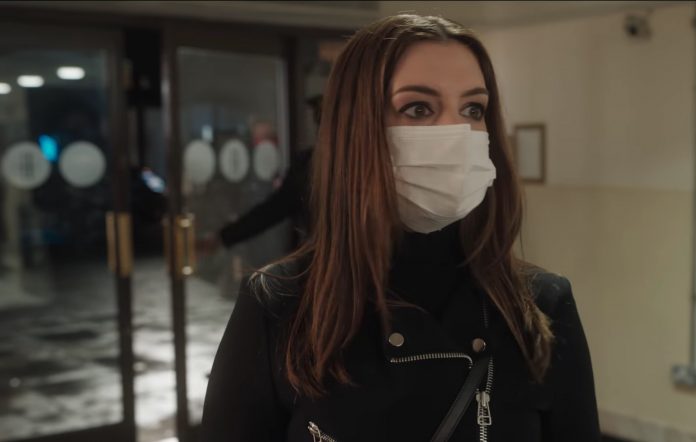
Anne Hathaway masks up for a COVID-era heist in Locked Down

As stated before, this movie is marketed as a slick heist film; something to rival the likes of the Ocean’s series, or something of that ilk. More than half of the trailer is dedicated to the notion of Locked Down as a heist movie; but we’re a solid 60 minutes into the 2 hour run time of this film before Linda and Paxton even start to discuss the idea of pulling a heist; and it’s another 30 minutes before that action starts (and that 30 minute time period isn’t even fully devoted to planning said heist). The opening hour of this film is given entirely to documenting the frustrations the two are feeling with their quarantine situations; and while the plot does quietly drive us towards the eventual endgame in the background of that development, the length of time it takes to get to that point makes this a very different film from what was advertised. I was wary going in about the nature of it; as someone who is still in the throes of a lockdown state, in furlough, my fear was that if that was anything more than an establishing frame for the heist, it may be a little too much – and I’m sorry to say that I was right. It was hard work to maintain focus on such a barrage of these scenarios that reflected my own situation; and while we go to the cinema looking for characters to empathise with and connect to, there was just too much of my situation being shown to me through Paxton to allow me to fully disconnect with real life and immerse myself into this film. Add to that the disappointment of the eventual heist; with only around 20 minutes of that 2 hour runtime given to its execution and an ever-growing set of scenarios which didn’t really make a lot of sense as it was happening, and I found myself struggling to remain engaged with this film as we reached the climax, including during the actual heist portion. This is even more disappointing given that this script is from Steven Knight, whose 2013 film Locke, starring Tom Hardy, is a masterclass in how to demonstrate human isolation (the film is entirely set within the central character’s car as he drives across England at night); so to have another piece with such a similar premise be so drastically different in quality is a real shame.

Locked Down is a movie with two great central performances, and an array of solid supporting roles that the film itself cannot do justice to. A slow-paced narrative provided unexpectedly as the result of misleading marketing does not do this film any favours, and while there is an interesting, well-acted piece of relevant drama within, the nature of it makes it uncomfortable to watch and engage with. If you’re a fan of Chiwetel Ejiofor and/or Anne Hathaway then this is a film which may pique your interests; but if you’re looking for a cool, sleek heist movie then you would be much better off watching the likes of Inside Man than Locked Down. If you really want to check this one out, I would advocate waiting at least until you’re allowed outside again, so you can shake off the uncomfortable familiarity of quarantine; but even that might not be enough to save this one.

Baby Driver

Your name’s Baby? B-A-B-Y, Baby?”

This is the first in a series of reviews of Dave’s Favourite Movies.

This is the only review for this series that was written at the time of the movie’s release. The review has been left unedited to reflect the author’s feelings at the time of release. No further endorsement is given to actors who have been later revealed to be terrible people.

The soundtrack to a movie can be the last thing that makes or breaks it in the eyes of the audience. The work of composers like Hans Zimmer and John Williams, too name just two, have led to some of the most iconic musical themes in cinematic history; music which has infiltrated pop culture across a huge spectrum. Who, for example, can see an image of a predatory Great White Shark without immediately calling Williams’ iconic theme for Jaws to mind? Who can see a pirate at a fancy dress party without thinking of Zimmers’ score for Pirates Of The Caribbean? Similarly, soundtracks which make considered and intelligent use of existing mainstream music are held in similarly high regard; James Gunn’s use of classic rock and pop tunes in the two Guardians Of The Galaxy movies not only builds and guides the emotional tone and tensions of the story, but also serves a purpose within the story as a direct connection to one of the central characters. Finally we have movies about music, such as the likes of Whiplash, which rely entirely on the soundtrack to drive every aspect of the piece; with the background music driving the emotional tone of scenes where nobody is actively playing, guiding the piece until the next on-screen performance.

In all my years of watching motion pictures, however; I don’t think I’ve seen a single film that uses the soundtrack the way that Edgar Wright (Scott Pilgrim vs. The World) does in Baby Driver, a heist movie following the eponymous Baby (Ansel Elgort, The Fault In Our Stars); a prodigious get-away driver working with Atlanta crime-lord Doc (Kevin Spacey, House Of Cards) to rip off local banks and security services. Baby is living with tinnitus and, as Doc puts it, “uses music to drown out the hum in the drum”; constantly hooked up to a series of iPod Classics to allow him to focus on anything but the ringing in his ears. This is the device which Wright uses to establish the core concept of the film – whatever we’re listening to is what Baby is listening to, and Baby has specific iPods and tracklists for specific scenarios. Our lead character chooses which songs he drives to, allowing Wright to lift the heart rates of the audience to the same pace as the central character by delivering the same music to us as to him. We get to see Baby timing the start of certain tracks to fit the beginning of a job; serving not only for him to match what he’s listening to with when he’ll be driving; but also provides him with a real-time ability to track the job as it plays out and allow him to know whether the rest of the crew are operating to the prescribed time-frame.

The effect of the soundtrack goes beyond that level, though; Wright has masterfully choreographed the film to match up with the music, especially during the high-octane heist scenes. Gunshots match to drum beats; tyre squeals match to guitar solos. Key moments are punctuated with lifts in the song of the moment, and Wright re-invents the literary device of pathetic fallacy (where the weather of a chapter in a novel reflects the mood of the central character) by having the tone of the soundtrack adapt to Baby’s immediate mood. This is something which we all know – who hasn’t decided to listen to something on the heavier end of the spectrum when in a bad mood? Wright has woven the physicality of the film into the construction of the music and it goes beyond the car scenes; Baby’s physical path through life is influenced by the music he listens to at all stages.

Baby is characterised as the silent type for the majority of the film; the notable exceptions being during interactions with Doc, with Debora (Lily James, Downton Abbey) and with Joseph (C.J. Jones, Lincoln Heights). These interactions are driven by entirely different motivations; Doc is his business associate; Debora is his love interest and Joseph is his foster father. The music we hear during Baby’s interactions with these three characters is vastly different both from each other and from the action scenes; as the love interest, all of Debora’s backing tracks are romantic in some way, and all make reference either to a Debora/Deborah or to a Baby (such as Beck’s Debora, or Carla Thomas’ B-A-B-Y), and music takes a more considered backseat during the scenes with just Doc and Baby.

Lily James as Debora and Ansel Elgort As Baby in Baby Driver

It is the scenes with Baby and Joseph, however, where the musical interaction takes an interesting tone. Joseph is deaf (as is C.J. Jones), and he interacts with the music in the scenes very differently. In the solace of their apartment, Baby removes the earbuds and blasts music from a record player; allowing Joseph to feel the vibrations of the songs he’s listening too. Combined with Baby’s physicality during these scenes, Joseph’s insight into what Baby is thinking and feeling is tremendous, reflective of the close relationship the two have. The second intriguing dynamic between the two is that they communicate primarily through American Sign Language (with their conversation subtitled for those who don’t know the language), which represents an important step forward in visibility of differently abled people on screen; particularly the casting of a deaf actor to play a deaf role. Elgort & Jones have a wonderful chemistry on screen, flawlessly demonstrating a close, personal bond both to each other and to music, despite their hearing issues.*

This interaction is a strong indication of the other strengths of Baby Driver; Wright has put together a fantastic script and assembled an incredible cast. Outside of his work directly alongside Jones, Elgort’s performance overall is fantastic. Baby is a complex character, and Elgort balances his grim determination and charming arrogance alongside a sense of youthful innocence expertly. The opening scenes establish the character expertly; Wright uses his first look at his eponymous hero to set the full expectations of his personality, allowing his relationships with other characters to fill in backstory and to develop his character as the film proceeds; allowing Elgort to flex his chops as the story moves.

Similarly, Lily James puts in a delightful turn; flawlessly adopting the character of the modern-day southern belle-come-manic pixie dream-girl, and providing an talkative innocence which plays off tremendously against the more reserved Baby. Her soft, earthy voice is particularly tantalizing to the young driver; a soothing tone which works to cause the same effect as his iPod and presents an important moment in understanding how his interpersonal interactions operate.

The other members of the supporting cast present an interesting dynamic to our central character. For those unfamiliar with Wright’s past work (firstly, where have you been?); he is a master of presenting caricatures in a believable style, while also subtly commenting on the nature of this characters within the landscape of cinema. Wright presents a rotating cast of cinematic bad-asses to round out the crews on each heist, and each actor brings a different form of gangland stereotype to the screen, for various lengths of time. This allows each character to present different amounts of levity to the scenes they feature in. Jon Berthnal (Daredevil), Lanny Joon (Hollywood Wasteland) and Flea (of Red Hot Chili Peppers fame) all make one-hit appearances and are conductors for some of Wright’s traditional quick-fire gags and providing alleyways into character exploration for those who are sticking around for longer.

Baby (Ansel Elgort) shares an elevator with Bats (Jamie Foxx), Darling (Eiza Gonzalez) and Buddy (Jon Hamm) in Baby Driver

The rest of the supporting cast is rounded out by the aforementioned Spacey, John Hamm (Mad Men), Eiza Gonzalez (From Dusk Til Dawn: The Series) and Jamie Foxx (Django Unchained). Spacey delivers the performance that you would expect; perfectly balancing the dark and dangerous side of the leader of a criminal empire with perfect delivery of comedic lines, and an amount of empathy for the central character.

Hamm, Gonzalez and Foxx play Buddy, Darling and Bats consecutively. These three work multiples jobs with Doc and Baby during our timeline and, as such, are key sources of influence on Baby’s development. All three characters are suitably complex and interesting, while maintaining their elements of stereotypical caricaturisation. As with Spacey, Foxx and Hamm are both effortlessly funny as well as being incredibly menacing, sometimes within the same sentence; and Gonzalez shines as the devilish bombshell, teaming up effortlessly with Hamm to create an unhinged, 21st cenutry Bonnie-And-Clyde-esque criminal duo.

All the pieces of Baby Driver add together to one hell of a thrill ride. Clever, funny and desperately exciting, I have never been more thrilled to feel my heart beating in my throat for two full hour. This film needs to be seen on the biggest screen you can possibly find; so grab some friends, get a big ol’ bucket of popcorn and strap your brain and your body in for the ride of their lives.

And get ready to have Focus’ Hocus Pocus in your brain for days afterwards. Don’t worry; it’s totally worth it.

I can’t possibly do justice to the work of C.J. Jones justice from my personal viewpoint in this review. If you’d like to read more about how his role in Baby Driver has touched those with similar disabsilities, please read the article “You Are Not Alone” by Adam Membrey on Birth.Movies.Death here:

http://birthmoviesdeath.com/2017/07/07/you-are-not-alone-baby-driver-c.j.-jones-and-the-perfect-pop-song-of-repres

Dave McGuckin is a theatre graduate, bar manager, former comedian and eternal film lover from Northern Ireland, now living in Canada. He began writing film reviews in 2016 for The Grade and then Great Central, both based in Leicester, England.

This site will collate these reviews, but also provides a platform for new reviews and essays on cinema, television, videogaming and (possibly) more

If you enjoy what you read, please consider sharing on social media, or leaving a small donation towards webhosting and content creation costs on Ko-Fi at http://www.ko-fi.com/davewritesreviews.

Check out the official social media links for Dave Writes Reviews below:
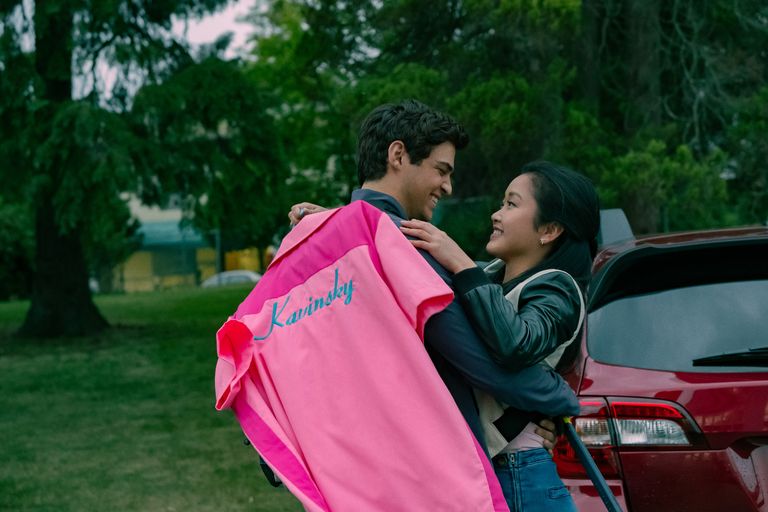
Godzilla: King Of The Monsters

We opened Pandora’s Box… and there’s no closing it now.”

The year 2019 was an important one for blockbuster movies. Marvel and Disney presented us with on of the most ambitious film events of all time with Avengers: Endgame, a film which brought a full decade of film making to a giant, conclusive battle to end the arcing Infinity Saga, and set the tone for the next few years of output. Marvel and Disney would dominate the box office in 2019, with 6 of the top 10 biggest box office hits coming from Disney, and 3 of those being part of the MCU.

What was missing from the top 10 was Godzilla: King Of The Monsters. Today, I am here to tell you why that was the biggest shame of 2019’s film landscape.

Warner Bros. And Legendary Pictures presented the third film in the MonsterVerse to mixed critical and audience reception. It’s clear that they tried to build on the feedback they received for their previous instalments (Godzilla in 2014 and Kong: Skull Island in 2017), but it’s also clear that they recognised the cult status that one line from Godzilla had achieved. Even if you’ve never seen that film, there’s a strong possibility that you have seen memes that made use of Ken Watanabe delivering the immortal line “Let them fight”. In Godzilla: King Of The Monsters, Legendary Pictures let them fight.

5 years after the events of Godzilla, we meet Dr. Emma Russell (Vera Farmiga, The Departed), a paleo-biologist studying the titan Mothra for Monarch, the organisation in charge of containing and monitoring the newly-discovered Titans. Mothra hatches into her larval form, allowing Russell to use a device called the Orca, which she designed with her estranged husband Mark (Kyle Chandler, First Man), to communicate with her. The event is interrupted by former SAS colonel and current eco-terrorist Alan Jonah (Charles Dance, Game Of Thrones); who kidnaps Russell and her daughter Madison (Millie Bobby Brown, Stranger Things) and intends to use her and the Orca to release the other titans that Monarch has contained for study. This action results in direct conflict with Monarch, the US military… and Godzilla himself.

Millie Bobby Brown and Vera Farmiga as Madison Russell and Dr. Emma Russel in Godzilla: King Of The Monsters

I talked in my reviews of the previous films about them being ensemble movies, and this approach certainly still applies to King Of The Monsters; with one key difference – the humans aren’t the only characters adopting the ensemble style. Some of the most popular stalwart monsters from the Godzilla film series make their first western appearances in this film; namely Mothra, Rhodan and King Ghidora*, who serves as the main villain of the piece. Once again, the design team has done incredible work with the monster designs; and each creature manages to both honour the original designs from the old movies, while also being realistic enough to sell their intrinsic natures. The prime example is Mothra; who not only gets to showcase the diversity of the design team’s imagination by moving from a larval stage to an adult state; but also presents a softer side of the titan’s designs; allowing the addition of a sense of beauty amongst the hulking monstrosities that have made up the series so far. Speaking of monstrosities; Ghidora represents in that department what could be the strongest way of the series so far; his three dragon-like heads, dual rattle tails and enormous wings reminiscent of the mythical Hydra of Greek legend; a comparison which leads to one of the more visually disgusting (yet effective) moments of the film when he is forced to regrow one of his heads after an encounter with Godzilla.

There is a use of elements which works well to drive home the differences between these monsters which is particularly effective for distinction as well. While Godzilla’s reliance on radiation for sustenance and assault is utilised heavily as a plot point once again, the other three make use of different elemental natures; Mothra demonstrates a reliance on water, with her larval form cocooning beneath a waterfall for her transformation; Rhodan is first seen bursting from containment from within an active volcano, and drags flames from the edges of his bird-like wings; and King Ghidora relies on electricity for his powered assaults, as he is able to blast lightning from all 3 heads, as well as generating storms as he flies. One scene of an over-charged Ghidora blasting lighting from all three heads and from the peaks of his wings at once is a particularly effective and striking visual, and is also just incredibly cool. The building of the elemental natures into the monster’s designs, akin to the visual effect when Godzilla is preparing his blast attack, allows not only for cool and interesting character animation; but also creates an interesting variety of offensive movements from each creature, beyond what you would expect from their basic animalistic design, and is well used for some of the more shocking moments during the action.

Of course, a full cast of humans is on deck for this film as well, but it must be said that the performances vary a little more in quality than in previous instalments; but not necessarily due to the fault of the actors. The creative team have taken steps to address the equality issue from the previous two films, as Farmiga and Brown get more than their fair share of screen time and are very much central to the plot. Brown does well in her big-screen debut, which gives her the opportunity to portray a much more balanced set of emotions than Stranger Things does. Farmiga and Brown do feature in one of the scenes which highlights the main issue with this film; as in a time-sensitive moment that also featuring Dance, a little too long is spent on the back-and-forth, trying to establish a moment of moral conflict for one of the characters involved, at a moment where it has been made clear that there is not time for that kind of debate. This happens more than once; a key scene featuring the returning Ken Watanabe (The Last Samurai) falls prey to the same desire to create increased dramatic tension, though the scenario which Dr. Serizawa finds himself in does make that particular moment a little more forgivable than the one mentioned before.

Ken Watanabe and Kyle Chandler as Dr. Ishirō Serizawa and Dr. Mark Russell in Godzilla: King Of The Monsters

Watanabe delivers a very similar performance to his turn in Godzilla, but his role has changed somewhat. Monarch now finds itself with a much greater range of equipment, backed partially by the US military in a more symbiotic relationship, and much of his conflict is actually driven by Dr. Mark Russell. Chandler is great in this role, simultaneously juggling the emotions of a concerned father who is desperately searching for a kidnapped daughter, with his scientific instincts as an animal behavioural specialist. While he supports Serizawa’s calls to assist Godzilla as he moves to fight the other titans, he is frustrated at Monarch’s inability to identify where his wife and daughter are so that they may launch a rescue; and the need to head off the titans as they continue to escape containment and bring ever-growing levels of chaos drives the majority of the human element in the film. The Monarch team also drive the majority of the humour this time; with Bradley Whitford (Get Out) and Thomas Middleditch (Silicon Valley) providing a lot of humour in their roles within Monarch (Whitford as a half-drunk scientist, akin to Rick from Rick & Morty; Middleditch as the annoying director of technology). The military personnel get their time to shine too, with Aisha Hinds (Underground) putting in a strong showing as Colonel Diane Foster, and O’Shea Jackson Jr. (Straight Outta Compton) standing out from the troops as CWO Jackson Barnes. As you can imagine from the fact this is a list of stand-out actors and not a full list of everyone with a notable role, the cast is so enormous that some people do disappear into the mix, and those who are not lost in the action are hurt by a sheer lack of screen time due to sharing with such a large cast of other actors and the titans. This film also would have been well served with a stronger script and a tighter story to drive the human characters, and the lack of it hurts the film from a narrative stand-point; but this film is certainly not setting out to accomplish the same goals as its predecessors, and it’s clear that the human element just is not as important here.

Where Gareth Edwards was coy with the monster fights in Godzilla, the same can not be said for Michael Dougherty’s approach to Godzilla: King Of The Monsters. By this point we must presume that were moving full steam ahead with the plans for Godzilla vs. Kong, and this is the appetiser for that piece. While the human element is still present, it’s now framed much differently and seen as the reaction to what is happening between the Titans; be it during attempts to evacuate cities where Titan activity is expected, or assessing the damage caused as they chase them across the US. The fights themselves, as noted, are spectacular and occur much more frequently than in the previous films; but it’s only when we reach the final fight that a partial removal of the human element allows these clashes to properly shine. Setting the confrontation in Boston also helps, as the impact of the showdown is definitely stronger when we’re allowed to see these creatures colliding with high-rise buildings, rather than the previous fights in locales such as the Antarctic, or in the sea off the coast of South America. It’s hard to tell whether a more cautious approach would have served the film better or not; having Godzilla and Ghidora clash multiple times certainly helps to establish Ghidora as a credible threat, but may damage the overall sense of urgency to their confrontations as the film continues. That is not to take away from the spectacle involved; as discussed at the start of this review, the effects team have as good a job with the movement of each titan as they have with the aesthetic designs, and the fights are all great to watch. Some of the long-shots of the titans at the end of a sequence are stunning as well; one particular shot of Ghidora standing dominant at the top of a mountain was an astonishing achievement by the effects team.

King Ghidora and Godzilla face off in Godzila: King Of The Monsters

Godzilla: King Of The Monsters is not quite cut from the same cloth as Godzilla or Kong: Skull Island, but that doesn’t make it worth any less of your time. Arguably, the greater focus on action between the titans themselves makes this outing more like the original Japanese Godzilla films than any of the other western attempts at a true Kaiju film, and King Of The Monsters deserves to be looked at through that frame. Also; if you want a film to switch your brain off and enjoy with a bucket of popcorn and a couple of drinks of an evening; you could do much worse than watching these gargantuan behemoths throw down.

Let them fight.

Dave McGuckin is a theatre graduate, bar manager, former comedian and eternal film lover from Northern Ireland, now living in Canada. He began writing film reviews in 2016 for The Grade and then Great Central, both based in Leicester, England.

This site will collate these reviews, but also provides a platform for new reviews and essays on cinema, television, videogaming and (possibly) more

If you enjoy what you read, please consider sharing on social media, or leaving a small donation towards webhosting and content creation costs on Ko-Fi at http://www.ko-fi.com/davewritesreviews.

Check out the official social media links for Dave Writes Reviews below:

*Did you know that King Ghidora official origin is that he’s actually an alien intent on terraforming the Earth in his image? Not mentioned in this movie at all. The original Kaiju films are class.